FindRareCoins.com · 2026 Edition
Vinyl Record Price Guide
Real Sold Values & Grading
What collectible records actually sell for — Beatles and Elvis first pressings, Blue Note jazz, pre-war blues 78s and punk rarities — priced by Goldmine grade from verified auction and marketplace sales.
eBay Sold Vinyl Price Finder
Most Valuable Records in This Guide
FindRareCoins.com · Price Guide
How Much Are Old Vinyl Records Worth?
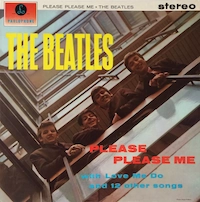
Most used records sell for $1–$20; a small group of first pressings, withdrawn releases, and pre-war 78s sell for thousands. The gap between those two groups comes down to four things: which pressing you have, its condition on the Goldmine scale, whether the sleeve and inserts survive, and how many copies were made in the first place. An original 1963 stereo Please Please Me on Parlophone's black-and-gold label can bring five figures, while a 1970s reissue of the same album rarely tops $30.
The values below come from verified sales — eBay completed listings, Discogs marketplace data, and results from Heritage, Julien's, Bonhams, RR Auction, and Omega Auctions — not asking prices. Each table gives realistic ranges for Very Good, Very Good Plus, and Near Mint copies, plus the most notable confirmed sale where one exists. Auction records are outliers driven by provenance or perfect condition, so treat them as ceilings rather than typical values.
If you collect across categories, our collectibles price guides use the same verified-sales approach, including the comic book price guide and vintage phonograph values for the machines that played these records.
Key Facts
- Most expensive vinyl record sold at auction: Ringo Starr's mono "White Album," No. 0000001 — $790,000 at Julien's, December 2015.
- Elvis's first acetate ("My Happiness," 1953) sold to Jack White for $300,000 in 2015.
- Sealed first-state Butcher Cover (stereo) sold for $125,000 at Heritage in February 2016.
- Grade drives price: a VG+ record typically brings about half the NM value; VG roughly a quarter.





Rock & Classic Rock Record Values
The Beatles dominate the top of the rock market: their records hold the auction record for vinyl ($790,000) and four of the ten rows below. What makes a Beatles record valuable is almost never the album itself — it's the specific pressing. The 1963 black-and-gold Parlophone label lasted only weeks before EMI switched to yellow-and-black, so the first mono and stereo runs of Please Please Me are scarce, and the stereo version, sold to a tiny early-stereo market, is far rarer than the mono.
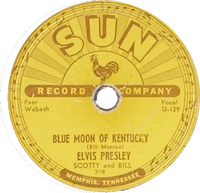
The same logic applies outside the Beatles. Led Zeppelin's 1969 UK debut is worth hundreds of dollars only with the short-lived turquoise cover lettering; Elvis's Sun singles from 1954–55 are valuable because Sun was a small Memphis label pressing modest quantities before RCA bought his contract. The Velvet Underground's banana cover adds value only when the peelable sticker is intact.
Condition matters as much as pressing. A worn Butcher Cover that someone peeled at home is a few hundred dollars; a first-state copy that never had the replacement "trunk" photo pasted over it can run five figures. When in doubt, compare your exact label, matrix, and cover state against sold listings before pricing.
| Record (Pressing) | VG | VG+ | NM | Notable Sale | Shop |
|---|---|---|---|---|---|
| ★ Beatles "Please Please Me" — UK Parlophone PMC 1202, mono, black & gold label (1963) | $200–$400 | $400–$900 | $1,000–$2,500 | ~$2,000 (Mint-minus, 2013) | eBay → |
| ★★★ Beatles "Please Please Me" — UK Parlophone PCS 3042, stereo, black & gold label (1963) | $1,500–$3,000 | $3,000–$6,000 | $8,000–$15,000+ | £22,322 (2009) | eBay → |
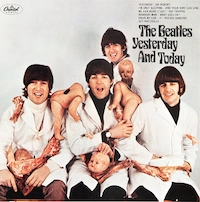
| ★★★ Beatles "Yesterday and Today" Butcher Cover — Capitol, first state (1966) | $1,500–$3,000 | $3,000–$10,000 | $10,000–$25,000 | $125,000 (sealed stereo, 2016); $234,000 (John Lennon's copy, 2019) | eBay → |
| Beatles Butcher Cover — third state (trunk cover peeled off) | $200–$500 | $500–$1,200 | $1,200–$3,000 | — | eBay → |
| ★ Beatles "White Album" — UK Apple mono, low serial number (1968) | $300–$800 | $800–$2,500 | $2,000–$10,000 | $790,000 (No. 0000001, Ringo's copy, 2015) | eBay → |
| ★★ Led Zeppelin — debut LP, UK Atlantic 588171, turquoise lettering (1969) | $300–$800 | $800–$2,500 | $2,500–$5,500 | $10,001 (promo copy, RR Auction) | eBay → |
| ★ Pink Floyd "The Piper at the Gates of Dawn" — UK Columbia SX 6157, mono (1967) | $250–$500 | $500–$1,200 | $1,200–$3,000 | — | eBay → |
| ★★ Elvis Presley "That's All Right" — Sun 209, 45 RPM (1954) | $1,000–$2,000 | $3,000–$5,000 | $5,000–$12,000 | $15,000 (misprint label, 2018) | eBay → |
| ★ The Velvet Underground & Nico — Verve V-5008, mono, unpeeled banana (1967) | $300–$700 | $700–$1,800 | $2,000–$5,000 | $25,200 (studio acetate, 2006) | eBay → |
| Typical classic rock first pressing (common title) | $10–$25 | $25–$75 | $75–$200 | — | eBay → |
Butcher Cover states: "first state" covers were never pasted over; "second state" still has the trunk photo glued on top; "third state" has had it peeled off. Capitol's recall means sealed first-state copies — mostly from the 24 that Capitol president Alan Livingston took home — are the only ones in the six-figure range.
Jazz, Blues & Soul Record Values
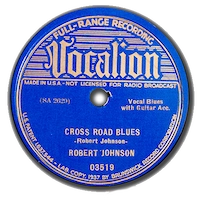
Pre-war blues 78s and 1950s Blue Note LPs are the two richest corners of this market. Robert Johnson's 78s, issued by Vocalion between 1937 and 1939, routinely sell for $3,000–$6,000 in decent condition, and a copy of "Cross Road Blues" reached $26,000 in 2018. These are shellac discs pressed in small runs for a rural market, and few survived decades of use.
On the jazz side, original Blue Note pressings carry the premium — particularly those with the West 63rd Street address and the "deep groove" ring pressed into the label. Hank Mobley's Blue Note 1568, with an estimated 300–1,000 copies pressed, is the label's best-known rarity; a copy with the "New York 23" label variant sold for $7,970. Most famous albums don't reach those levels: an original mono Kind of Blue is common enough that NM copies sell in the hundreds, not thousands.
Soul and R&B albums from the late 1960s were pressed in large numbers and are generally affordable. The value there sits in early singles on small labels and in clean, complete copies of key LPs — so check grade carefully before assuming a famous title is rare.
| Record (Pressing) | VG | VG+ | NM | Notable Sale | Shop |
|---|---|---|---|---|---|
| ★★★ Robert Johnson "Kind Hearted Woman Blues" — Vocalion 03416, 78 RPM (1937) | $1,500–$2,500 | $2,500–$4,500 | $5,000–$8,000 | $26,000 ("Cross Road Blues," Vocalion 03519, 2018) | eBay → |
| ★★★ Hank Mobley — Blue Note BLP 1568, W. 63rd St., deep groove (1958) | $1,000–$2,500 | $2,500–$5,000 | $5,000–$10,000 | $7,970 ("New York 23" label) | eBay → |
| ★★ Art Blakey "Moanin'" — Blue Note BLP 4003, mono, deep groove (1959) | $250–$600 | $600–$1,500 | $1,500–$3,500 | — | eBay → |
| ★ Miles Davis "Kind of Blue" — Columbia CL 1355, mono, 6-eye label (1959) | $50–$150 | $150–$400 | $500–$1,200 | ~$730 (NM, 2017) | eBay → |
| ★ John Coltrane "A Love Supreme" — Impulse A-77, mono, orange/black label (1965) | $100–$250 | $250–$600 | $600–$1,500 | — | eBay → |
| ★ Muddy Waters "I Can't Be Satisfied" — Aristocrat 1305, 78 RPM (1948) | $100–$250 | $250–$600 | $600–$1,500 | — | eBay → |
| Aretha Franklin "I Never Loved a Man the Way I Love You" — Atlantic 8139, mono (1967) | $25–$60 | $60–$150 | $150–$350 | — | eBay → |
| Typical 1950s Blue Note original (W. 63rd St., deep groove, common title) | $75–$200 | $200–$600 | $600–$2,000 | — | eBay → |
Blue Note label addresses date a pressing: Lexington Avenue (earliest 12-inch LPs), then 47 West 63rd Street, then "New York, USA," and finally the Liberty labels after the 1966 sale — Liberty-era copies are reissues, not originals. Japanese and later "tone poet" reissues can copy the cover art closely, so always check the labels and dead wax.
Punk, New Wave & Indie Record Values
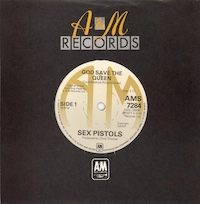
The single most valuable punk record is the Sex Pistols' "God Save the Queen" on A&M (AMS 7284). A&M pressed roughly 25,000 copies in March 1977, dropped the band within days, and destroyed nearly all of them; only a handful are known, and good copies sell for £12,000–£15,000. The later Virgin release of the same song is common and inexpensive — check the label before celebrating.
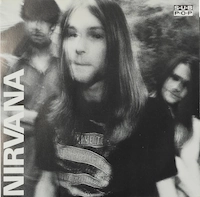
That pattern explains most of this table. Big-label punk singles like "Anarchy in the U.K." on EMI or the Clash's "White Riot" on CBS sold well and are worth tens of dollars, not thousands. The money is in tiny independent runs: Joy Division's self-released 1978 An Ideal for Living EP with its fold-out sleeve, and Nirvana's debut single "Love Buzz," limited to 1,000 hand-numbered copies, which has climbed past $11,000.
Counterfeits are a real problem in this genre. "Love Buzz," "An Ideal for Living," and the A&M "God Save the Queen" have all been bootlegged, so authentication through matrix etchings, sleeve printing, and label details is essential above a few hundred dollars.
| Record (Pressing) | VG | VG+ | NM | Notable Sale | Shop |
|---|---|---|---|---|---|
| ★★★ Sex Pistols "God Save the Queen" — A&M AMS 7284, withdrawn (1977) | $5,000–$8,000 | $8,000–$12,000 | $12,000–$20,000 | £15,000 hammer (Omega, 2022); $14,690 (Discogs, 2017) | eBay → |
| ★★★ Nirvana "Love Buzz" — Sub Pop SP23, hand-numbered of 1,000 (1988) | $2,000–$3,500 | $3,500–$6,500 | $6,500–$12,000 | $11,700 (May 2026) | eBay → |
| ★★ Nirvana "Bleach" — Sub Pop SP34, white vinyl, first 1,000 (1989) | $1,000–$1,800 | $1,800–$3,000 | $3,000–$5,000 | $3,500 (2023) | eBay → |
| ★★ Joy Division "An Ideal for Living" — Enigma PSS 139, fold-out sleeve (1978) | $600–$1,200 | $1,200–$2,500 | $2,500–$5,000 | £6,375 (John Peel's copy, Bonhams 2022) | eBay → |
| Sex Pistols "Anarchy in the U.K." — EMI 2566, UK 45 (1976) | $20–$40 | $40–$100 | $100–$250 | — | eBay → |
| The Smiths "Hand in Glove" — Rough Trade RT 131 (1983) | $30–$60 | $60–$150 | $150–$300 | — | eBay → |
| The Clash "White Riot" — CBS 5058, UK 45 (1977) | $10–$25 | $25–$60 | $60–$150 | — | eBay → |
| Typical UK punk original 45 (common artist) | $5–$15 | $15–$40 | $40–$100 | — | eBay → |
How Vinyl Records Are Graded
Most collectors and dealers use the Goldmine grading standard, and the price effect of each step is steep: a Very Good Plus record typically sells for about half the Near Mint value, and a Very Good copy for about a quarter. That's why the same pressing can be listed at $300 and $3,000 on the same day.
The record and the sleeve are graded separately and usually written together, as in "VG+/NM" (vinyl first, cover second). Grade visually under a bright light, then play-grade: a record that looks clean can still have groove wear that only shows up as distortion on loud passages.
| Grade | What It Means | Approx. % of NM Value |
|---|---|---|
| Mint (M) | Absolutely perfect in every way. Rarely used — a sealed record isn't automatically Mint, since warps and pressing flaws can hide under shrink-wrap. | Negotiated; often 100%+ |
| Near Mint (NM / M-) | Looks unplayed, no visible defects, plays without noise beyond the pressing itself. | 100% |
| Very Good Plus (VG+) | Light signs of handling — faint scuffs or slight warp that don't affect play. The most common grade for collectible copies in circulation. | ~50% |
| Very Good (VG) | Visible surface marks and audible noise in quiet passages, but it plays through. | ~25% |
| Good (G / G+) | Plays through with obvious surface noise and wear; worth buying only as a placeholder copy. | ~10–15% |
| Poor / Fair (P / F) | Cracked, badly warped, or skips. Value only if the record is extremely rare. | Minimal |
For 78 RPM shellac, specialist collectors use a different scale (N, E, V, G, F, P — New, Excellent, Very Good, Good, Fair, Poor, with + and − modifiers). An "E" 78 is roughly comparable to VG+ on vinyl. When buying high-value 78s, ask for an audio clip; shellac grading depends heavily on how the disc actually sounds.
How to Identify a First Pressing
The dead wax — the blank vinyl between the last groove and the label — is the most reliable place to identify a pressing. Matrix numbers, stamper codes, and engineer initials are hand-etched or machine-stamped there, and reference sites like Discogs list which combinations belong to which pressing. A UK Parlophone Beatles LP ending "-1N," for example, points to an early stamper, while later lacquer cuts carry higher numbers.
Check the label
Record companies changed label designs, colors, and printed addresses every few years, so the label often dates a copy within a narrow window. Parlophone's black-and-gold label gave way to yellow-and-black in 1963; Columbia's "6-eye" label was replaced in the early 1960s; Blue Note moved from Lexington Avenue to West 63rd Street to "New York, USA." Publishing credits matter too — early Please Please Me labels credit "Dick James Mus. Co." before later copies switched to Northern Songs.
Check the cover and inserts
Covers tell their own story: Led Zeppelin's turquoise lettering, the unpeeled Velvet Underground banana, Butcher Cover states, and laminated "flipback" UK sleeves are all first-run markers. Original inserts, posters, and inner sleeves add real value, and a missing poster or insert from a complete package is a common reason a copy sells below guide.
Watch for counterfeits and reissues
High-value records attract fakes. Counterfeits often have blurry label printing, machine-stamped matrices where originals were hand-etched, or the wrong vinyl weight. Modern reissues — including officially licensed audiophile editions — can reproduce cover art exactly, so treat the dead wax as the final word, and buy anything over a few hundred dollars from sellers who offer returns.
Did You Know?
10 Vinyl Record Facts
- The most expensive vinyl record ever sold at auction is Ringo Starr's mono copy of the Beatles' "White Album," serial No. 0000001 — $790,000 at Julien's in December 2015, against a pre-sale estimate of $40,000–$60,000.
- Wu-Tang Clan's "Once Upon a Time in Shaolin" is often called the priciest album ever, but it's a one-copy double CD, not vinyl. It sold for $2 million in 2015; collective PleasrDAO reportedly paid about $4 million for it in 2021, and its terms bar commercial release until 2103.
- Elvis Presley's first recording — a 1953 acetate of "My Happiness" made at Sun's Memphis studio — sold to Jack White for $300,000 in 2015.
- A sealed first-state Butcher Cover sold for $125,000 at Heritage in 2016. Many of the best sealed copies trace back to a box of 24 that Capitol president Alan Livingston took home during the 1966 recall.
- Only a handful of A&M "God Save the Queen" singles survived after A&M dropped the Sex Pistols in 1977 and destroyed the pressing; copies now sell for £12,000–£15,000.
- Hank Mobley's Blue Note 1568 sold poorly in 1958 and was never reissued in the usual United Artists series, which is why original copies are the most sought-after in the Blue Note catalog.
- Mono isn't always the valuable version. For early-1960s pop, stereo copies are often rarer because few buyers owned stereo equipment — the 1963 stereo Please Please Me on the black-and-gold label far outsells its mono twin.
- The matrix number in the dead wax is the single best tool for separating a first pressing from a reissue that copies the cover and label.
- Early pressings of The Velvet Underground & Nico have a peelable banana sticker on the Warhol cover that reveals a pink banana underneath — unpeeled copies are worth the most.
- Test pressings and acetates — short pre-production runs with plain or handwritten labels — are usually rarer than the commercial release, and a 1966 Velvet Underground studio acetate found at a flea market sold for $25,200.
Protect the Records You Already Own
Condition is most of a record's value, and most damage comes from storage — paper sleeves that scuff, records stacked flat, and dust ground into grooves. Anti-static inner sleeves, outer poly covers, and a carbon-fiber brush cost a few dollars per record and keep a VG+ copy from sliding to VG.
Shop Record Sleeves on AmazonWhere to Buy & Price Collectible Records
For rare pressings, the deepest pool of verified sold prices and listings is eBay, where completed sales show what copies in each grade actually brought. Reference books remain the fastest way to check catalog numbers and label variations offline.

Vinyl Record Price Guide FAQ
What makes a vinyl record valuable?
Scarcity of the specific pressing, condition, and demand for the artist. A first pressing on the original label in Near Mint condition can be worth 10–100 times a later reissue of the same album. Withdrawn releases (the A&M "God Save the Queen," the Beatles' Butcher Cover), tiny independent runs, and early 78s from small labels make up most of the four- and five-figure records. Fame alone isn't enough — many classic albums were pressed in the millions and sell for $10–$30.
How do I identify a first pressing?
Start with the matrix numbers and stamper codes etched or stamped in the dead wax, then compare the label design, printed address, catalog number, and publishing credits against a reference like Discogs. Cover details — lettering color, laminated "flipback" sleeves, original inserts — help confirm it. For any record worth more than a few hundred dollars, verify the dead wax before buying or selling.
What is the Goldmine grading scale?
It's the standard grading system for records: Mint (M), Near Mint (NM or M-), Very Good Plus (VG+), Very Good (VG), Good (G), and Poor/Fair. The record and sleeve are graded separately. As a rule of thumb, a VG+ copy sells for about half the NM price and a VG copy for about a quarter. Mint is reserved for truly perfect copies and is rarely used, even for sealed records.
What is a Blue Note "deep groove" pressing?
Early Blue Note LPs were pressed on equipment that left a circular indentation in the label area on one or both sides — the "deep groove." Along with the Lexington Avenue or West 63rd Street address on the label, it's a key sign of an original 1950s pressing. The groove alone doesn't prove originality, because some later copies used the same presses, so check the address, matrix, and cover details too.
Is a sealed record worth more than an opened one?
Usually yes, for vintage titles — sealed first pressings of key albums carry a premium because condition is presumed to be top-grade. But sealed doesn't guarantee Mint: warps, pressing flaws, and resealed copies exist, and some buyers discount sealed records they can't inspect. Confirm the shrink-wrap is period-correct (older wrap often lacks tear strips and barcode stickers) before paying a sealed premium.
Are reissues and modern pressings worth anything?
Most reissues trade near their retail price, but limited colored-vinyl runs, early record-club and audiophile pressings, and sold-out modern editions can appreciate. They're a different market from originals: a 2010s reissue of Kind of Blue sells for $20–$40, while an original 1959 mono copy in NM brings $500 or more.
Should I clean vinyl records before selling?
Yes, if you do it properly. A record-cleaning machine, ultrasonic cleaner, or a dedicated cleaning fluid with a microfiber or carbon-fiber brush removes dust that adds noise and lowers perceived grade. Avoid household cleaners, tap water, and paper towels, which leave residue or fine scratches. Never try to clean or "restore" shellac 78s with alcohol-based fluids — alcohol can damage shellac.
Where is the best place to sell valuable vinyl records?
eBay reaches the widest audience and generally produces the strongest prices for well-identified first pressings. Discogs is preferred by many specialist collectors and is good for genre-specific titles. For records worth several thousand dollars or with notable provenance, auction houses such as Heritage, Julien's, Bonhams, and Omega attract the deepest-pocketed bidders. Whatever the venue, clear photos of both labels and the dead wax are what sell a rare pressing.
Filled with record art, concert posters and artist profiles, as well as lists and values of the best rarities, 45s, 78s and albums from across the musical spectrum
 '
'