Error Coins —
The Complete Guide to U.S. Mint Mistakes
Some of the most valuable coins in existence aren't rare dates or famous designs — they're ordinary coins that left the mint wrong. A misaligned die, a missing clad layer, a doubled impression. These are error coins, and they can be worth thousands.
Explore Error Coins by Denomination
Not sure what to look for yet? Start with the denomination you're holding. Each coin type below has its own history of famous errors — some worth a few dollars, others worth six figures — and its own dedicated guide covering key dates, current values, and exactly what to check for.
Error values swing enormously based on which denomination you're dealing with. A doubled die on a common cent might bring $50, while the same kind of error on a low-mintage dollar coin can bring thousands. Pick your denomination below to see the specific varieties, values, and identification tips that apply to it.
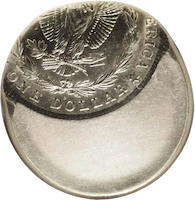
Dollar Error Coins
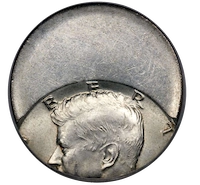
Half Dollar Error Coins
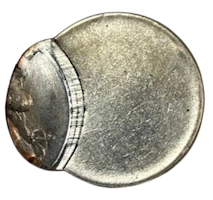
Quarter Error Coins
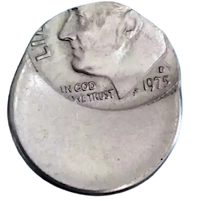
Dime Error Coins
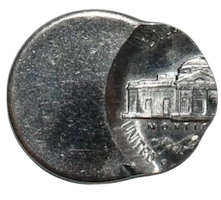
Nickel Error Coins
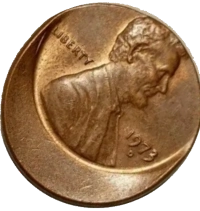
Penny Error Coins
What Are Error Coins?
Error coins are coins produced with unintended defects during the minting process. Unlike counterfeit coins, which are made outside the U.S. Mint, error coins are genuine coins that passed through official production with some kind of mistake — a misaligned die, a blank that was struck twice, a planchet punched from the wrong metal strip.
The U.S. Mint catches most errors before they reach circulation, but enough slip through every year to make error coin collecting one of the most exciting — and profitable — niches in numismatics.




The Main Types of U.S. Coin Errors
Error coins fall into three broad categories: planchet errors (problems with the metal blank before striking), die errors (problems with the die used to stamp the coin), and striking errors (problems that occur during the actual stamping process). Here's what each looks like in practice.
Doubled Die
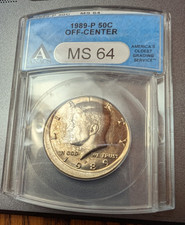
Off-Center Strike
Broadstrike
Die Cap / Brockage
Missing Clad Layer
Wrong Planchet
Rotated Die
Repunched Mint Mark
Die Cracks & Cuds
Most Valuable Error Coins Ever Sold
These are the benchmark sales that define the top of the error coin market. Most collectors won't find these in circulation, but knowing what's out there helps calibrate value expectations.
| Coin | Error Type | Sale Price | Shop |
|---|---|---|---|
| 1943 Copper Lincoln Cent | Wrong Planchet | $1,700,000+ | Shop → |
| 1955 Doubled Die Lincoln Cent | Doubled Die Obverse | $124,875 | Shop → |
| 2000-P Sacagawea / Washington Quarter Mule | Wrong Die Pairing | $194,000+ | Shop → |
| 1937-D Three-Legged Buffalo Nickel | Over-Polished Die | $99,875 | Shop → |
| 1982 No Mint Mark Roosevelt Dime | Missing Mint Mark | $2,185 | Shop → |
| 1916 Doubled Die Buffalo Nickel | Doubled Die Obverse | $281,750 | Shop → |
| Off-Center 1796 Draped Bust Cent | Off-Center Strike | $20,000+ | Shop → |
How to Find Error Coins in Circulation
Most error coins in collector hands today were found the old-fashioned way: by looking carefully at pocket change and bank rolls. The U.S. Mint strikes billions of coins every year — errors slip through more often than most people realize.
Best Coin Roll Hunting Targets for Errors
Cent rolls are the most popular starting point because they're cheap and Lincoln cents have a long history of dramatic errors. Half dollar rolls from banks occasionally contain older Kennedy halves that weren't searched. Quarter rolls from the State and National Parks programs yielded genuine doubled die finds for patient hunters.
What to Look for Under a Loupe
A 5x–10x jeweler's loupe is the only tool you need to start. Focus on the date and motto lettering first — that's where doubled dies show up most dramatically. Check the rim for broadstrikes (no rim definition) and look at the reverse alignment for die rotation errors. Any coin that looks "off" is worth a closer look.
Don't Confuse Errors with Damage
Post-mint damage — scratches, gouges, environmental corrosion, and coins that have been altered by machine — has no collector value. Genuine errors occur during the minting process and have clean, unstruck fields around the anomaly. A coin that looks like it was hit with a hammer after leaving the Mint is just a damaged coin, not an error.
What's Your Error Coin Worth?
Use our free coin value tools to get an estimate, or browse current error coin listings on eBay to see real sale prices.
Free Coin Value Estimator Price Guides & Value ChartsHow Error Coins Are Graded
Error coins are graded on the standard Sheldon 1–70 scale, just like any other coin. However, the error itself is described separately from the grade — a coin can be MS-65 (gem uncirculated) and also carry a designation like "Off-Center 25%" or "Doubled Die Obverse."
For valuable errors, professional grading by PCGS or NGC is strongly recommended. Both services will authenticate and grade the error, encapsulate it in a tamper-evident holder, and provide a description of the error type. A certified error coin is significantly easier to sell and typically commands a premium over raw (uncertified) examples of the same coin.
Where to Sell Error Coins
The right venue depends on the error's value. For common errors worth under $100, eBay is typically the best option — it reaches the largest audience of error coin buyers and allows you to set a realistic price. For errors worth $500 or more, consider a major auction house (Heritage Auctions, Stack's Bowers) or a dealer who specializes in mint errors.
Before selling any significant error coin, have it graded by PCGS or NGC. The authentication cost is small compared to the credibility it adds and the higher prices certified coins consistently achieve at auction.
As an Amazon Associate, FindRareCoins.com earns from qualifying purchases.
Where to Buy Error Coins
These sources offer the widest selection of certified and raw error coins across all types and denominations. Always verify values against recent sold listings before purchasing.
eBay — All Error Coins
eBay — Doubled Die Cents
eBay — Off-Center Strikes
Amazon — Error Coin Books
Heritage Auctions
PCGS Variety Certification
Related Coin Guides

Error Coins FAQ
Are error coins legal to own?
Yes, completely. Error coins are genuine U.S. Mint products that happened to leave the Mint with production flaws. They're legal to buy, sell, and own like any other coin. The exception is coins that were stolen directly from the Mint before being released to circulation — a very rare situation that applies to a handful of specific coins, not error coins generally.
How do I know if my coin is a genuine error or just damaged?
Genuine mint errors have sharp, clean features around the anomaly — the error happened before or during striking, so the rest of the coin shows normal Mint luster. Post-mint damage (PMD) like scratches, gouges, and environmental wear looks distinctly different: uneven metal displacement, dull surfaces around the damage, or alterations that cut into the design. When in doubt, a professional grader at PCGS or NGC can authenticate it.
What are the most common error coins found in circulation today?
Die cracks, minor die chips, and small doubled dies are the most frequently found. Off-center cents and broadstrikes show up regularly in cent rolls. The most common valuable modern error is the State Quarter series — dozens of doubled dies and a few dramatic off-centers were discovered by roll hunters between 1999 and 2008.
Do error coins need to be graded to be valuable?
Not always — common errors worth under $100 can sell raw without losing much value. But for any error worth $200 or more, professional grading by PCGS or NGC is strongly recommended. Certified coins sell faster, attract more buyers, and consistently achieve higher prices than equivalent raw coins, particularly at auction.
Where is the best place to buy error coins?
eBay has the largest selection of error coins at all price points, including certified examples from major grading services. Coin shows are excellent for finding raw errors at negotiable prices. For major errors worth thousands, Heritage Auctions and Stack's Bowers hold specialized numismatic auctions with authenticated, catalogued error coins.
Can I find valuable error coins in my pocket change?
Yes — it happens every year. Dramatic finds like off-center strikes and doubled dies regularly surface in circulation and bank rolls. The 1982 No Mint Mark Roosevelt Dime, for example, has a face value of 10 cents and is worth $75–$300+ in circulated condition. The key is knowing what to look for and checking coins systematically rather than hoping for luck.
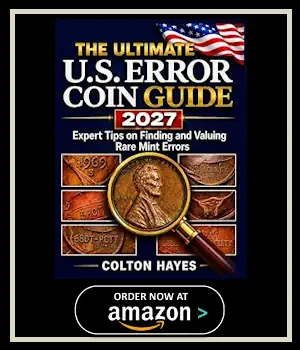
The Ultimate U.S. Error Coin Guide 2027 is a practical and easy-to-use reference designed to help you confidently identify, evaluate, and collect U.S. error coins.
 '
'