coin collections

U.S. Coin Sets

Proof Sets • Mint Sets • Silver Proof Sets • Uncirculated Sets

The Collector's Complete Guide to U.S. Coin Sets

Proof Sets, Mint Sets, Silver Sets & Specialty Issues

U.S. coin sets are among the most popular and accessible entry points in numismatics — and among the most rewarding long-term collecting pursuits. Since 1936, the United States Mint has issued annual proof sets designed specifically for collectors: coins struck with polished dies on specially prepared planchets, featuring the mirror-like fields and frosted, sculpted designs that set them apart from everyday circulation coinage. Alongside proof sets, the Mint has offered uncirculated (mint) sets since 1947, providing one business-strike example of every coin issued for circulation that year, sealed in original packaging to preserve pristine condition.

Sponsored Resource

What makes coin sets so compelling as a collecting category is the combination of completeness, condition, and history they represent. A proof set from 1955 captures an entire year of American coinage at its finest — every denomination, struck to the highest standard, still in its original holder decades later. A complete run of annual proof sets from 1936 through the present spans 90 years of U.S. monetary history, design evolution, and minting technology. Whether you collect for the artistry, the history, the silver content, or the long-term investment potential, coin sets offer a structured, satisfying collecting path with clear milestones at every stage.

📖 Know Your Values First: Before buying or selling coin sets, check the FRC Coin Price Guide to understand current market values. Key-date proof sets from the 1930s–50s and silver proof sets from all eras carry significant numismatic premiums — knowing what to look for makes all the difference.

Types of U.S. Mint Coin Sets

Proof, Silver, Mint & Specialty Sets Explained

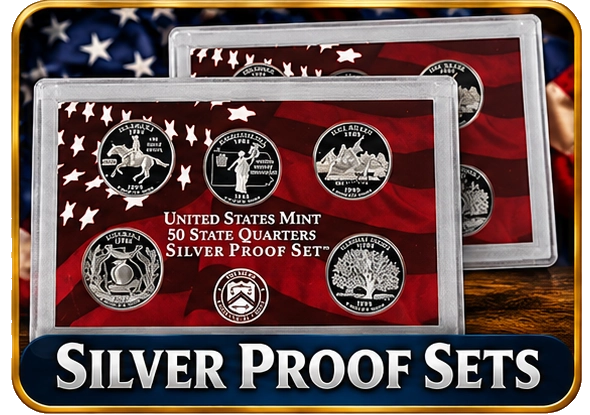
The U.S. Mint produces several distinct categories of collector coin sets, each with different compositions, mintages, and collector appeal. Standard clad proof sets (1968–present) include one proof example of every circulating denomination struck that year at the San Francisco Mint. Silver proof sets substitute 90% silver (or 99.9% silver from 2019 onward) for the dime, quarters, and half dollar, adding both precious metal content and collector appeal to the standard proof format. These sets have been offered since 1992 and are consistently among the most popular coin set offerings.

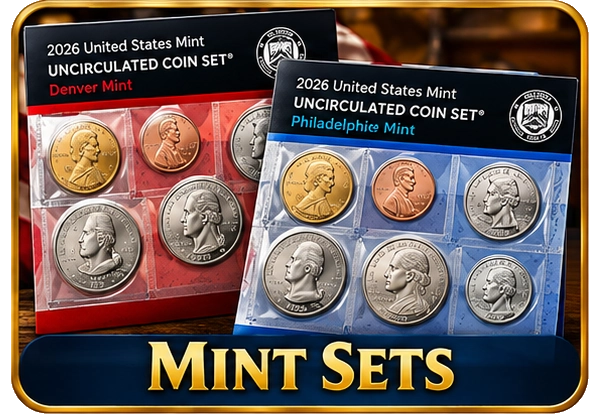
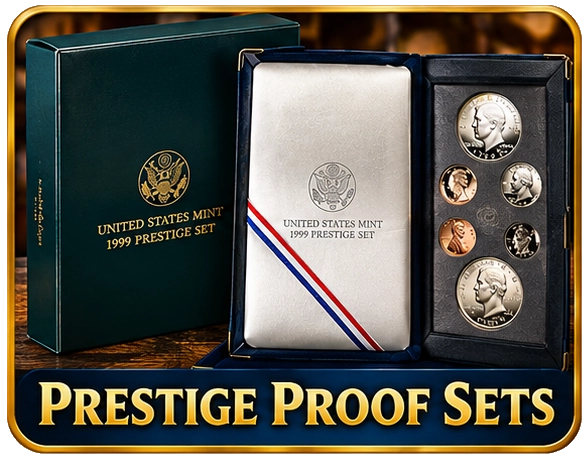
Uncirculated mint sets contain business-strike coins — the same coins produced for everyday circulation — from both the Philadelphia and Denver mints (and San Francisco in certain years), sealed in original Mint packaging. Because they represent coins struck at production speed rather than proof speed, they capture a different but equally historical snapshot of each year's coinage. Prestige proof sets, offered in certain years from 1983 through 1997, added commemorative coins to the standard proof set lineup in premium packaging. The Mint's American Innovation Dollar, American Women Quarters, and other specialty programs have generated their own dedicated sets in recent years.

Coin Set Values at a Glance

Estimated Market Ranges by Type and Era

Set Type Era / Years Silver Content Est. Value Range
Proof Set (Original) 1936–1942 90% silver $300 – $3,500+
Proof Set (Post-War) 1950–1964 90% silver $15 – $150+
Proof Set (Clad) 1968–present None (clad) $5 – $30
Silver Proof Set 1992–2018 90% silver $25 – $75
Silver Proof Set (Premium) 2019–present 99.9% silver $65 – $120
Uncirculated Mint Set 1947–1964 90% silver $15 – $200+
Uncirculated Mint Set (Clad) 1965–present None (clad) $8 – $25
Prestige Proof Set 1983–1997 None (clad) $25 – $150+
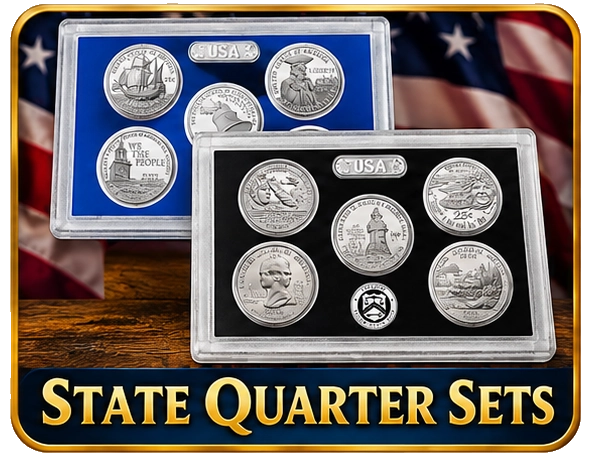
50 State Quarters Proof Set 1999–2008 Varies (clad/silver) $8 – $40

Most Collected U.S. Coin Set Categories

What Collectors Are Building Right Now
🪞

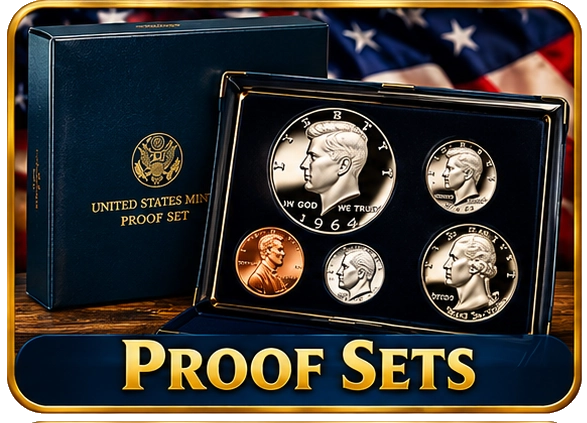
Proof Sets

Mirror-finish coins struck for collectors since 1936. The cornerstone of U.S. Mint collector offerings.

Sponsored Resource
🥈

Silver Proof Sets

90%–99.9% silver versions of annual proof sets. Popular for both numismatic appeal and silver content.

📦

Mint Sets

Uncirculated business-strike coins in original Mint packaging. Philadelphia and Denver issues each year.

🏛️

Prestige Proof Sets

Premium sets from 1983–1997 including commemorative coins. Sought for completeness and design variety.

Sponsored Resource
🗺️

State Quarter Sets

50 State Quarters and America the Beautiful programs in both clad and 90% silver. Popular starter sets.

🌟

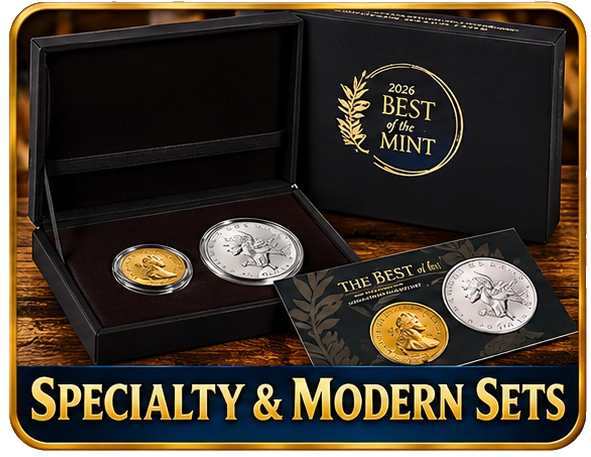
Specialty & Modern Sets

American Innovation, American Women Quarters, and other themed annual sets from the modern Mint era.


Coin Set Explorer

Sponsored Resource

Browse by Category • Click Any Set for Details & eBay Listings

Select a category above to explore coin sets

Key Dates and Most Valuable Proof Sets

The Sets Worth More Than Their Issue Price

Most modern clad proof sets (1968–present) trade at modest premiums above their original issue price — they were produced in large quantities and remain plentiful in the secondary market. The most valuable U.S. proof sets are the early issues from 1936 through 1942, when production was limited (fewer than 22,000 sets in some years) and the coins were struck in 90% silver. A complete 1936 proof set in original cellophane packaging can bring several thousand dollars depending on the grades of its five coins, with cameo and deep cameo examples commanding the highest premiums.

Among post-war sets, the 1950 proof set stands out — only 51,386 were produced, making it the lowest-mintage post-war proof set by a wide margin. It regularly trades at strong premiums above face value even in average condition. The 1955 set is similarly collected for its historically modest mintage. Among modern issues, sets containing the first-year appearance of major design changes — like the 1999 set (first 50 State Quarters) or the 2000 set (Sacagawea Dollar) — attract additional collector interest beyond baseline set value. Deep cameo (DCAM) designations on individual proof coins within a set can add considerable value when coins are removed from their holders for individual certification.

Storage Matters: Original Mint packaging is critical to preserving both the value and the collectibility of coin sets. Early proof sets in their original cellophane or hard plastic holders — especially unopened — carry significant premiums over sets that have been removed or repackaged. Never clean coins removed from sets, and store sets flat in a cool, dry environment away from direct light and sulfur-containing materials.

Silver Proof Sets: The Sweet Spot for Collectors

Precious Metal Content + Numismatic Quality

Silver proof sets, introduced in 1992, represent what many collectors consider the ideal combination of numismatic quality and precious metal value. Each set contains 90% silver versions of the dime, quarters, and half dollar — the same denominations that were struck in silver for general circulation prior to 1965. From 2019 onward, the silver content was upgraded to 99.9% fine silver across silver-content coins in the set, increasing their melt value and appeal to precious metals-oriented collectors.

A complete run of silver proof sets from 1992 through the present is an achievable goal for many collectors, with most individual sets available in the $25–$80 range depending on the year and the silver spot price. The sets also benefit from the design variety introduced by the State Quarters, America the Beautiful, and American Women Quarters programs — each year's set looks meaningfully different from the last, adding visual interest beyond the precious metal content alone. For collectors who want both investment exposure to silver and the craftsmanship of proof coinage, silver proof sets are one of the most efficient vehicles available. See our coin price guide for current silver melt calculations on these sets.

Shop U.S. Coin Sets on eBay

Browse proof sets, silver proof sets, uncirculated mint sets, and specialty issues from dealers and collectors nationwide. eBay Money Back Guarantee on every purchase.

🛍️ Shop Coin Sets on eBay 📚 Albums & Storage on Amazon

FindRareCoins.com participates in the eBay Partner Network and Amazon Associates program. Purchases made through links on this page may earn us a commission at no additional cost to you.

Where to Buy U.S. Coin Sets

Trusted Sources for Proof Sets, Mint Sets & Silver Sets

🛍️

eBay

The largest secondary market for coin sets. Millions of listings from dealers and collectors, with eBay Money Back Guarantee on every purchase.

Browse eBay →
🏛️

JM Bullion

Trusted bullion dealer carrying U.S. Mint silver proof sets and gold coin sets. Competitive pricing on current and recent issues.

Shop JM Bullion →
📊

Kitco

Live silver and gold pricing alongside coin set listings. Excellent for silver proof sets where melt value is a key component of pricing.

Visit Kitco →
🥈

Money Metals Exchange

Competitive silver proof set and uncirculated set inventory with transparent pricing and strong buyback program.

Shop Money Metals →
📚

Amazon

Albums, storage supplies, reference books, and coin holders for organizing and protecting your coin set collection.

Shop Amazon →
💰

FRC Coin Price Guide

Check current market values for proof sets, mint sets, and silver sets before you buy or sell. Updated regularly.

Check Values →

Frequently Asked Questions

What is the difference between a proof set and a mint set?

A proof set contains coins struck specifically for collectors using polished dies and polished planchets, producing mirror-like fields and frosted, highly detailed designs. These coins are never intended for circulation. A mint set (uncirculated set) contains business-strike coins — the same type struck for everyday commerce — but packaged in original Mint holders before they can be circulated or damaged. Proof coins are struck multiple times at slow speeds; mint set coins are struck once at production speed. Both are sealed in original Mint packaging and make excellent collector items, but proof coins generally command higher premiums due to their superior visual quality and specialized production.

Are old proof sets worth money?

It depends heavily on the year. Proof sets from 1936–1942 are genuinely valuable — original sets in nice condition can be worth several hundred to several thousand dollars, because production was extremely limited and the coins are 90% silver. Proof sets from 1950–1964 contain 90% silver coins and trade at modest to strong premiums depending on the year, with the 1950 set (51,386 minted) being the most valuable of the post-war era. Modern clad proof sets from 1968 onward are generally worth $5–$30, as they were produced in quantities of millions and remain widely available. Silver proof sets from 1992 onward carry a silver melt floor plus numismatic premium. Always check current values on the FRC coin price guide before buying or selling.

What is a silver proof set?

A silver proof set is a version of the annual U.S. Mint proof set in which the dime, quarters, and half dollar are struck in silver rather than the standard clad composition. From 1992 through 2018, these coins were 90% silver. Starting in 2019, the Mint upgraded to 99.9% fine silver for the silver-content coins. Silver proof sets cost more than standard clad proof sets at issue and consistently trade at premiums in the secondary market, both for their silver melt value and their collector appeal. They are among the most popular coin set offerings produced by the U.S. Mint and a natural addition to any silver coin collection.

Should I open a proof set to have the coins individually graded?

For most modern proof sets, opening the original holder to submit individual coins for PCGS or NGC grading is rarely worth the cost — submission fees plus return shipping typically exceed the premium a graded coin would add for common-date proof sets. The exception is when you have reason to believe specific coins in a set are exceptional — deep cameo proof coins with perfect surfaces in key dates can be worth considerably more when individually certified, particularly for series with low populations of high-grade examples in the population reports. Before opening any original Mint packaging, verify current population data on the PCGS or NGC registry. An opened, original-packaging proof set is also worth less as a set than an intact, sealed one.

How do I store coin sets to preserve their value?

Original Mint packaging is the best storage for coin sets — it was designed specifically to protect the coins and is itself part of the set's collector value. Store sets flat in a cool, dry environment (50–70°F, 40–50% relative humidity) away from direct sunlight and sources of sulfur (cardboard boxes, newspapers, rubber bands, and certain woods). Early proof sets in cellophane are especially sensitive to humidity and should be stored in archival-quality, acid-free holders if the original packaging is compromised. Never attempt to clean or polish coins from a set — any cleaning permanently reduces their numismatic value. A fireproof safe rated for both heat and humidity provides appropriate protection for a meaningful collection.

What is a deep cameo proof coin?

A deep cameo (DCAM) proof coin features the strongest possible contrast between its mirror-like fields and its heavily frosted, white-appearing raised designs. This "cameo" effect results from the use of fresh, specially prepared dies that transfer maximum frost to the coin's devices. As dies wear with use, the frosting diminishes and later strikes from the same die show less contrast. PCGS labels the designation "DCAM" and NGC uses "Ultra Cameo." Deep cameo examples from the 1960s and early 1970s — when the Mint did not consistently achieve heavy frosting — are significantly scarcer and more valuable than their non-DCAM counterparts. For modern proof coins (post-1977), deep cameo is the norm rather than the exception.