Canadian Coins — Royal Canadian Mint, Key Dates & Collector Guide
Loonie & Toonie • Key Dates • Silver Maple Leaf • Circulating & Bullion
The Royal Canadian Mint's Excellence
The Royal Canadian Mint is one of the world's most respected minting institutions, recognized internationally for the precision of its production standards, the artistry of its coin designs, and its pioneering work in high-relief and colored coin technology. Founded in 1908 in Ottawa, with a second facility opened in Winnipeg in 1976, the RCM produces everything from everyday circulating coinage to some of the most technically complex commemorative and bullion coins issued anywhere in the world.
What distinguishes the RCM from many of its peers is the breadth of its output. On any given year, the Mint might produce tens of millions of circulating loonies and toonies for daily commerce alongside ultra-limited proof sets, glow-in-the-dark wildlife coins, and the iconic 1 oz Silver Maple Leaf — one of the most widely traded silver bullion coins on the planet. This combination of mass production and artisanal craftsmanship at the high end has made Canadian coins a fixture in collections worldwide, not just in Canada.
Canada's Circulating Coins and Their Designs
Canada's circulating denominations are defined by their iconic national imagery, each chosen to reflect a different dimension of Canadian identity. The 1-cent penny — retired in 2013 — featured the maple leaf, while the 5-cent nickel carries a beaver, an animal whose importance to Canada's fur trade history cannot be overstated. The 10-cent dime bears the Bluenose schooner, the legendary Nova Scotia racing yacht that won the International Fishermen's Trophy four times and remains one of Canada's most enduring national symbols. The 25-cent quarter features the caribou, and the 50-cent piece — now rarely seen in circulation — carries the Canadian coat of arms.
The two most beloved denominations, however, are the $1 loonie and the $2 toonie. The loonie, introduced in 1987, takes its name from the common loon depicted on its reverse — a bird intimately associated with Canada's northern lakes and wilderness. The toonie followed in 1996 with a distinctive bimetallic construction: a nickel outer ring surrounding a bronze-colored aluminum-bronze center, with the iconic polar bear on one side of the inner disc. Together these two coins replaced the $1 and $2 paper notes and became fixtures of Canadian daily life, their designs as recognizable as the maple leaf itself.
Key Dates and Valuable Canadian Coins
Beyond everyday circulating issues, the Canadian coin series contains a number of genuinely scarce and valuable pieces that attract serious numismatic interest. The early decades of Canadian coinage — the late 19th and early 20th centuries under Queen Victoria and Edward VII — produced a number of low-mintage issues that are now key dates. The 1921 50-cent piece and the 1921 5-cent piece are among the rarest Canadian coins; most of the 1921 50-cent mintage was melted, and the survivors are worth tens of thousands of dollars in any grade, with the finest known examples having brought as much as $300,000 at auction.
The small-date and large-date varieties within certain years, the 1948 series (struck during a transitional period after India's independence required changes to the royal title), and the famous 1936 dot cents and dimes are all collectible targets that reward careful attention to variety identification. The 1955 "No Shoulder Fold" variety on the dollar, and various doubled die errors across multiple denominations, demonstrate that the Canadian series has as much variety collecting depth as its American counterpart. For certified values by date and variety, the FRC Coin Price Guide provides a useful starting reference. For related Mint background, see our Royal Canadian Mint guide.
The Silver Maple Leaf and Canadian Bullion
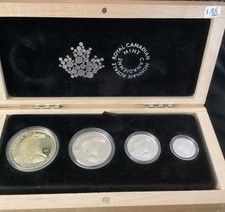
The Silver Maple Leaf, first issued in 1988, has become one of the world's most recognized silver bullion coins. Struck in .9999 fine silver (four nines pure — the highest standard regularly produced for bullion), it features the iconic maple leaf reverse and a portrait of Queen Elizabeth II on the obverse. Annual 1 oz issues are the backbone of the series, but the RCM has expanded into fractional sizes, kilo coins, and spectacular 100 kg ultra-high relief versions that serve as technical showpieces.
The Gold Maple Leaf, introduced in 1979, was a pioneer of the modern gold bullion coin market — the first coin struck in .9999 fine gold, setting a purity standard that competitors took years to match. The Canadian Maple Leaf series across both metals is IRA-eligible in the United States, making it a significant investment vehicle as well as a numismatic collectible. Annual mintage limits on the proof and specimen versions create collector editions that trade at meaningful premiums above spot.
Canadian Coin Explorer
Browse circulating classics, commemoratives, silver Maple Leafs, and key date collectibles. Select a category and click any coin for details and current listings.
Royal Canadian Mint — Circulating, Bullion & Commemorative
The Loonie, Toonie, and Modern Canadian Identity
Canada's one-dollar coin earned its nickname — the loonie — not from any financial connotation but from the common loon depicted on its reverse, designed by artist Robert-Ralph Carmichael. The loon is one of Canada's most evocative wildlife symbols: its haunting call echoes across northern lakes from British Columbia to Newfoundland, and its image on the dollar coin has made it one of the most affectionately nicknamed coins in the world. When the loonie replaced the $1 paper note in 1987, it met initial resistance but quickly became accepted — and then beloved — as a symbol of Canadian pragmatism and national character.
The toonie followed in 1996, designed by Brent Townsend with the polar bear reverse, a fitting complement to the northern wilderness theme established by the loonie. The toonie's bimetallic construction — initially a source of engineering challenges — became a point of pride for the RCM, which holds the distinction of producing one of the world's most technically sophisticated bimetallic circulation coins. Together, the loonie and toonie form the backbone of Canada's modern coinage, carrying more purchasing power in a single coin than most countries manage with their equivalent denominations.


Where to Find Canadian Coins
JM Bullion
Kitco
Money Metals Exchange
SD Bullion
Silver Gold Bull
eBay
 Find Canadian Coins on eBayMoney Back Guarantee
FindRareCoins.com participates in the eBay Partner Network, Amazon Associates, and AWIN affiliate programs. Purchases made through links on this page may earn us a commission at no additional cost to you.
Frequently Asked Questions
What is the rarest Canadian coin?
The 1936 dot cent is generally considered the rarest Canadian coin, with only a handful of confirmed examples. A dot below the date identifies coins struck in 1937 using 1936 dies after the death of King George V created production delays. One example sold at auction for over $400,000. The 1936 dot dime is similarly rare. Among more accessible coins, the 1921 50-cent piece — most of which were melted — and the 1921 5-cent nickel are the most significant rarities in the circulating series.
Are old Canadian coins made of silver?
Yes — Canadian dimes, quarters, half dollars, and dollars struck before 1968 contain silver. Coins from 1920 to 1967 are 80% silver; coins from 1967 to 1968 were transitional years where some issues are 80% silver and others are 50% silver, depending on the denomination and date. The easiest way to identify pre-1968 silver Canadian coins is the date — anything dated 1967 or earlier is 80% silver. These coins are widely available and actively collected for both their metal content and numismatic value.
What is the Silver Maple Leaf coin?
The Silver Maple Leaf is a 1 oz .9999 fine silver bullion coin produced annually by the Royal Canadian Mint since 1988. It features the iconic Canadian maple leaf on the reverse and a portrait of Queen Elizabeth II on the obverse, with a face value of $5 CAD. The Silver Maple Leaf is one of the world's most widely traded silver bullion coins, prized for its exceptional purity (four-nines fine — 99.99% pure silver), the RCM's quality standards, and its IRA eligibility in the United States.
Why is the loonie called the loonie?
The $1 coin introduced in 1987 quickly earned the nickname "loonie" from the common loon depicted on its reverse, designed by artist Robert-Ralph Carmichael. The common loon (Gavia immer) is one of Canada's most recognized wildlife species — its haunting call is synonymous with northern Canadian lakes. The nickname caught on almost immediately and is now the universally accepted informal name for the coin, even appearing in financial news when discussing the Canadian dollar's exchange rate.
What makes the 1948 Canadian dollar a key date?
The 1948 silver dollar is a key date because of the extremely low mintage of just 18,780 coins. Production was delayed that year due to India's independence in 1947, which required changes to the royal title on Canadian coins — "ET IND: IMP:" (Emperor of India) had to be removed from the legend surrounding the portrait of King George VI. While waiting for new dies, the mint struck very few coins, creating a scarcity that now commands strong premiums. Even circulated examples in Good condition are worth several hundred dollars.
Is the Royal Canadian Mint separate from the Bank of Canada?
Yes. The Royal Canadian Mint is a Crown corporation — a government-owned business — that operates independently from the Bank of Canada. The RCM is responsible for producing Canada's circulating coins, bullion coins, and commemorative issues. The Bank of Canada, by contrast, is Canada's central bank and is responsible for issuing paper currency (banknotes) and conducting monetary policy. The RCM operates two facilities: the Ottawa plant (opened 1908), which handles numismatic and special products, and the Winnipeg plant (opened 1976), which handles high-volume circulating coin production.
How do I start collecting Canadian coins?
The easiest starting point is a Whitman or Dansco coin album for Canadian cents, nickels, or dimes — searching through pocket change and rolls from the bank fills most common dates affordably. Pre-1968 silver coins (dimes, quarters, halves, dollars) are another natural entry point, widely available from dealers and eBay at modest premiums above melt value. The Charlton Standard Catalogue of Canadian Coins is the essential reference, updated annually with current values and variety information. For key dates and certified material, PCGS and NGC both service Canadian coins and provide the same authentication confidence as they do for U.S. issues.
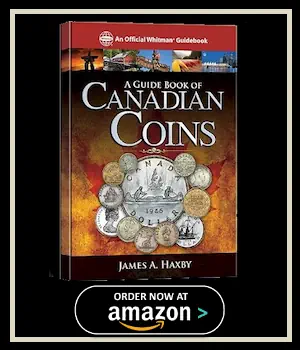
A comprehensive, full‑color reference that details the history, grading standards, and retail pricing of Canadian coins and tokens for collectors.
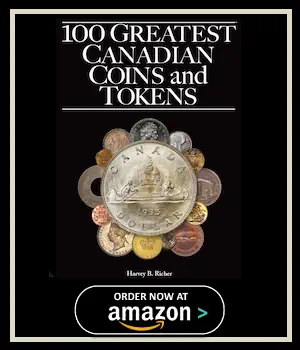
 '
'