Cheerios Dollar Value2000-P Sacagawea Prices by Grade, Records & How to Identify One
In 1999, General Mills hid 5,500 new Sacagawea dollars in boxes of Cheerios. Many carried a prototype reverse the Mint never used again. Here is what a genuine Cheerios dollar is worth, and how to tell if yours is one.
Cheerios Dollar Value by Grade
A genuine Cheerios dollar is worth about $3,000 to $5,000 in MS-63 to MS-66, roughly $5,000 to $12,000 in MS-67 and MS-68, and over $30,000 for the single finest known. In contrast, a regular 2000-P Sacagawea dollar is worth little more than face value. The difference comes down to the detail in the eagle's tail feathers.
| Grade | What It Looks Like | Typical Value | Shop |
|---|---|---|---|
| MS-63 to MS-64 | Uncirculated, a few marks or spots | $3,000 – $4,000 | eBay → |
| MS-65 | Gem, light handling only | $3,000 – $4,500 | eBay → |
| MS-66 | Premium gem, clean surfaces | $3,500 – $5,000 | eBay → |
| MS-67 | Nearly flawless, strong luster | $4,800 – $6,600 | eBay → |
| MS-68 | Finest grade PCGS has assigned | $5,300 – $12,600 | eBay → |
| MS-69 (NGC) | Single finest known | $27,600 – $33,600 | eBay → |
| Regular 2000-P (smooth feathers) | Normal Sacagawea dollar, for comparison | $1 – $25 | eBay → |
Values are for PCGS- or NGC-certified coins attributed as "Cheerios" (FS-902), based on 2024–2026 auction results. Prices for the same grade vary widely, so check recent sales before you buy or sell.

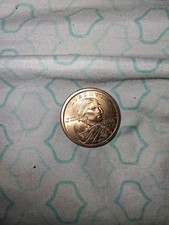


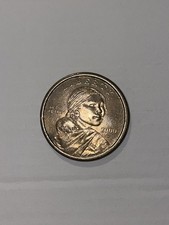


The Cheerios dollar is a 2000-P Sacagawea dollar struck with an early, more detailed version of the eagle reverse. General Mills packed these coins into Cheerios boxes in a 1999 promotion for the new "golden dollar." PCGS ranks it number 10 among the top 100 modern U.S. coins, and graders attribute it as FS-902.
Because almost nobody knew the coins were different until 2005, many were spent or handled carelessly. For values on other coins, use the coin prices guide, or try What's My Coin Worth if you aren't sure what you have. For other valuable dollar varieties, see our dollar error coins guide.
- Mint: Philadelphia (P mint mark)
- Attribution: FS-902, "Boldly Detailed Tail Feathers" (PCGS: "Cheerios Prototype Reverse")
- Distributed: 5,500 dollars in Cheerios boxes, one in about every 2,000th box
- Discovered: June 2005, by collector Pat Braddick
- Finest known: NGC MS-69, sold for $33,600 (Stack's Bowers, 2025)
Cheerios Dollar Auction Records
The highest reported price for a Cheerios dollar is $34,500, paid in July 2008 for a PCGS MS-68, according to NGC Auction Central. The single finest known coin, an NGC MS-69, sold for $27,600 in November 2024 and then for $33,600 in August 2025, both at Stack's Bowers.
Prices have settled well below that early peak, however. Most MS-68 coins now trade for $5,300 to $12,600, and MS-67 examples bring about $5,000 to $6,600. The table below shows the top sales along with recent results for context.
| Grade | Price | Sale | Shop |
|---|---|---|---|
| PCGS MS-68 | $34,500 | July 2008 (highest reported) | eBay → |
| NGC MS-69 | $33,600 | Stack's Bowers, August 2025 (finest known) | eBay → |
| NGC MS-69 (same coin) | $27,600 | Stack's Bowers, November 2024 | eBay → |
| PCGS MS-68 | $12,600 | Heritage, August 2022 | eBay → |
| PCGS MS-68 | $12,000 | Stack's Bowers, December 2025 | eBay → |
| PCGS MS-67 | $6,600 | Stack's Bowers, December 2025 | eBay → |
The Cheerios Dollar Promotion
In 1999, the U.S. Mint teamed up with General Mills to introduce the new Sacagawea dollar before it reached banks. About 10 million boxes of Cheerios each held a new 2000-dated Lincoln cent. In addition, roughly every 2,000th box held a 2000-P Sacagawea dollar, for a total of 5,500 dollars.
The Mint struck those coins early, while its engravers were still refining the reverse design. Before regular production began, they smoothed out the eagle's tail feathers. As a result, the cereal coins carry a reverse that almost never appears on the hundreds of millions of 2000-P dollars made afterward.
Discovered Six Years Later
Nobody noticed the difference at first. Then, in June 2005, collector Pat Braddick saw that the tail feathers on his Cheerios dollar didn't match a regular one. Once experts confirmed the variety, collectors began opening the cereal packages they had saved.
Still, no one knows how many prototype coins survive. Many families found a dollar in their cereal and simply spent it. Furthermore, not every coin in a Cheerios package has the prototype reverse, so the true number is almost certainly lower than 5,500.
How to Identify a Cheerios Dollar
A genuine Cheerios dollar has boldly detailed tail feathers on the eagle, with raised center shafts and fine lines running through each feather. On a regular 2000-P Sacagawea dollar, by contrast, the tail feathers are smooth and plain. Look at the reverse with a 5x loupe, and compare it side by side with a normal 2000-P dollar.
Check the Date and Mint Mark
The coin must show the date 2000 with a P mint mark below it on the obverse. Denver coins and later dates were never part of the promotion. Also, the variety only matters on the reverse, so the obverse of a Cheerios dollar looks just like any other 2000-P.
Compare the Tail Feathers
Focus on the long feathers at the bottom of the eagle's tail. On the prototype reverse, each feather shows a clear raised shaft down the middle, like a real feather. On the regular design, the same feathers are flat with little or no inner detail. Once you have seen both side by side, the difference is easy to spot.
Are Sealed Cheerios Packages Worth More?
A sealed Cheerios package does not guarantee a Cheerios dollar, because PCGS has opened genuine, untampered packages that held a regular reverse. The card also covers the reverse, so you can't see the tail feathers without opening it.
For that reason, most buyers pay for the coin rather than the cardboard. PCGS only labels a coin "Cheerios" when it has the prototype reverse, no matter where it came from. If you have a sealed package, you can open it carefully, check the feathers, and keep the card and the matching cent together if the coin is the real variety.
What to Do If You Think You Have One
If your 2000-P Sacagawea dollar has detailed tail feathers with raised shafts, compare it with photos on PCGS CoinFacts or with a regular 2000-P dollar. If it matches, submit it to PCGS or NGC and ask for variety attribution. A holder that names the variety sells for far more than one that lists only the date and mint.
Don't clean the coin, since even light rubbing can drop it several grades and cost thousands at this level. Store it in a soft, PVC-free flip until you submit it. For a quick first opinion from a photo, you can also try the free Error Coin Identifier.

 '