Error Coin Identifier
Check off your coin's visual symptoms below and get an instant identification, value range, and grading tips — no photo upload needed.
Found a coin that doesn't look quite right? This free tool works from a simple checklist — select your coin type, check off every visual symptom you can see, and it will analyze the combination and identify the most likely error.
 Search This Error on eBay
Error coins are among the most exciting finds in all of numismatics. They're the coins that slipped through the US Mint's quality control with something visibly wrong — a doubled image, a misaligned strike, missing metal, or a design punched onto the wrong blank entirely. To a collector, that "mistake" can be worth dozens, hundreds, or even thousands of dollars above face value. The challenge is knowing exactly what you have.
Most collectors find a suspicious coin and spend hours down internet rabbit holes trying to match photos and descriptions. This tool cuts that process down to seconds — check off what you see, and it returns a specific error type with an explanation of what happened at the mint, a realistic value range by grade, grading and confirmation tips, and a direct eBay search link so you can see what similar examples are actually selling for right now.
- Use a 5x–10x loupe or magnifying glass — many doubled dies are subtle
- Tilt the coin at different angles to catch raised lines, extra metal, or weak areas
- Compare it to a normal example of the same coin if you have one
- Check both the obverse (heads) and reverse (tails) — errors often affect both sides
- Note the coin's denomination and approximate date before starting
If your coin has multiple things going on at once, check every symptom that applies — some of the most valuable errors are combinations, like an off-center strike on the wrong planchet.
Common Error Types at a Glance
Not sure what you're looking at? This quick reference covers the six most frequently encountered mint error categories and what causes them.
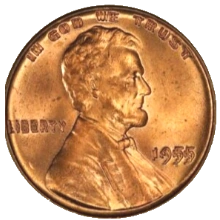
Doubled Die Errors
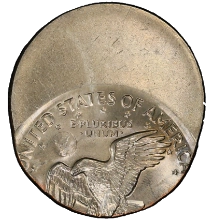
Off-Center Strikes
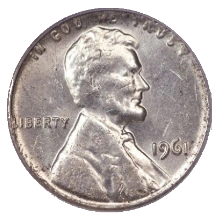
Wrong Planchet Errors
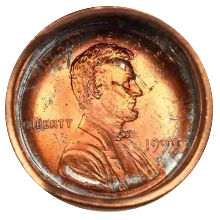
Die Cap & Brockage Errors
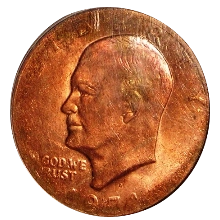
Missing Clad Layer
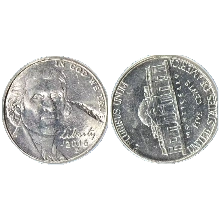
Rotated Die Errors
Where to Research & Buy Error Coins
Whether you're looking to sell a find, buy a certified example, or deepen your knowledge, these are the best resources for error coin collectors.
eBay — Error Coins
Amazon — Error Coin Books
PCGS CoinFacts
NGC Coin Explorer
FRC Error Coin Value Guide
FRC Coin Price Guide
Related Guides
Find Error Coins on eBay
Money Back Guarantee
FindRareCoins.com may earn a commission on purchases at no extra cost to you.
Frequently Asked Questions
How do I know if my coin is a genuine mint error or just damage?
This is the single most important question in error coin collecting. Genuine mint errors happen before the coin leaves the US Mint — the metal is affected during the minting process itself (the striking, the die, or the planchet). Post-mint damage happens after: someone scratched it, bent it, drilled it, or ran it through a machine. The key distinction is that genuine errors show smooth, original mint luster in the affected areas, while damage typically shows raised or jagged edges, tool marks, or disrupted surface texture. If a doubled image looks fuzzy or mechanical rather than sharp and layered, it may be machine doubling (worth nothing) rather than a true doubled die (worth a premium). When in doubt, have it examined by a professional numismatist or submit it to PCGS or NGC for authentication.
Should I clean my error coin before having it graded?
Never clean a coin you intend to submit for grading or sell to a collector. Cleaning — even gentle cleaning — removes the original surface, destroys mint luster, and leaves hairline scratches that are immediately visible under grading-level magnification. A cleaned coin will receive a "details" or "altered surface" designation from PCGS and NGC, which dramatically reduces its value and sometimes makes it unsaleable to serious collectors. Leave the coin exactly as you found it. A little dirt or toning won't hurt the grade nearly as much as cleaning will.
Is it worth paying to have an error coin certified by PCGS or NGC?
For any error coin you believe is worth over $75–$100, certification is almost always worth the cost. PCGS and NGC fees typically run $30–$65 per coin depending on the tier and turnaround time. Certified coins sell for significantly more than raw (uncertified) coins of the same grade because buyers can trust the grade and authenticity without examining the coin themselves. For major errors — wrong planchet, large off-center strikes, dramatic doubled dies — the certification premium can easily be 2x to 5x the raw price. For minor errors on common coins worth under $50, the economics may not justify certification.
What makes one error coin more valuable than another of the same type?
Several factors drive value within any error category. Severity is the biggest: a 50% off-center strike is far more valuable than a 5% shift. Grade matters enormously — a Mint State doubled die commands multiples of what the same coin grades circulated. Rarity of the specific coin and date adds a multiplier (an error on a key date is worth more than the same error on a common date). Denomination plays a role too — errors on gold coins and silver dollars tend to attract more premium than errors on cents, simply because the base coin is already valuable. Finally, eye appeal matters: an error that looks dramatic and displays well sells better than a subtle one.
Can I find error coins in everyday pocket change?
Yes — and many collectors do exactly that. Off-center strikes, rotated dies, missing clad layers, lamination errors, and die cracks can all turn up in circulation. Doubled dies are harder to find in change since the most dramatic examples tend to get pulled out quickly, but minor varieties still circulate. The best practice is to check every coin before spending it. Pay particular attention to dimes and quarters for missing clad layers (they'll look copper-colored on one side), and examine Lincoln cents carefully for doubling in the lettering and date. A loupe and good light source are all you need to start.
What's the difference between a doubled die and machine doubling?
A doubled die error occurs during the die-making process, when the hub imprints the working die twice at slightly different angles. Every coin struck from that die will show the same doubling in the same locations — it's in the die itself. The doubled image on a true doubled die appears as two distinct, fully formed layers of the design element, often with a shelf-like separation. Machine doubling (also called mechanical doubling or strike doubling) is a completely different phenomenon that happens during the striking process — the die bounces or shifts slightly as it strikes the planchet. Machine doubling produces a flat, shelf-like displacement of the metal with no real depth or separation between the images. It adds zero premium and is extremely common. True doubled die coins are far rarer and worth significantly more — which is why the distinction matters so much to collectors and graders.
Do I need to upload a photo to use this tool?
No. The Error Coin Identifier works from a checklist, not a photo upload — you select your coin's denomination and check off the visual symptoms you can see (doubled text, an off-center strike, a missing clad layer, and so on), and the tool analyzes that combination to identify the most likely error type. Photo-based identification can be unreliable for subtle errors like machine doubling versus a true doubled die, so a guided checklist approach, paired with your own close examination under a loupe, tends to produce a more accurate starting point.
The Ultimate U.S. Error Coin Guide 2027 is a practical and easy-to-use reference designed to help you confidently identify, evaluate, and collect U.S. error coins.
 '
'