FindRareCoins.com · 2026 Edition
Baseball Card Price Guide
Real sold prices for the hobby's key cards — T206 Wagner and Plank, Goudey Ruth and Gehrig, 1952 Topps Mantle, and the Griffey, Jeter and Trout rookies — by PSA grade.
eBay Sold Baseball Card Price Finder
Most Valuable Baseball Cards in This Guide
FindRareCoins.com · Price Guide
How Much Are Baseball Cards Worth?
A baseball card's value comes down to three things: the player, whether it's the right card of that player (usually the rookie card or a key pre-war issue), and its grade. Most cards from the 1980s and 1990s sell for under a dollar, while a handful of graded cards — the T206 Wagner, the 1952 Topps Mantle, the Goudey Ruths — have sold for millions. The same 1993 SP Derek Jeter rookie that sells for about $130 raw has brought more than $250,000 in PSA 10.
The figures in this guide come from verified sales: auction results from Heritage, Goldin, Memory Lane, Robert Edward Auctions and Mile High, plus recent eBay completed sales tracked by price-guide services. Each table shows typical ranges at three grades that matter for that era, along with the most notable confirmed sale. Record prices reflect a single exceptional card; use the grade columns for what a typical example brings.
Because the pre-war and vintage markets have risen sharply since 2020, older guides that still circulate online often understate values for low-grade Mantles, Ruths and T206 Hall of Famers by half or more. If you collect across categories, our collectibles price guides — including the comic book and vinyl record guides — use the same verified-sales approach.
Key Facts
- Most expensive baseball card: 1952 Topps Mickey Mantle, SGC 9.5 — $12.6 million at Heritage in August 2022.
- Most expensive sports card overall: a 2007-08 Upper Deck Michael Jordan/Kobe Bryant dual Logoman autograph — $12.93 million in August 2025.
- Most expensive pre-war card: T206 Honus Wagner, SGC 2 — $7.25 million in a 2022 private sale.
- Modern baseball record: a 2013 Bowman Chrome Aaron Judge card sold for $5.2 million in March 2026, passing Mike Trout's $3.94 million Superfractor.
Pre-War Tobacco & Gum Card Values (1909–1941)
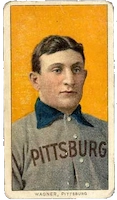
The T206 Honus Wagner is the most famous card in the hobby, and its prices show why pre-war cards sit at the top of the market: a PSA 1 — the lowest numerical grade — sold for $5.124 million, more than four times the previous PSA 1 record of $1.146 million set in 2020. Only about 60 authentic Wagners are known, because the American Tobacco Company stopped printing it early in the 1909–11 run.
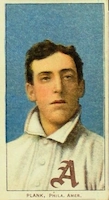
The T206 set's second great rarity is Eddie Plank, also pulled early, likely because of a damaged printing plate. A PSA 4 Plank set a record for the grade at $318,997 in 2024, and a PSA 7 has sold for $690,000. Ty Cobb, Cy Young, Walter Johnson and Christy Mathewson are more available but still command thousands in mid grades, while T206 commons remain affordable entry points into pre-war collecting.
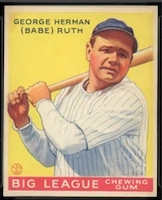
The 1933 Goudey set introduced gum-pack baseball cards and four separate Babe Ruth cards. The #53 "yellow" Ruth is the most valuable, with a PSA 9 bringing $4.21 million in 2021, and Lou Gehrig's #92 is the set's other cornerstone. Low-grade examples of both now sell in the thousands, not the hundreds older guides list.
| Card | PSA 1 | PSA 3 | PSA 5 | Notable Sale | Shop |
|---|---|---|---|---|---|
| ★★★ T206 Honus Wagner (1909–11) | $1.1M–$5.1M | $6M+ | — | $7.25M (SGC 2, 2022); $5.124M (PSA 1) | eBay → |
| ★★★ T206 Eddie Plank (1909–11) | $75,000–$120,000 | $150,000–$250,000 | $350,000+ | $690,000 (PSA 7); $318,997 (PSA 4, 2024) | eBay → |
| ★★ T206 Ty Cobb (any of four poses) | $2,500–$5,000 | $6,000–$12,000 | $20,000–$40,000 | — | eBay → |
| ★ T206 Hall of Famers (Cy Young, Walter Johnson, Christy Mathewson) | $400–$1,000 | $1,000–$2,500 | $3,000–$8,000 | — | eBay → |
| T206 common player | $40–$80 | $80–$175 | $200–$400 | — | eBay → |
| ★★★ 1933 Goudey Babe Ruth #53 | $5,000–$8,000 | $12,000–$20,000 | $25,000–$45,000 | $4.21M (PSA 9, 2021); $203,150 (PSA 8) | eBay → |
| ★★ 1933 Goudey Lou Gehrig #92 | $4,000–$6,000 | $12,000–$20,000 | $20,000–$30,000 | $225,700 (SGC 9, 2026) | eBay → |
T206 Wagner records: an SGC 2 sold privately for $7.25 million in 2022 and an SGC 3 brought $6.6 million at auction in 2021. Even half of a Wagner — a cut card sold in two pieces — brought $475,960 in 2022.
Vintage Card Values (1948–1979)
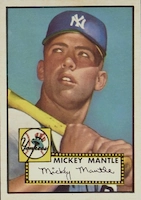
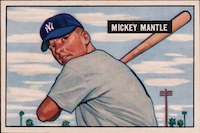
The 1952 Topps Mickey Mantle #311 is the most valuable post-war card, and every grade of it is a major purchase: PSA 1 copies sold for roughly $28,000–$60,000 in late 2025, PSA 3s for $70,000–$80,000, and the record SGC 9.5 for $12.6 million. Mantle's true rookie, the 1951 Bowman #253, is more affordable in low grade but has passed $500,000 in PSA 8.
Bowman and Topps produced the first nationally distributed post-war sets — Bowman starting in 1948 and Topps launching its first major set in 1952 — so these years contain the rookie cards of Willie Mays, Hank Aaron and Sandy Koufax. High-grade copies are scarce because cards of the era were handled, flipped and stored in shoeboxes; a PSA 9 Koufax rookie sold for $390,400 in July 2026.
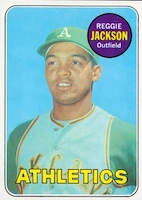
Later vintage rookies like Nolan Ryan (1968) and Reggie Jackson (1969) are affordable in mid grades but jump sharply at the top: Reggie's PSA 10 crossed $1 million. For vintage cards, centering and corner wear decide the grade, and the gap between PSA 8 and PSA 9 is often five to ten times the price.
| Card | PSA 3 | PSA 6 | PSA 8 | Notable Sale | Shop |
|---|---|---|---|---|---|
| ★★★ 1952 Topps Mickey Mantle #311 | $70,000–$80,000 | $200,000–$350,000 | $1M–$1.8M | $12.6M (SGC 9.5, Heritage 2022) | eBay → |
| ★★★ 1951 Bowman Mickey Mantle #253 (RC) | $25,000–$40,000 | $55,000–$80,000 | $390,000–$575,000 | $3.19M (PSA 9, 2022) | eBay → |
| ★★ 1951 Bowman Willie Mays #305 (RC) | $6,000–$10,000 | $20,000–$35,000 | ~$100,000 | — | eBay → |
| ★★ 1954 Topps Hank Aaron #128 (RC) | $4,000–$5,500 | $9,000–$13,000 | ~$38,000 | — | eBay → |
| ★★ 1955 Topps Sandy Koufax #123 (RC) | $1,500–$2,500 | $5,000–$7,500 | ~$39,000 | $390,400 (PSA 9, 2026) | eBay → |
| ★ 1968 Topps Nolan Ryan #177 (RC) | $1,000–$1,500 | $3,000–$4,500 | ~$11,000 | $100,650 (PSA 9) | eBay → |
| ★ 1969 Topps Reggie Jackson #260 (RC) | $250–$400 | $700–$1,000 | $3,500–$6,000 | $1,005,600 (PSA 10, 2021) | eBay → |
1952 Topps #311: the August 2022 Heritage sale of the SGC 9.5 Mantle stood as the highest price ever paid for a sports card until August 2025, when a Jordan/Kobe dual Logoman autograph sold for $12.93 million. It remains the most expensive baseball card.
Modern Card Values (1980–Present)
For base rookie cards from the 1980s onward, nearly all the value sits in PSA 10. The 1993 SP Derek Jeter is the clearest example: about $130 raw, roughly $1,200 in PSA 9, and around $250,000 in PSA 10, because the card's foil surface chips so easily that true gem copies are rare. The 1989 Upper Deck Ken Griffey Jr. follows the same curve on a smaller scale.
The biggest modern sales are serial-numbered and autographed parallels rather than base cards. Mike Trout's 2009 Bowman Chrome Superfractor autograph — a 1/1 graded BGS 9 — sold for $3.94 million in 2020, and a 2013 Bowman Chrome Aaron Judge card topped it at $5.2 million in March 2026. Trout's flagship 2011 Topps Update base rookie, by contrast, is widely available and sells for about $1,000 in PSA 10.
Cards from the "junk wax" years (roughly 1986–1994) were printed in enormous quantities, so most are worth very little even in high grade. Before submitting modern cards for grading, compare the grading fee against what a PSA 9 actually sells for — for many cards, only a 10 justifies the cost.
| Card | Raw | PSA 9 | PSA 10 | Notable Sale | Shop |
|---|---|---|---|---|---|
| ★★★ 1993 SP Derek Jeter Foil #279 (RC) | $100–$160 | $1,000–$1,300 | ~$250,000 | — | eBay → |
| ★★ 1989 Upper Deck Ken Griffey Jr. #1 (RC) | $75–$110 | $400–$500 | $5,000–$6,500 | — | eBay → |
| ★ 2011 Topps Update Mike Trout #US175 (RC) | $225–$300 | $350–$450 | $900–$1,100 | $3.94M (2009 Bowman Chrome Superfractor auto, BGS 9) | eBay → |
| Junk wax era star rookie (1986–1994, common issue) | $1–$5 | $15–$40 | $50–$200 | — | eBay → |
Parallels and 1/1s sell on a separate market from base cards. Always confirm the exact card — set, number, parallel and serial number — before comparing prices; a Trout "Update" rookie and a Trout Bowman Chrome Superfractor are worlds apart.
How Baseball Cards Are Graded
PSA, SGC and BGS (Beckett) grade cards on a 1–10 scale based on four things: centering, corners, edges and surface. A single number decides most of a card's value, and the jumps are steep at the top — for a modern rookie, PSA 10 can be worth 5 to 200 times a PSA 9.
PSA dominates resale value for most cards, SGC is especially respected for pre-war and vintage cards, and BGS uses four subgrades, with a rare "Black Label" for perfect 10s across all four. Cards that are authentic but altered or too damaged to grade receive an "Authentic" designation instead of a number.
| PSA Grade | What It Means |
|---|---|
| GEM MT 10 | Four sharp corners, sharp focus, full original gloss, no staining; centering about 60/40 or better on the front. |
| MINT 9 | A superb card with one minor flaw, such as slight wax staining or a minor printing imperfection. |
| NM-MT 8 | Looks Mint at a glance; slight fraying on a corner or minor centering issues on close inspection. |
| NM 7 – EX-MT 6 | Light corner wear and minor surface wear visible; still a strong, attractive card. |
| EX 5 – VG 3 | Rounded corners, visible surface wear, possible light creases. |
| GD 2 – PR 1 | Heavy wear, creases, rounded or damaged corners. For icons like Wagner and Mantle, still worth five to seven figures. |


Did You Know?
10 Baseball Card Facts
- The T206 Honus Wagner sold for $7.25 million in a 2022 private sale (SGC 2). Only about 60 authentic copies are known; the American Tobacco Company stopped printing it early, likely because Wagner objected to its use.
- The 1952 Topps Mickey Mantle #311 in SGC 9.5 sold for $12.6 million at Heritage in August 2022 — the record for any sports card until a Jordan/Kobe dual autograph brought $12.93 million in 2025.
- Mike Trout's 2009 Bowman Chrome Superfractor autograph, a 1/1 graded BGS 9, sold for $3.94 million in 2020. A 2013 Bowman Chrome Aaron Judge card passed it at $5.2 million in March 2026.
- The 1914 Baltimore News Babe Ruth — printed while Ruth was a minor-league pitcher — is rarer than the Wagner, with roughly 10 known. An SGC 3 sold for $7.2 million in December 2023.
- A PSA 9 1933 Goudey Babe Ruth #53 sold for $4.21 million in 2021, and a PSA 9 1951 Bowman Mickey Mantle brought $3.19 million in 2022.
- No major baseball card sets were produced during World War II; paper shortages halted gum cards until Leaf and Bowman returned in 1948. Topps issued its first major set in 1952.
- The 1933 Goudey set has no #106 in packs. Collectors who wrote in to complain were mailed a Napoleon Lajoie card in 1934, making it one of the scarcest cards of the era.
- The junk wax era (about 1986–1994) printed cards in such quantities that most are nearly worthless — even PSA 10 copies of many star rookies sell for under $200.
- The 1993 SP Derek Jeter rookie's foil front chips so easily that PSA 10 copies are scarce, which is why a $130 raw card can be worth around $250,000 graded Gem Mint.
- A PSA 4 T206 Eddie Plank sold for $318,997 in 2024 — a record for the grade — and a PSA 7 Plank has sold for $690,000.
Protect Cards Before You Grade or Sell
Corners and surfaces decide grades, and most damage happens after a card leaves the pack. Penny sleeves, semi-rigid card savers (the holder PSA prefers for submissions) and top loaders cost pennies per card and keep a potential 10 from becoming an 8.
Shop Card Supplies on AmazonWhere to Buy & Price Baseball Cards
eBay holds the deepest pool of graded and raw listings and the sold-price history that most price guides are built on. For six- and seven-figure cards, major auction houses handle authentication and provenance, but nearly every card in this guide trades regularly on eBay.

Baseball Card Price Guide FAQ
What is the most valuable baseball card ever sold?
The 1952 Topps Mickey Mantle #311 graded SGC 9.5 sold for $12.6 million at Heritage Auctions in August 2022, the highest price for any baseball card. Close behind are a T206 Honus Wagner (SGC 2) at $7.25 million in a 2022 private sale and a 1914 Baltimore News Babe Ruth (SGC 3) at $7.2 million in 2023. The overall sports-card record is a Michael Jordan/Kobe Bryant dual autograph that sold for $12.93 million in 2025.
How are baseball cards graded?
PSA, SGC and BGS grade cards on a 1–10 scale by examining centering, corners, edges and surface. PSA 10 Gem Mint is the top grade at PSA; BGS uses four subgrades and awards a Black Label when all four are perfect 10s. Grading fees depend on the card's declared value and turnaround time, ranging from bulk tiers of a few dozen dollars per card to hundreds of dollars or more for high-value submissions — check each company's current fee schedule before submitting.
Why is the T206 Honus Wagner so valuable?
Only about 60 authentic T206 Wagners are known, because the American Tobacco Company halted the card early in the 1909–11 run — most likely because Wagner objected to its production. It combines extreme scarcity, an all-time great player and a century of fame as the hobby's "Holy Grail." Even a PSA 1, the lowest numerical grade, has sold for $5.124 million.
What is the difference between PSA 9 and PSA 10?
A PSA 10 has essentially no visible flaws and centering of roughly 60/40 or better; a PSA 9 has one minor flaw. The price gap can be enormous: a 1989 Upper Deck Ken Griffey Jr. rookie sells for about $450 in PSA 9 versus roughly $5,000–$6,500 in PSA 10, and a 1993 SP Derek Jeter goes from about $1,200 to around $250,000.
Are cards from the 1980s and 1990s worth anything?
Most are not. Card makers overproduced during the "junk wax" era, roughly 1986–1994, so most cards from those years sell for pennies. The exceptions are key rookies in top grades and genuinely scarce issues: the 1993 SP Derek Jeter and 1989 Upper Deck Griffey in PSA 10 are the standouts. Check PSA 10 sold prices before paying to grade any card from this period.
Should I get my baseball cards graded?
Grade a card when the graded value at a realistic grade clearly exceeds the raw value plus the grading fee and shipping. For pre-war and vintage stars, grading almost always pays because it confirms authenticity and removes buyer doubt about trimming. For modern cards, it usually only pays if the card has a real chance at a PSA 10.
How can I tell if an old card has been trimmed or altered?
Measure it against the set's standard size, look for edges that are unusually sharp or uneven compared to the card's surface wear, and check for recoloring under magnification. Because these alterations can be hard to spot by eye, buy expensive vintage cards already graded by PSA, SGC or BGS, which screen for trimming and restoration.
How do I find out what a baseball card is actually worth?
Check completed sold listings on eBay for the exact card, set number and grade — asking prices on active listings are often far above what cards sell for. The price finder at the top of this page builds that search for you. For graded cards, the grading company's population report shows how many copies exist at each grade, which helps explain big price gaps between grades.
Sports Illustrated's has polled its Major League Baseball experts to determine the ultimate Top 10 in more than 20 categories.
 '
'