Quarters — Complete U.S. Quarter Dollar Series Guide & Values
Draped Bust to Washington • 225+ Years of American Coinage
Value Overview by Series
Values shown are broad approximate ranges for common-date circulated examples within each series. See each series' dedicated guide for complete date-by-date values and key dates.
| Series | Years | Composition | Common Date Range | Guide |
|---|---|---|---|---|
| Draped Bust | 1796–1807 | .8924 Silver | $1,500–$25,000+ | View Guide → |
| Capped Bust | 1815–1838 | .8924 Silver | $100–$3,000+ | View Guide → |
| Seated Liberty | 1838–1891 | 90% Silver | $25–$300+ | View Guide → |
| Barber | 1892–1916 | 90% Silver | $8–$40+ | View Guide → |
| Standing Liberty | 1916–1930 | 90% Silver | $8–$50+ | View Guide → |
| Washington (silver) | 1932–1964 | 90% Silver | $3–$15+ | View Guide → |
| Washington (clad) | 1965–present | Cu-Ni Clad | $0.25–$3+ | View Guide → |
| State & ATB Quarters | 1999–2021 | Cu-Ni Clad | $0.25–$5+ | Shop eBay → |
The History of the U.S. Quarter
The quarter dollar was authorized in the Mint Act of 1792, but unlike the dollar and half dollar, it wasn't the Mint's early priority — the first quarters weren't struck until 1796, and even then only 6,146 pieces of the Draped Bust design were made, a one-year-only type using the small eagle reverse. What followed was a genuinely fragmented early production history rather than a steady start: quarter production stopped completely after 1796 and didn't resume until 1804 (now with a heraldic eagle reverse), then halted again after 1807 for a seven-year gap tied to coin shortages during the War of 1812. Production resumed in 1815 with John Reich's Capped Bust design and continued with further interruptions through the 1820s.
Quarter production became consistent starting in 1831, and — with the sole exceptions of 1922, 1931, and 1933, when Depression-era demand for coinage collapsed — the Mint has struck quarters every year since. The Seated Liberty design (1838–1891) introduced the first .900 fine silver standard for the denomination, a purity level that held until the switch to copper-nickel clad composition in 1965. Along the way the quarter carried five major circulating designs before Washington's portrait arrived in 1932 to mark the bicentennial of his birth — a design (in modified form) still in production today, nearly a century later.
Every U.S. Quarter Series
The quarter denomination encompasses six major design eras across its 225+ year history. Click any series below for a dedicated guide with date-by-date values, key dates, and grading information.
Early Quarters
Seated Liberty Quarters
Barber Quarters
Standing Liberty Quarters
Washington Quarters
Quarter Error Coins
Full Coin Price Guide
Silver Bullion Guide
Silver Content Across the Series
Quarter composition changed twice in ways that matter for evaluating a coin's melt value. From 1796 through 1837, quarters were struck in .8924 fine silver (a slightly lower purity standard than later coinage). Starting with the Seated Liberty Quarter in 1838, the Mint moved to the .900 fine silver standard that continued through 1964 — giving these coins approximately 0.1808 troy ounces of pure silver per coin. In 1965, facing the same silver shortage that affected the dime and half dollar, the Mint switched permanently to a copper-nickel clad composition with no silver content at all, which remains the standard for circulating quarters today.
This means date recognition alone tells you most of what you need to know about a quarter's baseline bullion value: any quarter dated 1964 or earlier is 90% silver (or the earlier .8924 standard for pre-1838 examples), while any quarter dated 1965 or later — including every State Quarter, America the Beautiful Quarter, and American Women Quarter — is silver-free clad composition worth face value unless it carries a numismatic premium. A small number of special silver proof versions of modern quarters have been struck for collectors since 1992, but these are clearly marked and sold separately from circulating coinage.

![[Lot of 10] Barber Quarter 25c 90% Silver F-VF Full Rim/Date US Silver Coin Lot](https://i.ebayimg.com/images/g/6VIAAeSw8~lqvXcs/s-l225.jpg)

Collecting the Quarter Denomination
The quarter's long and eventful design history makes it an excellent denomination for type collectors — building a complete type set spanning Draped Bust, Capped Bust, Seated Liberty, Barber, Standing Liberty, and Washington designs tells the story of American coin artistry across more than two centuries in just six representative coins. Because common-date examples of the later silver series (Barber, Standing Liberty, early Washington) are widely available and affordable, a meaningful type set is achievable for most collectors without requiring pursuit of the denomination's rarest key dates — though the earliest types (1796 Draped Bust, 1804 quarters) command serious premiums even in heavily worn condition due to their genuine scarcity.
For collectors focused on silver content and bullion value, pre-1965 quarters (commonly traded as "junk silver" in the bullion trade when in worn, non-collectible condition) offer an accessible way to acquire silver holdings while retaining numismatic character. PCGS and NGC both grade quarters across every series, and certification becomes increasingly important as coin value rises — particularly for the earliest 18th and 19th century types and any of the well-documented key dates (1796, 1823/2, 1901-S, 1916 Standing Liberty) where authentication and condition assessment carry substantial weight in final value.
Where to Buy Quarters
eBay — All Quarter Series
eBay — 90% Silver Quarters
JM Bullion
Kitco
Money Metals Exchange
SD Bullion
Silver Gold Bull
FRC Coin Price Guide
 Find Quarters on eBayMoney Back Guarantee
FindRareCoins.com participates in the eBay Partner Network, Amazon Associates, and AWIN affiliate programs. Purchases made through links on this page may earn us a commission at no additional cost to you.
Frequently Asked Questions
What is the oldest U.S. quarter series?
The Draped Bust Quarter, first struck in 1796, is the earliest series. Only 6,146 were made that year, using the small eagle reverse — a one-year-only type before production stopped entirely. The Draped Bust design returned in 1804 with a new heraldic eagle reverse and continued (with another interruption from 1808–1814) through 1807. Together with the Capped Bust Quarter (1815–1838) that followed, these are collectively referred to as "Early Quarters" and covered in our dedicated guide given their shared collecting characteristics and generally higher entry-level values.
Why wasn't the quarter struck every year from the start?
Unlike the cent or half dime, the quarter wasn't an early priority for the Mint, and its production depended on citizens depositing enough silver to justify a striking run — there was no guaranteed annual mintage in the earliest decades. The result was a genuinely fragmented start: quarters were struck in 1796, then not again until 1804, then not again from 1808–1814 (a gap tied to coin shortages during the War of 1812), with further interruptions through the 1820s. Production only became consistent starting in 1831, and even then the Mint skipped 1922, 1931, and 1933 due to Depression-era demand collapse — the last gaps in the series' history.
How can I tell if my quarter is silver?
The date tells you almost everything you need to know. Any quarter dated 1964 or earlier is 90% silver (pre-1838 examples used a slightly different .8924 fine standard). Any quarter dated 1965 or later — including every State Quarter, America the Beautiful Quarter, and American Women Quarter — is copper-nickel clad and contains no silver at all, unless it's a specially marked silver proof collector issue sold separately from circulating coinage since 1992. This simple date-based rule applies across every series and is the fastest way to evaluate a quarter's baseline bullion value.
What is the most valuable quarter series?
Early Quarters (Draped Bust and Capped Bust, 1796–1838) generally command the highest values as a series overall, given their age, historical significance, and relative scarcity compared to later 19th and 20th century quarters. Within any individual series, however, specific key dates can be dramatically more valuable than the series' typical range — the 1901-S Barber Quarter and 1916 Standing Liberty Quarter are both extreme rarities that can rival or exceed early quarter values despite belonging to series with otherwise moderate typical values.
Are old quarters a good investment?
Pre-1965 quarters carry genuine silver bullion value (approximately 0.1808 troy ounces for common dates from 1838 onward) that provides a price floor independent of numismatic factors, while scarcer dates and better-preserved examples carry additional collector premiums. Whether they represent a "good investment" depends on both silver price performance and numismatic market trends, which we cannot predict — we recommend consulting a qualified financial advisor before making significant purchases. Many collectors pursue quarters primarily for historical and numismatic interest rather than as a pure investment vehicle.
What is a good starting point for collecting quarters?
Building a type set — one representative example of each major design across the denomination's 225+ year history — is one of the most popular and achievable quarter collecting goals, since common-date examples of the more recent series (Barber, Standing Liberty, Washington) are widely available and affordable. From there, many collectors specialize further into a specific series (such as Standing Liberty or Barber) to pursue that series' complete date-and-mintmark run and key dates in greater depth. State Quarters and America the Beautiful Quarters also remain a popular, low-cost entry point for younger or new collectors thanks to their broad availability and low individual coin cost.
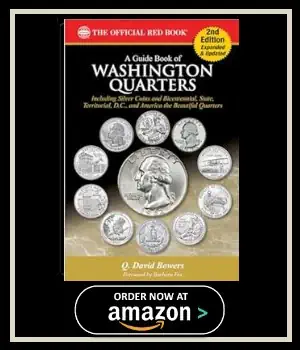
A Guide Book of Washington Quarters - Full-color illustrations, current market values, and an appendix on the America the Beautiful silver bullions coins
 '
'