Barber Quarters — Key Dates, Values & History (1892–1916)
1892–1916 • 90% Silver • Liberty Head Design • The 1901-S King
Barber Quarter Value Guide
Key Dates and Typical Values by Grade
| Date / Mint | Mintage | Good (G-4) | Fine (F-12) | VF-20 | MS-63 |
|---|---|---|---|---|---|
| Common date (P) | Varies | $5 | $10 | $20 | $300+ |
| 1896-S | 188,039 | $600+ | $1,500+ | $3,000+ | $50,000+ |
| 1901-S — King of the Series | 72,664 | $2,500+ | $8,000+ | $20,000+ | $100,000+ |
| 1913-S | 40,000 | $1,500+ | $4,000+ | $8,000+ | $50,000+ |
| 1899-S | 708,000 | $40 | $100 | $250 | $5,000+ |
| 1901-O | 1,612,000 | $15 | $35 | $80 | $2,000+ |
| 1904-O | 2,456,000 | $15 | $40 | $100 | $3,000+ |
Origins of the Barber Quarter
The Liberty Head Quarter — universally known to collectors as the Barber Quarter — was struck from 1892 to 1916, part of a complete redesign of America's silver coinage undertaken by Chief Engraver Charles E. Barber. All three "Barber coinage" denominations — dime, quarter, and half dollar — debuted simultaneously in 1892, sharing the same obverse portrait of Liberty wearing a laurel wreath and cap. The quarter occupies a pivotal place in this trio: struck at four mints across its 25-year run (Philadelphia, New Orleans, San Francisco, and Denver in the final years), it offers collectors substantial variety in mintmark combinations alongside a genuinely challenging set of key dates.
The series arrived during a period when the U.S. Mint sought more unified, modern designs across its silver coinage, replacing the long-running Seated Liberty motif that had served since 1838. Barber's classical, restrained portrait reflected the artistic sensibilities of the Gilded Age, and though later criticized by some as less inspired than what followed (the Standing Liberty Quarter arrived in 1916), the Barber Quarter remains a foundational series for any serious 20th-century silver collection.
Design and Mint Marks
The obverse presents Liberty in profile, wearing a Phrygian cap and laurel wreath, with "LIBERTY" inscribed on a headband and thirteen stars surrounding the portrait. The reverse carries a heraldic eagle with a shield on its breast, arrows and an olive branch in its talons — standard American numismatic symbolism of the era. Mint marks appear on the reverse directly below the eagle: no mark for Philadelphia, "O" for New Orleans, "S" for San Francisco, and "D" for Denver (only in the series' final years, 1906 and after).
This mint mark placement matters enormously for value — the same date can range from nearly worthless to a five-figure rarity depending purely on which mint struck it, as the 1901 issue dramatically illustrates: the Philadelphia 1901 (8,892,000 struck) is common and inexpensive, while the San Francisco 1901-S (72,664 struck) is the single most valuable regular-issue Barber Quarter. New Orleans issues are often weakly struck compared to their Philadelphia and San Francisco counterparts, while Denver produced some of the lowest mintages of the series' final years.
Silver Content and Collectibility
Each Barber Quarter contains 0.1808 troy ounces of pure silver, based on the 90% silver / 10% copper composition and 6.25-gram total weight established with the Seated Liberty Quarter in 1838 and continued unchanged through the Barber series. This gives even a heavily worn common-date Barber Quarter meaningful precious metal value well above its 25-cent face value. The combination of silver melt value and genuine numismatic demand means Barber Quarters almost always trade above pure melt — even the most common Philadelphia dates carry a premium for their age, and the series' key dates command prices entirely disconnected from silver content.
Completing a full Barber Quarter date-and-mint set is one of the more demanding challenges in 20th-century U.S. coin collecting, with the 1901-S standing as the single hardest coin to acquire. Many collectors instead pursue a "Big Three" approach — 1901-S, 1896-S, and 1913-S — as milestone acquisitions within a broader, more achievable date run of common Philadelphia and San Francisco issues.
Key Dates and Major Rarities
1901-S — King of the Series
1896-S
1913-S
1899-S
1901-O & 1904-O
1892 — First Year
Shop Barber Quarters on eBay
Browse common Philadelphia dates to certified key dates including the 1901-S, 1896-S, and 1913-S.
Barber Quarter References on Amazon


Where to Buy Barber Quarters
These are the marketplaces and resources used by serious Barber Quarter collectors for buying and research.
eBay
eBay — Key Dates
JM Bullion
Kitco
Money Metals Exchange
SD Bullion
Silver Gold Bull
FRC Coin Price Guide
Related Coin Guides
 Find These Coins on eBayMoney Back Guarantee
FindRareCoins.com participates in the eBay Partner Network and Amazon Associates program. Purchases made through links on this page may earn us a commission at no additional cost to you.
Frequently Asked Questions
What is the most valuable Barber Quarter?
The 1901-S is the undisputed king of the series — only 72,664 were struck at the San Francisco Mint, the lowest mintage of any regular-issue Barber Quarter. Even heavily worn examples in Good condition are worth $2,500 or more, and certified MS-63 examples have realized over $100,000 at major auction houses. The 1896-S (188,039 struck) and 1913-S (40,000 struck, technically the lowest mintage in the series but slightly better known to period collectors) round out the "Big Three" key dates.
Why is the 1901-S rarer than the 1913-S despite a higher mintage?
Although the 1913-S had a lower reported mintage (40,000 vs. 72,664), the 1901-S is considered the true rarity because it was largely overlooked by contemporary collectors — mintmark-focused collecting hadn't yet become standard practice in 1901, so far fewer examples were deliberately saved. By 1913, collectors were more mintmark-aware, meaning proportionally more 1913-S examples were preserved in higher grades despite the lower original mintage.
How much silver is in a Barber Quarter?
Each Barber Quarter contains 0.1808 troy ounces of pure silver, based on the 90% silver / 10% copper composition and 6.25-gram total weight. At current silver prices, this gives even a heavily worn common-date Barber Quarter meaningful melt value well above its 25-cent face value — typically several dollars depending on the current spot price of silver.
How do I tell Barber Quarter mint marks apart?
The mint mark appears on the reverse directly below the eagle. No mark means Philadelphia; "O" means New Orleans; "S" means San Francisco; and "D" (only in the series' final years, 1906 onward) means Denver. Because the same date can vary enormously in value by mint — as dramatically illustrated by the common 1901 Philadelphia versus the rare 1901-S — always verify the mint mark carefully, and be alert to fraudulently added mint marks on key dates like the 1901-S.
Should I buy raw or certified Barber Quarters?
For any Barber Quarter key date — especially the 1901-S, 1896-S, or 1913-S — PCGS or NGC certification is strongly recommended. The 1901-S in particular is a frequent target for counterfeiters who add a fake S mint mark to an otherwise common Philadelphia coin. Certification provides both authentication and a standardized grade that protects buyers and preserves resale value.
What is a good entry point for collecting Barber Quarters?
Common-date Philadelphia and San Francisco Barber Quarters in Good to Fine condition offer the most accessible entry point, typically available for $5–$20. From there, most collectors work toward completing a full date-and-mint set, treating the 1901-S, 1896-S, and 1913-S as milestone acquisitions rather than starting points. Building a set date-by-date from the most common issues first is the standard, budget-friendly approach recommended by most numismatic references.
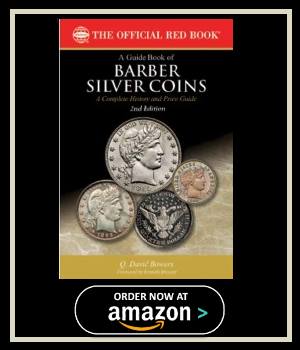
Guide Book of Barber Silver Coins - Advice and instructions on grading and smart collecting, along with retail prices in up to 12 grades (including Proofs)
 '
'