
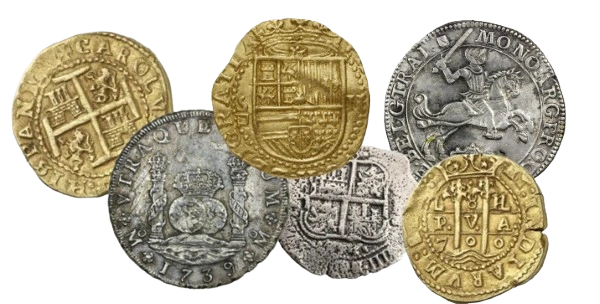
Historic Shipwreck Coins
Spanish Treasure • American Gold Rush • Pirate & Caribbean • Ancient Wrecks
Treasure from the Deep
Tangible Links to Centuries of Maritime History
Shipwreck coins are far more than lost treasure pulled from the ocean floor — they are tangible links to centuries of maritime history. Recovered from ships claimed by storms, piracy, or war, these coins reflect the movement of wealth, culture, and power across the world's great trade routes. Each discovery offers a rare chance to hold a piece of the past, connecting modern collectors to the sailors, merchants, and empires whose ambitions once defined the age of sail.
What makes shipwreck coins truly unique is the journey they endured before sinking beneath the waves. Many traveled across continents on vessels driven by commerce or conquest, only to be preserved underwater for hundreds — sometimes thousands — of years. Famous wrecks like the 1622 Spanish galleon Our Lady of Atocha have yielded remarkable silver and gold coins that highlight Spain's dominance in the New World. Mediterranean shipwrecks reveal Roman and Greek currency; British, Portuguese, and Dutch wrecks showcase the ambitions of expanding empires. Each recovered coin carries the imprint of its era and the story of the ship that carried it to its final resting place.
Famous Shipwreck Discoveries
The Atocha, SS Central America & the Wrecks That Made History
In 1985, after sixteen years of searching off the Florida Keys, Mel Fisher's team located the Our Lady of Atocha — a Spanish galleon sunk in a 1622 hurricane while carrying the wealth of the New World back to Spain. The wreck yielded over 40 tons of silver and gold: thousands of silver cobs, gold bars and chains, emeralds, and artifacts that made it one of the greatest maritime treasure discoveries in recorded history. Certified Atocha silver reales and gold escudos remain among the most sought-after provenance pieces in American numismatics.
The SS Central America presents a different kind of story. In 1857, the sidewheel steamer sank in a hurricane off Cape Hatteras carrying over three tons of California Gold Rush gold — $20 Double Eagles, half eagles, and private mint gold bars from San Francisco assayers like Kellogg & Humbert and Justh & Hunter. Salvors in the 1980s recovered thousands of coins in extraordinary mint-state condition, preserved in the cold, dark depths for over a century. The 1857-S Double Eagles recovered from the wreck — pristine, uncirculated, still brilliant — are among the most prized American coins of the 19th century. A single Justh & Hunter gold ingot from the wreck has sold for over $8 million.
Famous Shipwrecks & Coin Values
Key Wrecks, Origins & Collector Value Ranges
| Wreck | Date Sunk | Notable Coins | Value Range |
|---|---|---|---|
| Our Lady of Atocha | 1622 | Silver 8 Reales, Gold Escudos | $1,000 – $500,000+ |
| SS Central America | 1857 | $20 Double Eagles, Gold Ingots | $5,000 – $8,000,000+ |
| 1715 Spanish Treasure Fleet | 1715 | Silver Cobs, Gold Doubloons | $500 – $100,000+ |
| SS Republic | 1865 | Double Eagles, Seated Liberty Silver | $100 – $100,000+ |
| Whydah Gally | 1717 | Spanish & Portuguese Cobs | $2,000 – $200,000+ |
| Brother Jonathan | 1865 | $20 Double Eagles (MS condition) | $3,000 – $150,000+ |
| Antikythera Wreck | c. 70–60 BC | Greek Bronze & Silver Coins | $100 – $10,000+ |
| El Cazador | 1784 | Mexican Mint 8 Reales (400,000 recovered) | $100 – $10,000+ |
Shipwreck Coin Categories
What Collectors Are Seeking from the Deep
Spanish Treasure Fleet
Atocha, 1715 Fleet, Santa Margarita — silver cobs and gold escudos from Spain's New World empire.
American Gold Rush Wrecks
SS Central America, SS Republic, Brother Jonathan — pristine U.S. gold coins preserved in the deep sea.
Pirate & Caribbean
Whydah Gally, Port Royal, Spanish Main cobs — coins from the golden age of Caribbean piracy.
Ancient Mediterranean Wrecks
Roman, Greek, Byzantine, and Phoenician coins recovered from Mediterranean trade routes spanning millennia.
NGC / PCGS Certified
Certified shipwreck coins with provenance labels — the highest standard for authenticity, condition, and resale value.
Treasure Coast Finds
Florida's 1715 Fleet wrecks — silver and gold cobs still washing ashore, actively hunted by licensed salvors.
Shipwreck Coin Explorer
Browse by Era • Click Any Wreck for Details & eBay Listings


Why Collectors Pursue Shipwreck Coins
Scarcity, Provenance & the Stories That Cannot Be Replicated
Shipwreck coins occupy a unique position in numismatics — they are simultaneously historical artifacts, certified collectibles, and (in the case of gold and silver specimens) precious metal holdings. Their appeal goes beyond rarity. A certified Atocha 8 Reales is not simply a 400-year-old Spanish silver coin; it is a documented survivor of a specific shipwreck, one of a finite number of coins that can ever carry that provenance. That irreproducible story is precisely what collectors pay significant premiums to own.
The oceangoing environment also creates a distinctive appearance that no mint-produced or buried coin can replicate. Saltwater toning, encrustation, and the characteristic texture of sea-corroded silver and gold add character that collectors and museums find compelling. NGC's Shipwreck Effect designation specifically acknowledges and codifies this unique appearance, assigning condition grades that reflect the realities of underwater preservation rather than penalizing coins for the very qualities that make them remarkable. Provenance documentation — recovery records, certifications, and chain-of-custody papers — is essential for higher-value shipwreck pieces and adds substantially to both historical value and resale liquidity.
Caring for Shipwreck Coins
Storage, Preservation & Responsible Collecting
Shipwreck coins that have been professionally conserved and certified require the same storage discipline as any high-value numismatic piece: acid-free holders, low humidity (below 50%), stable temperatures, and protection from direct handling. Coins in NGC or PCGS slabs are well-protected and should not be cracked out of their holders — the certification and its associated provenance documentation are part of the coin's value. For uncertified pieces, airtite capsules or acid-free 2x2 holders are appropriate; avoid PVC storage materials entirely, as PVC off-gassing can damage the patina that makes shipwreck coins distinctive.
Responsible salvors operate under archaeological standards and international frameworks including UNESCO's Convention on the Protection of the Underwater Cultural Heritage. Ethical collecting means purchasing from established, documented sources — not undocumented offerings with no verifiable chain of custody. The best shipwreck coins available to collectors today come from professionally excavated wrecks with complete paper trails, ensuring both the historical value and the legal status of every piece.
Shop Shipwreck Coins on eBay
Browse certified and documented shipwreck coins — Spanish cobs, American gold, pirate-era silver, and ancient Mediterranean finds — from specialist dealers worldwide.
🛍️ Shop Shipwreck Coins on eBay 📚 Shipwreck References on AmazonFindRareCoins.com participates in the eBay Partner Network and Amazon Associates program. Purchases made through links on this page may earn us a commission at no additional cost to you.
Frequently Asked Questions
Are shipwreck coins legal to own?
The legality of shipwreck coin ownership depends on the specific wreck, the country whose waters it rests in, and how and when it was recovered. Coins recovered from wrecks under valid salvage permits — like those from the Atocha, SS Central America, SS Republic, and 1715 Fleet — are fully legal to buy and sell in private hands. Coins from wrecks in U.S. federal waters or on sovereign-immunity vessels (such as warships) may have restricted legal status. Ancient coins from Mediterranean wrecks are subject to cultural property laws that vary by country of origin. The safest approach: purchase from reputable dealers who provide full provenance documentation and can confirm legal recovery status. NGC and PCGS certification of provenance is the strongest assurance for collectors.
What is the most valuable shipwreck coin ever sold?
The single most valuable shipwreck artifact is a Justh & Hunter gold ingot recovered from the SS Central America, which sold for over $8 million. Among coins specifically, pristine SS Central America 1857-S Double Eagles in near-perfect condition have sold in the high five and low six figures. Atocha gold escudos in top condition can reach $100,000 or more. The 1857-S Double Eagle recovered from the Central America — graded MS69 by PCGS, possibly the finest example of any 19th-century U.S. gold coin in existence — is one of the most significant American numismatic artifacts ever offered at auction.
What is the NGC Shipwreck Effect designation?
The NGC Shipwreck Effect label is a special certification designation for coins that have been recovered from documented shipwrecks and show the characteristic surface effects of extended underwater exposure — encrustation, saltwater toning, and the particular texture that distinguishes genuine shipwreck coins from ordinary circulated examples. Rather than penalizing these coins with a "Details" grade for cleaning or environmental damage, NGC applies the Shipwreck Effect designation and grades them on a numeric scale appropriate to their preservation state. This designation significantly increases collector confidence, documents provenance, and in most cases adds meaningful premium to market value. PCGS offers analogous provenance certification for select shipwreck pieces.
What are Spanish cob coins (reales and escudos)?
Spanish cob coins — known as "macuquinas" in Spanish — are crude, irregularly shaped silver and gold coins produced by the Spanish colonial mints of the 16th through early 18th centuries. Silver cobs were denominated in reales (1, 2, 4, and 8 reales — the "piece of eight"), while gold cobs were denominated in escudos (1, 2, 4, and 8 escudos — the "doubloon"). They were struck by cutting a rough lump of metal from a bar, weighing it to the correct standard, and hammering it between two dies. The resulting coins are never perfectly round and rarely show a complete design — but their weight and silver or gold content were precisely controlled by the Spanish Crown. Their crude beauty and historical significance make them among the most collectible coins in the world, particularly when recovered from famous wrecks with documented provenance.
Is the Atocha treasure still being found?
Yes — the Mel Fisher organization (Salvors Inc.) continues to hold salvage rights to the Atocha and Santa Margarita wreck sites and actively works them when conditions allow. The initial 1985 discovery located the main cargo pile ("the Motherlode"), but the wreck field is enormous and scattered across miles of ocean floor by currents and shifting sand. New coins, emeralds, bars, and artifacts are still being recovered in excavation seasons. The 1715 Fleet wrecks off Florida's Treasure Coast are similarly ongoing — storms regularly uncover new material and licensed beach salvors still make fresh discoveries after significant weather events.
How do I authenticate a shipwreck coin before buying?
For pieces under $200, research the specific wreck being claimed and compare the coin's characteristics (style, mint, date range) with known authenticated examples. For any coin above $200–$500, only purchase examples certified by NGC (with Shipwreck Effect or provenance label) or PCGS (with provenance designation). Require full provenance documentation: recovery records identifying the wreck, the salvage company or archaeologist, and the date of recovery. Purchase from established specialists in maritime treasure — dealers like those affiliated with APMEX, NGC-authorized dealers, or the Mel Fisher organization's own marketplace for Atocha pieces. Avoid uncertified pieces with vague provenance claims, particularly on general marketplace platforms where misrepresentation is common.
The Atlas of Shipwrecks & Treasure. An oversized treasure of a book, packed with illustrations, photographs, maps, and possibilities. Chronology starts from the Bronze Age
 '
'