
Comic Book Collecting
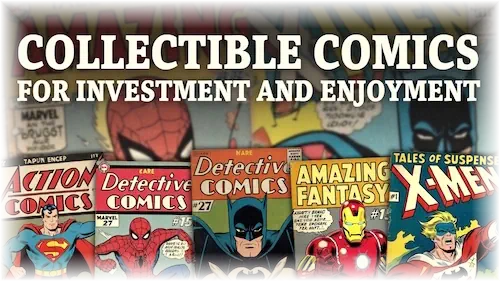
Comic books are cultural artifacts that blend art, storytelling, and history into collectible form. From Action Comics #1 — the most valuable comic ever printed — to modern first appearances driving today's market, this guide covers everything you need to collect with confidence.
Why Comic Books Resonate Today
Comic books have become genuine cultural touchstones. Their pages blend timeless characters with evolving social narratives, making them far more than entertainment — they're snapshots of history and imagination. The rise of superhero films has introduced iconic characters to entirely new generations, driving renewed curiosity toward the original issues where these heroes first appeared.
Names like Spider-Man, Batman, and Captain America now echo across global culture. As their cinematic universes continue to grow, collectors trace these characters back to their earliest printed adventures — discovering that the original source material tells a richer, more layered story than any screen adaptation. First appearances, landmark storylines, and key issues continue to appreciate in value as demand from both fans and investors grows.
What Makes a Comic Book Valuable?
Not every old comic is valuable, and not every valuable comic is old. These are the key factors that drive prices in the collector market.
| Factor | What to Look For | Impact on Value |
|---|---|---|
| First Appearance | First appearance of a major character (hero, villain, supporting cast) | Extreme |
| Condition / Grade | CGC or CBCS grade — 9.8 vs 6.0 can mean 10x price difference | Extreme |
| Key Issue Status | Origin stories, death issues, major storyline starts | Very High |
| Era | Golden Age (1938–56), Silver Age (1956–70), Bronze (1970–85) | High |
| Print Run Size | Lower print runs = fewer surviving copies = higher value | High |
| Media Adaptation | Film/TV announcements cause rapid price spikes on related keys | Moderate–High |
| Variant Covers | Low-ratio variants (1:100, 1:500) command premium over newsstand | Moderate |
| Signature / Provenance | Creator-signed with CGC Signature Series adds collector premium | Moderate |
Browse thousands of key issues, graded slabs, and raw comics from serious sellers worldwide.
📚 Shop Key Comics on eBay 📖 Comic Price Guides on AmazonExplore Key Comics by Era
Select an era below to browse landmark key issues. Click any comic to see its collector status, value range, and live eBay listings.


The Holy Grails of Comic Collecting
A handful of comics have transcended the hobby to become genuine investment-grade assets — with auction records that rival fine art. Here are four that define the top of the market.
Action Comics #1 — Up to $6 Million
The 1938 first appearance of Superman by Jerry Siegel and Joe Shuster. The most valuable comic book ever printed. A CGC 8.5 copy sold for $6 million in 2024, establishing it as one of the most expensive pieces of pop culture memorabilia in existence.
🛍️ View on eBayAmazing Fantasy #15 — Up to $3.6 Million
The 1962 first appearance of Spider-Man by Stan Lee and Steve Ditko. The most important Silver Age comic book. A CGC 9.6 copy sold for $3.6 million, making it the benchmark key issue of the Marvel era and a cornerstone of any serious collection.
🛍️ View on eBayDetective Comics #27 — Up to $3 Million
The 1939 first appearance of Batman (Bruce Wayne) by Bob Kane. The cornerstone DC key issue. Surviving copies in any grade are extraordinarily rare — a CGC 7.0 sold for $1.5 million, and high-grade examples would likely exceed all previous records at auction.
🛍️ View on eBayIncredible Hulk #181 — Up to $150,000
The 1974 first full appearance of Wolverine by Len Wein and Herb Trimpe. The most important Bronze Age comic book. A CGC 9.8 is worth over $150,000 — making it the gateway key for collectors who can't afford Golden or Silver Age grails but want significant appreciation potential.
🛍️ View on eBayThe Comic Book Eras Explained
Golden Age (1938–1956)
The Golden Age began with the publication of Action Comics #1 in 1938 and encompasses the birth of the superhero genre. This era introduced Superman, Batman, Captain America, Wonder Woman, and dozens of other characters who would define popular culture for the next century. Golden Age comics are the rarest and most valuable in the hobby — surviving copies in any grade are scarce, and high-grade examples are effectively museum pieces. Condition is brutal to find given the newsprint stock and the fact that most were read, traded, and discarded.
Silver Age (1956–1970)
The Silver Age is widely considered the golden era of Marvel Comics. Stan Lee, Jack Kirby, and Steve Ditko created the Fantastic Four, Spider-Man, the X-Men, Thor, Iron Man, the Avengers, and the Hulk — essentially the entire foundation of the Marvel Cinematic Universe — within a single decade. DC revived the Flash in Showcase #4 (1956), widely considered the first Silver Age comic. Silver Age keys remain the most actively traded tier in the hobby, with strong demand from both collectors and investors.
Bronze Age (1970–1985)
The Bronze Age is characterized by darker, more socially conscious storytelling and the introduction of characters who would later drive massive media franchises. Wolverine, the Punisher, Luke Cage, Moon Knight, and Harley Quinn all debuted in this era. Bronze Age books are the sweet spot for many collectors — they're attainable in high grade, deeply connected to current MCU storylines, and have significant appreciation potential as media adaptations continue to be announced.
Modern Age (1985–Present)
The Modern Age introduced the speculator boom of the 1990s, the independent comics revolution, and eventually the key issue market as collectors know it today. Most 1990s comics were overprinted and have minimal value — but genuine first appearances of characters like Deadpool (New Mutants #98), Harley Quinn (Batman Adventures #12), and the Teenage Mutant Ninja Turtles (Mirage #1) command serious premiums. The key to modern collecting is identifying genuine first appearances versus hype-driven speculation.

Getting Started in Comic Collecting
Comic collecting scales naturally with interest and budget. Whether you're browsing $1 bargain bins at a local shop or chasing CGC 9.8 key issues, there's room for every collector to build a meaningful collection.
Collect What You Love First
The most sustainable collections are built around genuine passion. Some collectors specialize by era — Golden Age, Bronze Age — while others collect by publisher, character, creative team, or genre. Don't be afraid to explore independent titles, reprints, or single-run series. The joy of the hunt — unearthing a key issue in a convention booth's back-issue bin — is as much a part of the hobby as the collection itself.
Learn to Grade Before You Buy
Condition is everything in comic collecting. A comic graded CGC 9.8 can be worth 10–50x more than the same issue graded 6.0. Before spending significant money on raw (ungraded) comics, study the CGC grading standards thoroughly. Learn to identify spine stress lines, color bleaching, staple rust, and page tanning — the factors that separate a high-grade copy from an average one. The CGC website has free grading resources, and YouTube has extensive tutorials from experienced collectors.
Use Sold Listings to Price Accurately
Always check eBay sold listings and CGC Census data before buying or selling. The listed price of a comic means nothing — what matters is what the same book in the same grade actually sold for in the last 90 days. CGC's website shows the population of graded copies at each grade level, which helps you understand true scarcity. A comic with only 3 copies graded 9.8 is genuinely rare; one with 400 copies at 9.8 is not.
From Golden Age keys to affordable Bronze Age gems, find your next addition to the collection on eBay.
📚 Shop All Key Issues on eBay 📖 Overstreet Price Guide on AmazonFrequently Asked Questions
What is the most valuable comic book ever sold?
Action Comics #1 (1938), featuring the first appearance of Superman, holds the record. A CGC 8.5 copy sold for $6 million in 2024. Other record-holders include Amazing Fantasy #15 (first Spider-Man, CGC 9.6 sold for $3.6 million) and Detective Comics #27 (first Batman, CGC 7.0 sold for $1.5 million). These books are so rare in high grade that auction results set new records regularly.
Is it worth getting comics graded by CGC?
For any comic worth over $100–150, CGC grading is generally worthwhile. The cost of grading (typically $30–$100+ depending on tier and value) is offset by the premium that a certified grade commands from buyers. CGC 9.8 copies of key issues routinely sell for 3–10x more than raw copies of the same book. The authentication also protects buyers and sellers — a CGC slab guarantees the comic hasn't been cleaned, pressed, or restored without disclosure.
What's the difference between pressing and restoration — and does it matter?
Pressing is a conservation technique that removes non-color-breaking defects (bends, creases, spine rolls) using heat and pressure. CGC considers pressing acceptable and does not note it on the label — a pressed comic can receive any grade. Restoration (also called "restoration" or "conserved") involves adding material to the comic — color touch, piece fill, trimming — and CGC marks restored comics with a purple label, which dramatically reduces value. Always ask about pressing and restoration history when buying expensive raw comics.
How do I store comics to preserve their condition?
Store comics in Mylar or polypropylene bags with acid-free backing boards. Keep them in long or short boxes stored vertically (not stacked flat under weight). Maintain stable temperature and low humidity — heat and moisture are the primary enemies of paper. Avoid attics, basements, and garages. Never use rubber bands or tape on comics. For high-value books, consider CGC encapsulation for long-term preservation. Check stored books periodically for signs of foxing, tanning, or pest activity.
Where is the best place to buy and sell comic books?
eBay is the largest marketplace and the best place to establish current market value via sold listings. For high-value graded comics, Heritage Auctions and ComicConnect specialize in premium books and reach serious collectors worldwide. Local comic shops and conventions are excellent for raw books, back issues, and building relationships with dealers. MyComicShop and ComicBookRealm are solid platforms for mid-range books. For modern keys and first prints, new release Wednesdays at your local shop remain the best source.
Are 1990s comics worth anything?
The vast majority of 1990s comics are worth very little — they were massively overprinted during the speculator boom, with many issues seeing print runs in the millions. However, genuine first appearances from the 1990s can be valuable: New Mutants #98 (first Deadpool), Batman Adventures #12 (first Harley Quinn), and Venom: Lethal Protector #1 all command real premiums. The key is distinguishing between books that were actually scarce and those that were simply hyped at the time. Always check CGC Census population and recent sold data before assuming a 1990s book is valuable.
Whether you're chasing a Golden Age grail or building a Bronze Age collection, the world's largest comic book marketplace is one click away.
📚 Shop All Comics on eBay 📖 Comic Collecting Books on Amazon '
'