Early Half Dollars: Cornerstones of American Coinage
Early United States half dollars hold a prominent place in the numismatic world. These coins represent a crucial chapter in American coinage history. The Mint produced them during the 18th and 19th centuries. They played a pivotal role in the nation’s commerce and trade. Furthermore, they showcased remarkable design evolution. In this extensive exploration, we delve into the various half-dollar series from this era. We will examine their designs, historical context, and their enduring allure for collectors. For instance, the earliest series, known as the Flowing Hair half dollars, was struck from 1794 to 1795.
The Significance of Early Half Dollars
Crucial for Commerce and Trade
Half dollars were vital to the nascent American economy. Their value made them ideal for everyday transactions. Larger than quarters but smaller than dollars, they filled a critical niche. Consequently, they facilitated trade across different states and with foreign nations. The U.S. Mint’s consistent production of these coins was essential. It provided much-needed liquidity in a rapidly expanding economy. Therefore, half dollars truly served as the backbone of early American commerce.
Reflecting National Identity
Beyond their economic function, early half dollars also served as artistic canvases. Their designs reflected the evolving national identity of the United States. Each series featured Lady Liberty in various forms. These depictions symbolized the nation’s ideals of freedom and republicanism. Moreover, the changing designs often mirrored broader artistic trends of the time. Thus, examining these coins provides a tangible link to America’s formative years. They are truly miniature works of art and history.
Flowing Hair Half Dollars (1794-1795)
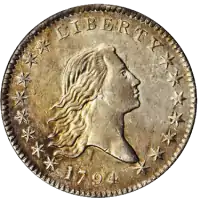
The **Flowing Hair half dollar** represents the very first half-dollar series. The Mint struck these coins from 1794 to 1795. Robert Scot, the chief engraver, designed them. The obverse features a portrait of Lady Liberty with long, flowing hair. The reverse displays a small eagle surrounded by a wreath. These coins are exceptionally rare today. Their limited mintage and age make them highly desirable. Consequently, they are often considered key pieces for any serious collector of early U.S. coinage. Owning one connects you directly to the nation’s earliest minting efforts.
Draped Bust Half Dollars (1796-1807)
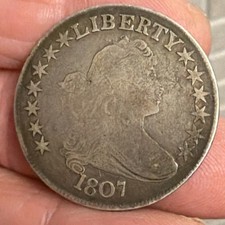
Following the Flowing Hair design, the **Draped Bust half dollar** emerged in 1796. This series introduced a more refined depiction of Lady Liberty. Her hair is elegantly tied, and drapery covers her bust. This design came in two main varieties: one with a small eagle on the reverse (1796-1797) and another with a heraldic eagle (1801-1807). The Heraldic Eagle reverse was a more robust design. Furthermore, it offered more detail. Draped Bust half dollars from the initial years are particularly scarce. Therefore, they command significant premiums among numismatists. They truly reflect a period of artistic development at the young U.S. Mint.
Capped Bust Half Dollars (1807-1839)
The **Capped Bust half dollar** succeeded the Draped Bust series in 1807. John Reich designed this widely circulated coin. It featured Liberty wearing a classical cap. This design proved remarkably enduring. The Mint produced it for over three decades, until 1839. This series has several sub-varieties. These include those with a large date/small letters and small date/large letters. Later, a reeded edge variation also appeared. Therefore, collectors often specialize in specific varieties within this popular series. Its longevity speaks to its widespread acceptance and utility during a period of rapid national expansion.
Seated Liberty Half Dollars (1839-1891)
The **Seated Liberty half dollar** became the standard in 1839. Christian Gobrecht designed this iconic series. It features Liberty seated on a rock, holding a shield and pole. This design dominated American coinage for over half a century, through 1891. Many variations exist within this long-running series. For example, some show arrows at the date, while others have rays on the reverse. The inclusion or omission of the motto “IN GOD WE TRUST” also marks different types. Consequently, collecting Seated Liberty half dollars offers diverse challenges and rewards. Their historical breadth makes them particularly fascinating to study.
Factors Affecting Value
The value of early half dollars depends on several key factors. Condition plays the most significant role. A coin’s grade, determined by wear, luster, and surface marks, drastically impacts its price. Rarity is another crucial element. Low mintage figures or specific varieties can make a coin exceptionally valuable. Furthermore, the presence of a mint mark (such as O for New Orleans or S for San Francisco) can also influence rarity and value. Therefore, understanding these factors is essential for any collector. Professional grading by services like PCGS or NGC provides objective assessments, offering peace of mind.
Building Your Collection
Starting an early half dollar collection can be incredibly rewarding. Consider beginning with more accessible dates or common varieties to gain experience. Research is paramount; consult reputable price guides and reference books. Joining local coin clubs or online forums connects you with experienced numismatists. This allows for valuable learning and trading opportunities. Furthermore, always acquire coins from trusted dealers or auction houses. Proper storage in non-PVC holders is also vital for long-term preservation. Ultimately, the journey of collecting early half dollars offers a deep connection to American history and numismatic artistry.
These coins hold the distinction of being the first official silver half dollars minted by the United States. The obverse of these coins features a portrait of Liberty with flowing hair, and the reverse displays an eagle encircled by stars. The design, attributed to Robert Scot, exhibits the influence of neoclassical art, a prevailing style of the late 18th century. Due to their limited mintage and historical significance, Flowing Hair half dollars are highly sought after by collectors and enthusiasts. Their value in the numismatic market is primarily determined by factors like condition, rarity, and historical importance.
The subsequent series, the Draped Bust half dollars, were struck from 1796 to 1807. These coins marked the transition from the Flowing Hair design and featured a more refined depiction of Liberty with her hair draped in a more subdued manner. The reverse design remained consistent with an eagle and stars. The Draped Bust series underwent several modifications, leading to the introduction of the Small Eagle and Heraldic Eagle reverse designs. The Heraldic Eagle design, created by John Eckstein, features an eagle with a shield on its breast, symbolizing the strength and unity of the nation. Draped Bust half dollars are prized by collectors for their elegant design and historical importance, with their value influenced by factors similar to the Flowing Hair series.


'