
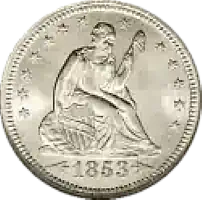
Seated Liberty Dollars
Introduction to the Seated Liberty Dollar
The Seated Liberty Dollar holds an important place in American numismatic history, representing a period of growth, symbolism, and national identity. First issued in 1840 and produced until 1873, this coin became a powerful emblem of the nation’s values during the mid‑19th century. Its introduction marked a shift toward more refined and meaningful coinage designs that reflected America’s evolving sense of unity and purpose.
Symbolism and Artistic Design
At the heart of the Seated Liberty Dollar is its iconic obverse design, featuring Lady Liberty seated gracefully on a rock. She holds a staff topped with a Phrygian cap, a long‑standing symbol of freedom and independence. This imagery conveyed the nation’s commitment to liberty during a time of rapid expansion and social change. On the reverse, a bold American eagle clutches arrows to signify strength and readiness, while the olive branch represents peace—together forming a balanced message of resilience and diplomacy.
A Coin of National Identity
Beyond its artistic appeal, the Seated Liberty Dollar served as a widely used medium of exchange across the United States and in international trade. Its design and symbolism resonated with citizens who saw the coin as a reflection of the country’s ideals. Today, collectors value the Seated Liberty Dollar not only for its silver content and historical significance but also for the story it tells about America’s aspirations during a transformative era. Its enduring legacy continues to inspire numismatists and historians alike.
United States Dollars
Morgan, Peace & Modern Dollar Coins


Richly illustrated with more than 1,500 full-color photographs, this updated edition brings unmatched depth and perspective to Liberty Seated coinage.
The Gobrecht Journal: For Collectors of the Liberty Seated Coin Series, Volume 15, Issue 44 Single Issue Magazine – January 1, 1989
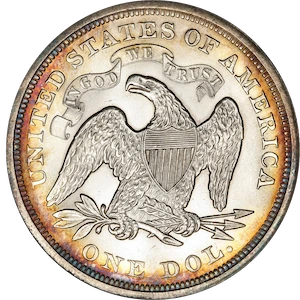
The Addition of “In God We Trust”
One of the most significant changes to the Seated Liberty Dollar came in 1866, when the motto “In God We Trust” was added to the reverse. This modification reflected the nation’s growing religious sentiment during the mid‑19th century, especially in the aftermath of the Civil War. As the country entered Reconstruction, many Americans sought to acknowledge a higher power and reinforce a sense of unity and moral purpose. The inclusion of the motto on U.S. coinage symbolized this cultural shift and marked an important moment in the evolution of American currency.
Circulation and Economic Importance
During its years in circulation, the Seated Liberty Dollar played a vital role in the American economy. It served as a reliable medium of exchange for merchants, traders, and everyday citizens, both within the United States and abroad. Its widespread use reflected the nation’s expanding commercial activity throughout the 19th century. Over time, however, changing economic conditions and shifting public preferences led to a decline in the coin’s popularity. By 1873, a combination of monetary policy changes and practical considerations resulted in the Seated Liberty Dollar being replaced by newer designs and denominations.
Weight Adjustments and Minting Legacy
Earlier in its history, the Seated Liberty Dollar underwent important physical changes that shaped its long‑term legacy. In 1853, the coin’s weight was reduced to 412.5 grains and its diameter increased to 38.1 mm, adjustments intended to improve its practicality in everyday commerce. Although these changes sparked mixed reactions, they marked a significant step in the evolution of U.S. silver coinage. The dollar was struck at several mint facilities—including Philadelphia, New Orleans, San Francisco, and Carson City—each leaving its own mint mark and production history. Some years saw extremely low mintages, making certain issues especially prized by collectors today.
 '
'