
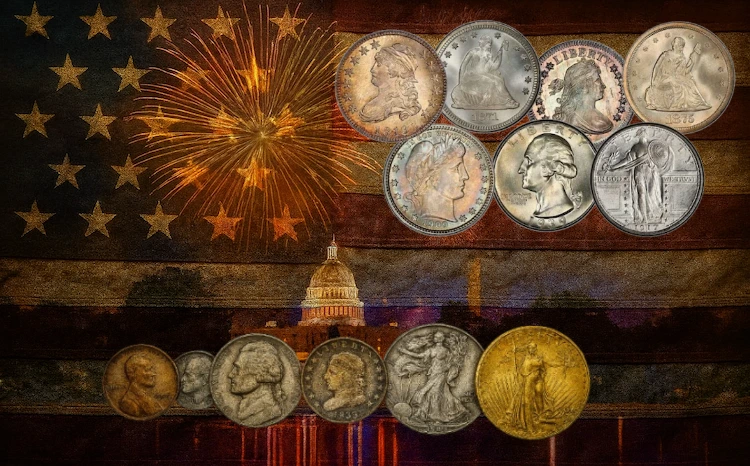
United States Coins
Legendary Rarities • Classic Gold • Silver Classics • Modern Collectibles
America's Numismatic Heritage
From Colonial Coppers to Modern Masterpieces
U.S. coins tell the story of a nation's growth through the tangible language of metal, design, and purpose. From the earliest colonial coppers that circulated before independence to the gleaming modern bullion coins of the present era, each piece serves as both currency and chronicle — capturing pivotal moments in American history within the confines of carefully struck planchets. These miniature works of art reflect more than economic necessity. They embody the craftsmanship of legendary engravers, the symbolism chosen to represent national values, and the technological innovations that transformed minting from manual labor to precision manufacturing.
Mintmarks whisper tales of regional production facilities — Philadelphia, Denver, San Francisco, Carson City, New Orleans, West Point — while composition changes document the economic pressures of wartime and crisis. Whether you are drawn to the elegant profiles of early Liberty designs, the commemorative significance of presidential portraits, or the investment potential of key-date rarities, U.S. coinage offers a fascinating intersection of history, artistry, and collectibility that no other field of numismatics can match.
The 1909 Lincoln Cent — A Watershed Moment
The First Real Person on a U.S. Circulating Coin
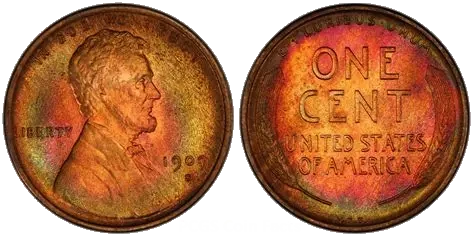
The introduction of the Lincoln cent in 1909 marked a watershed moment in American numismatic history. For the first time, the United States placed the portrait of an actual historical figure — rather than an allegorical representation of Liberty — on a circulating coin. This bold departure from tradition honored President Abraham Lincoln on the centennial of his birth, transforming everyday currency into a memorial accessible to every American. Designed by Lithuanian immigrant sculptor Victor David Brenner, the obverse featured Lincoln's profile based on a Matthew Brady photograph; the reverse displayed two wheat ears flanking the denomination — the "wheat cent" beloved by collectors to this day.
The Lincoln cent succeeded in grounding currency in storytelling, ensuring that Lincoln's legacy would literally pass through the hands of future generations. The design proved so enduring that Lincoln remains on the cent today, making it the longest-running portrait in U.S. coinage history. The key date 1909-S VDB — bearing Brenner's initials on the reverse, struck only in San Francisco — is one of the most famous coins in American numismatics, with fewer than 500,000 minted. Circulated examples start at $700; gem uncirculated specimens regularly exceed $3,000.
The Washington Quarter & American Coin Design
How U.S. Designs Reflect a Nation's Evolving Identity
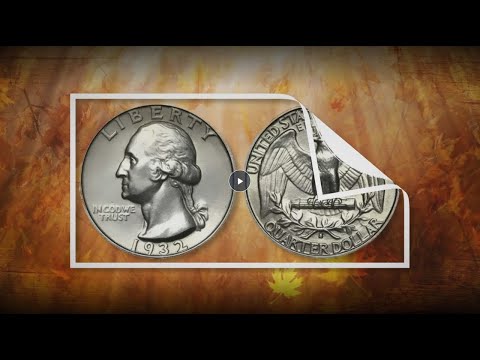
In 1932, as the nation struggled through the Great Depression, the U.S. Mint introduced the Washington quarter to commemorate the bicentennial of George Washington's birth. Originally intended as a one-year issue, its popularity led to permanent adoption — replacing the Standing Liberty quarter that had circulated since 1916. Sculptor John Flanagan based the design on a 1786 bust by Jean-Antoine Houdon; the result was a dignified left-facing profile that became one of the most familiar images in American commerce for the next nine decades.
Early coins featured Liberty in various incarnations — draped, capped, seated, standing — reflecting Enlightenment ideals and the young republic's aspirations. The 20th-century transition to presidential portraits signaled a mature nation comfortable celebrating specific historical figures rather than abstract ideals. Modern commemorative programs like the 50 State Quarters, America the Beautiful Quarters, and American Women Quarters demonstrate that U.S. coinage remains a dynamic reflection of the nation's evolving story — educational tools as much as monetary instruments.
Key U.S. Coin Series — Overview & Values
Classic, Gold, Silver & Modern — What Collectors Are Buying
| Series | Years | Key Date / Type | Typical Value Range |
|---|---|---|---|
| Morgan Silver Dollar | 1878–1921 | 1893-S, 1895 Proof | $30 – $500,000+ |
| Saint-Gaudens $20 Double Eagle | 1907–1933 | 1907 High Relief MCMVII | $2,000 – $500,000+ |
| Walking Liberty Half Dollar | 1916–1947 | 1916-D Obverse Mint Mark | $10 – $10,000+ |
| Lincoln Wheat Cent | 1909–1958 | 1909-S VDB, 1943 Copper | $0.05 – $1,700,000+ |
| Mercury Dime | 1916–1945 | 1916-D | $2 – $10,000+ |
| Buffalo Nickel | 1913–1938 | 1913-D Type 2, 1918/7-D | $1 – $350,000+ |
| American Gold Eagle (1 oz) | 1986–present | Proof, Burnished W issues | $2,000 – $3,000+ |
| 1804 Silver Dollar | 1804 (struck 1834–35) | Class I Original | $2,000,000 – $10M+ |
Top U.S. Coin Collecting Categories
Where American Numismatists Focus Their Pursuits
Legendary Rarities
1804 Dollars, 1913 Liberty Nickels, 1933 Double Eagles — the holy grails of American numismatics.
U.S. Gold Coins
Saint-Gaudens Double Eagles, Indian Head Eagles, Liberty Head series — classic gold from 1795 to 1933.
Silver Classics
Morgan and Peace Dollars, Walking Liberty Halves, Mercury Dimes — the golden age of American silver coinage.
Error Coins
Doubled dies, off-center strikes, wrong planchet errors — the most dynamic and surprising area of U.S. collecting.
Modern Bullion
American Gold Eagles, Silver Eagles, Gold Buffalos — government-guaranteed precious metal coins from 1986 onward.
Modern Collectibles
State Quarters, America the Beautiful, commemoratives, and circulation finds — accessible collecting for every budget.
U.S. Coin Explorer
Browse by Category • Click Any Coin for Details & eBay Listings




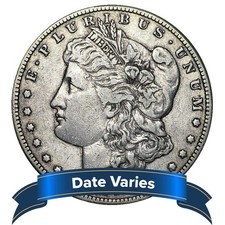
Legendary U.S. Rarities — The Holy Grails
The 1804 Dollar, 1913 Liberty Nickel & 1933 Double Eagle
Three coins stand above all others in American numismatics — pieces so rare, so historically charged, and so fiercely contested that they define what it means to own a truly legendary coin. The 1804 Silver Dollar, known as the "King of American Coins," was never actually struck in 1804 — all 15 known examples were produced decades later as diplomatic gifts and restrikes. The 1913 Liberty Head Nickel exists in only five known examples, struck under mysterious unauthorized circumstances at the Philadelphia Mint after the Buffalo Nickel had officially replaced the Liberty Head design. Every one of the five has a known name and complete ownership history.
The 1933 Saint-Gaudens Double Eagle is the ultimate forbidden coin — 445,500 were struck but almost none were released before FDR's gold recall order. The U.S. government has spent decades attempting to recover the handful that escaped, and only one example has been legally cleared for private ownership. That coin sold for $18.9 million in 2021, making it the most valuable U.S. coin ever auctioned. These three coins represent the pinnacle of American numismatic achievement — coins that are as much legal artifacts and historical objects as they are collectibles.
Shop United States Coins on eBay
Browse thousands of certified and raw U.S. coins — gold, silver, key dates, errors, and modern issues — from dealers and collectors nationwide.
🛍️ Shop U.S. Coins on eBay 📚 Coin Guides on AmazonFindRareCoins.com participates in the eBay Partner Network and Amazon Associates program. Purchases made through links on this page may earn us a commission at no additional cost to you.
Frequently Asked Questions
What U.S. coins are worth money?
Value in U.S. coins comes from three main factors: rarity (low mintage or few survivors), condition (higher grades command dramatically higher prices), and demand (collector interest in the series). Key-date coins in popular series — the 1909-S VDB Lincoln cent, the 1916-D Mercury dime, the 1893-S Morgan dollar — command strong premiums even in worn condition. Error coins like the 1943 copper penny and doubled die issues can be worth far more than their face value. For most common-date coins in circulated condition, value is close to face value or slightly above. The best starting point is checking a current PCGS or NGC price guide for any coin you believe may be valuable.
What is the rarest U.S. coin?
By number of known examples, the 1849 Double Eagle Pattern (unique — one known, in the Smithsonian) and the 1870-S $3 gold piece (unique — one known in a private collection) are among the rarest. Among coins that occasionally come to market, the 1913 Liberty Head Nickel (five known) and the 1804 Silver Dollar (15 known) are the most famous. The 1933 Double Eagle occupies a special category — technically only one has been legally cleared for private ownership, though others are known to exist and are subject to government seizure. For coins in collector hands, the 1894-S Barber Dime (9 known) and 1927-D Saint-Gaudens Double Eagle (about a dozen known) are among the rarest regularly appearing at auction.
What is the best U.S. coin series to collect?
The answer depends on your budget and interests. Morgan Silver Dollars are the most popular series in U.S. numismatics — common dates are affordable, the history is rich, and key dates provide aspirational collecting goals. Lincoln cents offer the widest range from face value to millions and are accessible at every level. For gold, the Saint-Gaudens Double Eagle series combines investment-grade metal with America's most beautiful coin designs. Mercury dimes and Walking Liberty half dollars offer outstanding artistry at modest prices. For modern collecting, the 50 State Quarters and error coin hunting require minimal investment. The best series is ultimately the one whose history and designs genuinely interest you.
How do mintmarks affect U.S. coin values?
Mintmarks indicate which U.S. Mint facility produced a coin — Philadelphia (no mark or P), Denver (D), San Francisco (S), Carson City (CC), New Orleans (O), and West Point (W). For most series, branch mint coins — especially those from Carson City and San Francisco — were produced in smaller quantities than Philadelphia issues and command higher prices. The impact varies enormously by series and date: a common-date Morgan Dollar with a CC mintmark might bring twice the price of the same date from Philadelphia, while a key-date S-mint coin like the 1893-S Morgan can be worth hundreds of thousands. Mintmark position, size, and the presence of mintmark varieties (like the 1892-O Micro O Barber half dollar) add further complexity and value to the study of U.S. coinage.
Are American Silver Eagles a good investment?
American Silver Eagles are the most liquid and widely recognized silver coins in the world, carrying a U.S. government guarantee of one troy ounce of .999 fine silver. As a way to own physical silver with maximum liquidity and broad acceptance, they are excellent. Whether they are a "good investment" depends on silver's price performance, which is driven by macroeconomic factors — industrial demand, inflation expectations, and currency dynamics. Silver Eagles trade at a premium of $5–$8 over spot price, meaning you pay above the raw metal value. Most financial advisors treat physical silver as a portfolio diversifier rather than a primary investment vehicle. Consult a qualified financial advisor before making significant precious metal purchases.
What is a doubled die coin and how do I find one?
A doubled die occurs when the hub used to create a coin die is impressed more than once at slightly different angles or positions, creating a die with doubled design elements. When that die strikes coins, every coin from it shows the doubling — most visibly in lettering and date numerals. The 1955 Doubled Die Lincoln cent (strong doubling visible to the naked eye) and 1972 Doubled Die cent are the most famous examples. Finding doubled dies requires careful examination under a loupe or magnifier, focusing on the date, motto lettering (LIBERTY, IN GOD WE TRUST), and design devices. The best resource for identifying known doubled die varieties is the Cherrypickers' Guide to Rare Die Varieties — an essential reference for any collector interested in this area.
Guide Book of Barber Silver Coins - Advice and instructions on grading and smart collecting, along with retail prices in up to 12 grades (including Proofs)
 '
'