
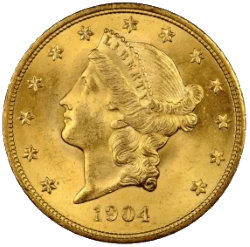
United States Gold Coins
Classic Gold • Modern Bullion • Certified Rarities • Investor Guide
America's Gold Coinage Heritage
From the First Mint Act to the Modern Eagle
United States gold coins represent more than two centuries of numismatic history — from the first tentative eagles struck in 1795 to the gleaming American Gold Buffalos produced in .9999 fine gold today. Each era of U.S. gold coinage reflects the nation's economic ambitions, artistic sensibilities, and the political forces that shaped monetary policy. No other collecting field blends beauty, history, and intrinsic metal value quite like American gold.
Congress authorized the U.S. Mint with the Coinage Act of 1792, and by 1795 Philadelphia was striking the first $10 Eagles and $5 Half Eagles. These early Capped Bust and Draped Bust designs were produced in tiny quantities, making survivors extraordinarily rare. Later Liberty Head and then Indian Head series introduced millions of gold coins to American commerce — until the Gold Reserve Act of 1934 ended the era of circulating gold coinage overnight.
The Saint-Gaudens Era
America's Most Beautiful Coins — 1907 to 1933
President Theodore Roosevelt commissioned sculptor Augustus Saint-Gaudens in 1905 to redesign American coinage, calling existing U.S. coins artistically inferior to ancient Greek pieces. The result — particularly the $20 Double Eagle and $10 Eagle with their flowing Liberty and dramatic eagle reverses — are widely considered the most beautiful coins ever struck by the United States government. Saint-Gaudens died before production began, but his vision was faithfully executed across more than 70 million Double Eagles struck through 1933.
The 1907 High Relief MCMVII (Roman numeral) specimens represent Saint-Gaudens's original artistic intent at its purest — struck in extremely high relief with three blows of the press, producing sculptural depth that no subsequent regular-issue gold coin would match. These sell for $10,000–$100,000+ in today's market depending on variety and grade.
Classic U.S. Gold — Series & Value Overview
Key Dates, Denominations & What They're Worth
| Series | Years | Gold Content | Typical Value Range |
|---|---|---|---|
| Saint-Gaudens $20 Double Eagle | 1907–1933 | .9675 oz | $2,000 – $500,000+ |
| Liberty Head $20 Double Eagle | 1850–1907 | .9675 oz | $2,000 – $100,000+ |
| $10 Indian Head Eagle | 1907–1933 | .48375 oz | $800 – $50,000+ |
| Liberty Head $10 Eagle | 1838–1907 | .48375 oz | $700 – $30,000+ |
| $5 Indian Head Half Eagle | 1908–1929 | .24187 oz | $400 – $25,000+ |
| $3 Gold Princess | 1854–1889 | .14512 oz | $700 – $50,000+ |
| $2.50 Indian Quarter Eagle | 1908–1929 | .12094 oz | $300 – $10,000+ |
| $1 Gold (Type I, II, III) | 1849–1889 | .04837 oz | $200 – $10,000+ |
Top Collecting Categories
Where Gold Coin Collectors Focus Their Pursuits
Classic U.S. Gold
Pre-1934 circulating gold — Liberty Head, Indian Head, and Saint-Gaudens series across all denominations.
Modern Gold Eagles
American Gold Eagles (1986–present) in bullion and proof. The standard U.S. gold investment coin, IRA eligible.
Gold Buffalos
America's first 24-karat (.9999) gold coin. Buffalo Nickel design. Available in bullion and proof from 2006.
Certified Rarities
Key dates, high-relief specimens, and ultra-rare survivors in PCGS or NGC holders. Investment-grade gold.
Gold Bullion
U.S. and world bullion coins — Eagles, Buffalos, Krugerrands, Maple Leafs, and Pandas priced near spot.
Gold Commemoratives
$5 gold commemoratives from 1986 onward. Baseball Hall of Fame, Olympics, and other limited-issue themes.
U.S. Gold Coin Explorer
Browse by Category • Click Any Coin for Details & eBay Listings


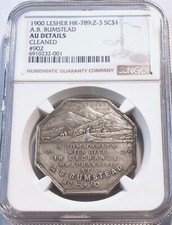
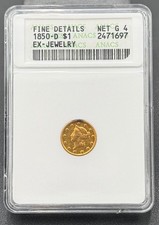

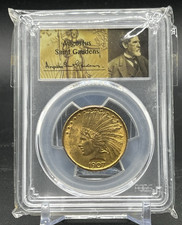


Modern U.S. Gold — Eagles, Buffalos & Commemoratives
1986 to Present — Investment Gold You Can Own Today
The American Gold Eagle, introduced in 1986, brought U.S. gold coinage back after a 53-year absence. Struck in 22-karat (.9167 fine) gold with a copper-silver alloy for durability, it features a modified Saint-Gaudens obverse and a multi-eagle family reverse. Available in four sizes (1 oz, 1/2 oz, 1/4 oz, 1/10 oz) in both bullion and proof versions, the Gold Eagle remains the most widely recognized and traded U.S. gold coin in the world — and is approved for inclusion in IRAs.
The American Gold Buffalo, launched in 2006, was the U.S. Mint's answer to demand for a pure .9999 gold coin. Using the iconic Buffalo Nickel design by James Earle Fraser, the Gold Buffalo became the first 24-karat gold coin ever struck by the United States government. Proof versions with their mirror-finish fields and frosted devices are particularly sought by collectors; low annual mintages create meaningful scarcity and collector premiums above spot value.

Grading & Certification for Gold
PCGS, NGC & What Certified Gold Is Worth
Professional grading by PCGS or NGC is especially important for classic U.S. gold coins, where the spread between grades can be enormous. A Saint-Gaudens Double Eagle in MS63 might sell for $2,500; the same date in MS66 could fetch $25,000 or more. Certification verifies authenticity — critical given the prevalence of counterfeit classic gold — and provides a tamper-evident holder that preserves the coin's condition for future buyers.
For modern bullion coins purchased near spot, grading is generally not cost-effective unless you have reason to believe you have a proof or special strike. For any classic pre-1934 gold coin worth more than $500, professional certification is almost always worth the submission fee in terms of added resale value and buyer confidence.
Find U.S. Gold Coins on eBay
Browse thousands of classic gold, modern Eagles, certified rarities, and bullion coins from dealers and private sellers worldwide.
🛍️ Shop U.S. Gold Coins on eBay 📚 Gold Coin Books on AmazonFindRareCoins.com participates in the eBay Partner Network and Amazon Associates program. Purchases made through links on this page may earn us a commission at no additional cost to you.
Frequently Asked Questions
What is the difference between a Gold Eagle and a Gold Buffalo?
The American Gold Eagle (1986–present) is struck in 22-karat (.9167 fine) gold alloyed with copper and silver for added durability. The American Gold Buffalo (2006–present) is struck in 24-karat (.9999 fine) pure gold. The Eagle features a modified Saint-Gaudens design; the Buffalo uses the classic Buffalo Nickel design by James Earle Fraser. Both are IRA eligible. The Buffalo commands a slight premium over the Eagle due to its higher purity, while the Eagle is more widely traded globally.
Are pre-1933 U.S. gold coins still legal to own?
Absolutely. Executive Order 6102 (1933) required citizens to surrender circulating gold coins and certificates, but this order was rescinded by the Gold Reserve Act of 1977. Pre-1933 U.S. gold coins are fully legal to own, buy, and sell in the United States with no restrictions. In fact, numismatic gold coins — those with recognized collector value — have historically been treated separately from bullion for regulatory purposes. All pre-1933 U.S. gold coins are freely tradeable.
How do I know if a classic gold coin is genuine?
Counterfeit classic U.S. gold coins exist and range from crude to sophisticated. The safest protection is buying only PCGS- or NGC-certified coins in sealed holders — both services guarantee authenticity. For raw coins, invest in a precision scale (genuine gold coins have very specific weights), check dimensions against published standards, and use a strong magnet (gold is non-magnetic). A specific gravity test using water displacement is also reliable. For any coin over $500, professional authentication before purchase is strongly advised.
What is the 1933 Double Eagle and why is it so valuable?
The 1933 Saint-Gaudens Double Eagle was struck but never officially released, as FDR's gold recall order came just before distribution. The entire mintage of 445,500 coins was ordered melted. A handful escaped — some through theft from the Mint — and the government spent decades trying to recover them. Today only one coin has been officially cleared for private ownership through a 2001 legal settlement; it sold for $18.9 million in 2021. Other examples that surface are subject to government seizure, making the 1933 Double Eagle one of the most legally complex and valuable objects in American numismatics.
What classic gold coins are best for beginning collectors?
The $1 Gold Liberty (Type I, II, or III) and $2.50 Indian Quarter Eagle offer the most affordable entry into classic U.S. gold — common dates in circulated condition start under $300. Liberty Head Half Eagles ($5) in circulated grades are also accessible. For a single iconic piece, a circulated Saint-Gaudens $20 Double Eagle in VF or EF condition can be had for $2,000–$2,500, close to melt value, and represents one of the most beautiful coins ever made. Always buy certified coins from established dealers when starting out.
Can U.S. gold coins be included in an IRA?
Yes — both the American Gold Eagle and American Gold Buffalo are IRS-approved for self-directed precious metals IRAs. Gold Eagle coins qualify under a specific IRS exception for coins minted by the U.S. Treasury; Gold Buffalos qualify on purity (.9999 fine meets the .995 minimum). Classic pre-1933 coins are generally not IRA eligible. To add gold to an IRA, you must work through a self-directed IRA custodian and a qualified depository — the coins must be stored with the custodian, not at home. Consult a financial advisor before making retirement account decisions.
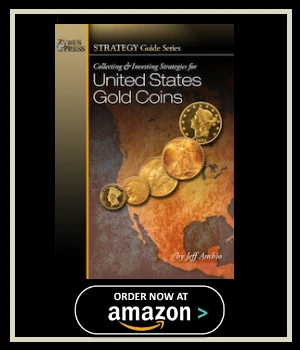
Collecting and Investing Strategies for United States Gold Coins This book covers regular-issue gold series from 1795 through 1933 and informs the reader on a number of investing strategies, including collecting by type, variety, or rarer issues.
 '
'