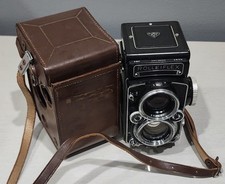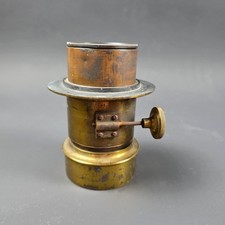
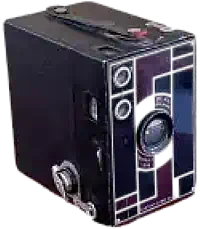
Vintage Cameras
The Fascinating Evolution of Cameras
Cameras capture images and preserve memories. Their evolution showcases human ingenuity and technological progress. Unlike many inventions, cameras didn’t emerge from a single breakthrough. Instead, they developed gradually over centuries.
Early Beginnings: The Camera Obscura
The camera’s history begins in the 11th century. During this period, scholars introduced the camera obscura concept. This simple device became photography’s foundation.
How the Camera Obscura Worked
Developed by polymath Ibn al-Haytham, the camera obscura was revolutionary. Essentially, it was a darkened room or box with a small opening. Light passing through created an inverted outside image inside. While it couldn’t capture images permanently, this invention proved crucial for future developments.
Key Milestones in Camera Development
Following the camera obscura, several important advancements occurred:
- 17th Century: Portable versions appeared
- 1826: First permanent photograph created
- 1888: Kodak introduced consumer cameras
As a result of these innovations, cameras became more accessible. Consequently, photography transformed from a scientific curiosity to an everyday activity.
Why Vintage Cameras Matter Today
Vintage cameras remain important for several reasons. First, they represent technological history. Second, many photographers appreciate their unique image quality. Finally, they remind us how far photography has progressed.
The first steps toward creating a camera capable of capturing permanent images came in the early 19th century. Joseph Nicéphore Niépce and Louis Daguerre played pivotal roles in this transformation. Niépce’s experiments with a light-sensitive material led to the creation of the world’s oldest surviving photograph, taken in 1826. Daguerre, in partnership with Niépce, later introduced the daguerreotype process, which used a silver-coated copper plate to capture images. These early photographic methods, however, were complex and required long exposure times, making them impractical for most people.
In the years that followed, the camera underwent a series of significant developments. The mid-19th century saw the introduction of the wet-plate collodion process, which improved the quality and reduced exposure times, but it still required photographers to carry a portable darkroom. This limitation was overcome with the dry-plate process, introduced in the 1870s, which allowed photographers to use pre-coated plates and eliminate the need for a darkroom in the field.
The late 19th century marked a period of innovation in camera design and accessibility. George Eastman, the founder of Eastman Kodak, played a pivotal role in bringing photography to the masses. In 1888, Eastman released the Kodak No. 1, the first commercially successful camera designed for amateur photographers. It came pre-loaded with film and a simple lens, making it incredibly user-friendly. The company’s marketing slogan, “You press the button, we do the rest,” reflected the camera’s accessibility, as it allowed ordinary people to capture their own images without needing the skills of a professional photographer.
Kodak continued to drive innovation in photography in the early 20th century with the introduction of the Brownie camera in 1900. The Brownie was a compact and affordable camera that further democratized photography, making it even more accessible to the general public. This popular camera allowed individuals to document their lives and create cherished memories.


'