⚔️ World War II Numismatic History
1943 Steel Penny Value —
Wartime Cent Price Guide & Key Errors
1943 Steel Penny Value by Grade and Mint Mark
A common circulated 1943 steel penny is worth roughly a quarter to a few dollars. Uncirculated examples start around $8–$15, and the scarcest high-grade coins, especially the 1943-S, climb into four figures. The chart below breaks values down by grade and mint mark, and the sections after it explain what drives the differences.
For other dates in the series, see our Wheat Penny Value Chart, browse general coin prices, or use What's My Coin Worth? to get a quick read on a coin you already own.
| Coin | VF-20 | EF-40 | MS-63 | MS-65 | MS-67+ | Shop |
|---|---|---|---|---|---|---|
| 1943 (Philadelphia) | $0.25–$1 | $1–$3 | $8–$15 | $25–$50 | $500–$3,000+ | eBay → |
| 1943-D (Denver) | $0.50–$2 | $2–$5 | $10–$20 | $35–$75 | $600–$5,000+ | eBay → |
| 1943-S (San Francisco) | $1–$3 | $3–$8 | $15–$30 | $60–$150 | $1,000–$10,000+ | eBay → |
Values are approximate ranges for reference. High-grade certified examples command the upper end, and rusted or cleaned coins sell for far less. The rare 1943 copper and 1944 steel error coins are covered separately below with reported auction results, since they don't follow a normal grade-by-grade price scale. Always verify current values against completed eBay sales or the PCGS and NGC price guides.


Why the U.S. Mint Switched to Steel in 1943
In 1943, every penny struck for circulation in the United States was made of steel instead of copper, a wartime emergency measure that produced one of the most recognizable coins in American numismatic history. The coin spent less than twelve months in production, yet it never stopped capturing the imagination of collectors.
By late 1942, the United States was fully committed to a global war that was consuming raw materials at a staggering rate. Copper, the primary component of the one-cent coin, was in critically short supply. The metal was essential for shell casings, electrical wiring in military equipment, communications infrastructure, and dozens of other defense applications.
The U.S. Mint tested a range of alternative materials, including plastics and glass, before settling on low-carbon steel coated with a thin layer of zinc. The steel planchets were cheaper, domestically available in abundance, and could be struck on the existing presses with minimal modification. Congress authorized the change in December 1942, and production of the zinc-coated steel cents began at all three operating mints in early 1943. What the government didn't fully anticipate was the public reaction.
The 1943 Steel Penny: What Was Minted and Where
All three active U.S. Mint facilities struck steel cents in 1943. Combined production came to roughly 1.09 billion coins, making the 1943 steel penny one of the most heavily produced Lincoln cent issues of the 20th century. Despite that enormous mintage, the coins were unpopular in circulation.
Philadelphia
No Mint Mark 684,628,670Denver
1943-D 217,660,000San Francisco
1943-S 191,550,0001943-S Steel Penny Value: The Key to the Series
If you searched for "1943 S penny value," the short answer is that a circulated 1943-S steel cent is worth only a few dollars. The San Francisco Mint struck 191,550,000 of them, and steel cents were saved in large numbers, so worn examples are easy to find. Where the 1943-S separates itself is in gem Mint State condition.
Steel cents rusted quickly, and many were cleaned to remove the corrosion. An uncleaned, unspotted 1943-S in MS-65 or better is a genuinely difficult coin, which is why certified examples in top grades can bring hundreds or thousands of dollars, as the chart above shows. For a budget-friendly approach, a problem-free MS-63 gives you the mint mark and the wartime story without the gem-grade premium.
The mint mark, an "S," sits below the date on the obverse. Don't confuse the common steel 1943-S with the extremely rare 1943-S copper error, which is estimated at only five to seven known examples and belongs to an entirely different price tier.
Public Confusion and the Problem With Steel Pennies
The 1943 steel cents were controversial from the start. The silvery-gray color of the zinc-coated coins caused widespread confusion. People regularly mistook them for dimes, and vending machines of the era, calibrated to reject non-copper coins, frequently refused them. Slot machines, parking meters, and coin-operated phones all presented problems.
The rust problem proved even more serious. Zinc is a reasonable corrosion inhibitor but not an impervious one, and millions of steel cents exposed to moisture, sweat, and everyday handling began rusting within months of issue. Rumors also spread that the coins were magnetic, which was true and caused further machine rejections. Some Americans believed the government was quietly debasing the currency.
Why the 1943 Steel Cent Failed in Circulation
- Color confusion — the silvery-gray appearance led many to mistake steel cents for dimes
- Vending machine rejection — most coin-operated machines were calibrated for copper alloy coins
- Magnetism — steel's magnetic properties caused additional mechanical issues in coin-counting equipment
- Rust — the zinc coating failed under normal handling, producing unsightly corroded coins
- Public distrust — some Americans believed the government was circulating inferior currency
The Mint responded quickly. In 1944, copper alloy returned to cent production using salvaged brass from spent military shell casings. The steel cent experiment lasted exactly one year.
The 1943 Copper Error Cents: America's Most Famous Mint Mistake
🚨 The Million-Dollar Error: 1943-D Copper Lincoln Cent
$1,700,000During the switch from copper to steel in early 1943, a small number of bronze planchets left over from 1942 stayed in the press hoppers and were struck with 1943 dies. The result was a handful of 1943-dated Lincoln cents in copper, the metal that was supposed to have been replaced completely.
PCGS estimates that fewer than 20 examples were struck in bronze at Philadelphia and San Francisco combined, and only one 1943-D bronze cent is known. That unique Denver coin, graded PCGS MS64 Brown, sold privately through Legend Numismatics in September 2010 for $1.7 million, a record for any Lincoln cent. Every accepted genuine example carries PCGS or NGC certification, so treat any uncertified coin claimed to be a 1943 copper cent with extreme skepticism.
| Coin | Grade | Reported Result | Year | Shop |
|---|---|---|---|---|
| 1943-D Copper (unique) | PCGS MS64 BN | $1,700,000 (private sale) | 2010 | Replicas → |
| 1943-S Copper | PCGS MS63 BN | $504,000 (Heritage) | 2020 | Replicas → |
| 1943 Copper (Philadelphia) | MS62 BN | $348,000 (Heritage) | 2021 | Replicas → |
Results are as reported by auction houses and third-party summaries, and they vary by individual coin. A result for one certified rarity is not a price guide for any other coin. Shop links go to replica searches only, because no genuine example should be bought without PCGS or NGC certification. Check the PCGS Auction Prices database for current records.
How to Tell If Your 1943 Penny Is Steel, Copper, or a Fake
Nearly every 1943 penny found in circulation is a common steel cent. Its silvery color also explains the popular "1943 silver penny" nickname, but the coin contains no silver at all. It is zinc-coated steel worth face value to a few dollars. Start with the simplest test and work up from there.
Magnet Test
Weight Test
Altered-Date Check
Professional Certification
The Reverse Error: 1944 Steel Cents
The mismatch also worked in the other direction. After copper production resumed in 1944, a small number of steel planchets were struck with 1944 dies, producing 1944-dated steel cents. PCGS estimates the surviving population at roughly 25 to 30 coins, about double the known population of 1943 bronze cents. Its CoinFacts entry notes that some of these blanks may have come from planchets meant for a Belgian 2-franc coin the Mint was striking that year, since they are nearly identical to the 1943 steel planchets.
Two of them stand out. Only two 1944-S steel cents are known, and one graded PCGS MS66 sold for $408,000 in 2021, the current auction record for the issue. A Philadelphia 1944 steel cent in PCGS MS64 reached $180,000 at Heritage Auctions in June 2021. Like the copper errors, these exist because the transition between planchet types, at enormous production volumes, made a few mismatched planchet-and-die combinations nearly inevitable.
Collecting 1943 Steel Pennies: Where to Start
The 1943 steel cent series is one of the most accessible entry points in Lincoln cent collecting, and one of the most interesting for its historical context.
Building Your 1943 Steel Cent Collection
- Type coin approach — a single circulated 1943 steel penny represents the wartime series in a general collection; common Philadelphia examples cost under $5
- Three-coin set — Philadelphia, Denver (1943-D), and San Francisco (1943-S) in matching grades; budget around $10–$50 for circulated and $50–$300+ for matched MS-63 examples
- High-grade registry collecting — the 1943-S in MS-66 or MS-67 is a legitimate challenge coin, and certified examples in top grades are genuinely scarce
- Avoid cleaned coins — steel cents are frequently cleaned to remove rust, and cleaned examples carry heavy discounts
- PCGS and NGC certification — recommended for any example costing more than a few dollars, since altered-date and plated fakes exist
Where to Buy 1943 Steel Pennies
Zinc-coated steel cents aren't a bullion product, so eBay and Amazon are the most practical sources for raw, certified, and reference-book purchases. Always check recent sold comps before buying.
eBay — Raw, Certified & Key Dates
Amazon — Collector Guides
Continue Exploring Lincoln Cents & U.S. Small Cents
Wheat Penny Value Chart
1909-S VDB Lincoln Cent
Error Coins Value Guide
Coin Prices Guide
Top 10 Rarest U.S. Coins
Investing in Rare Coins
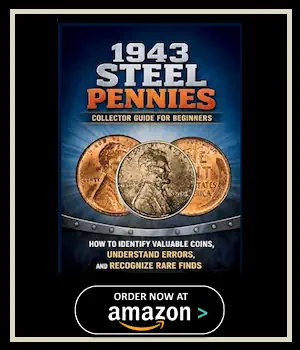

As an Amazon Associate, FindRareCoins.com earns from qualifying purchases.
🪙 Shop 1943 Steel Lincoln Cents on eBay
Find certified and raw 1943 steel cents (Philadelphia, Denver 1943-D, and San Francisco 1943-S) from trusted dealers and collectors.
Lincoln Cent Books on Amazon
Affiliate links — FindRareCoins.com may earn a commission when you purchase through links on this site.
 '
'