
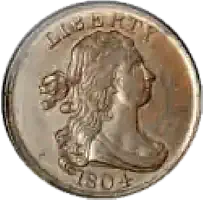
US Large Cent Coins
Origins of the Early American Copper Cent
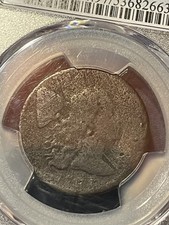
The Large Cent, first issued in 1793, was one of the earliest coins struck at the Philadelphia Mint and marked a major step in establishing a stable national currency. Its debut design featured Liberty with flowing hair on the obverse and a chain encircling “One Cent” on the reverse—a bold but controversial choice that prompted an immediate redesign. As one of the young nation’s first circulating coins, the Large Cent symbolized America’s early efforts to define its monetary identity and create a functional coinage system.
Design Evolution and Minting Advances
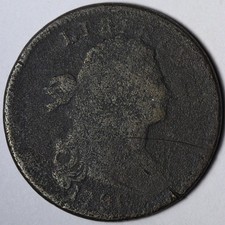
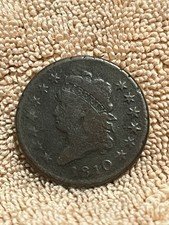
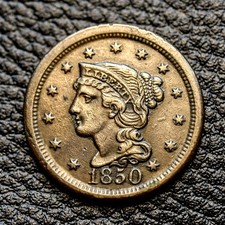
From 1793 to 1857, the Large Cent underwent numerous artistic and technical refinements, resulting in iconic types such as the Draped Bust, Classic Head, and Coronet Head. These changes reflected improvements in engraving techniques, shifts in public taste, and the Mint’s adoption of more efficient production methods, including steam-powered presses by the 1830s. Adjustments to size, weight, and die preparation gradually improved strike quality and consistency, making later issues more uniform while preserving the charm of early handcrafted varieties.
Collecting Significance and the End of an Era
Collectors prize the Large Cent for its rich variety of dates, die states, and historical context, with notable rarities like the 1793 Liberty Cap and 1804 issues commanding strong interest. Rising copper prices in the 1850s led to the introduction of the smaller Flying Eagle Cent, ending Large Cent production in 1857 and closing a foundational chapter in U.S. coinage. Today, even well-worn examples offer a tangible link to America’s earliest minting years, making the Large Cent a cornerstone of early American numismatics.
United States Coins
Rare Coins, Gold & Silver Bullion, Collectibles





A Guide Book of Half Cents and Large Cents – Learn how to grade, evaluate quality, and make smart purchases of early copper coinage.

 '
'