Morgan Silver Dollars
1878–1921 • George T. Morgan • The Legendary 1893-S
The History of the Morgan Silver Dollar
The Morgan silver dollar, struck from 1878 to 1904 and again for a single additional year in 1921, owes its existence to the Bland-Allison Act of 1878, a piece of Congressional legislation driven substantially by Western mining state interests seeking a guaranteed market for the enormous quantities of silver flowing from the Comstock Lode and other newly discovered deposits. This political and economic backdrop makes the Morgan dollar as much a product of Gilded Age monetary politics as it is a numismatic design achievement, since the coin was struck in vast quantities largely independent of genuine commercial demand for a circulating silver dollar.
Struck at the Philadelphia, New Orleans, San Francisco, and Carson City mints (and later Denver for the 1921 issue), the Morgan dollar became the workhorse silver dollar of late 19th-century America, though enormous quantities were struck and simply stored in Treasury vaults for decades rather than actively circulating — a fact that would later prove hugely significant for 20th-century collectors when massive government silver dollar hoards began entering the market. The series briefly paused after 1904 before a final, one-year revival in 1921 to help meet post-World War I silver certificate redemption obligations under the Pittman Act.




George T. Morgan's Design
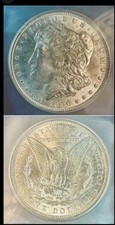
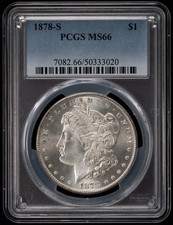
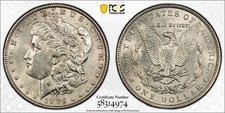
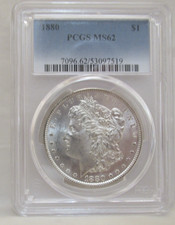
The coin's design comes from George T. Morgan, an English-born engraver who joined the U.S. Mint specifically for this project after Chief Engraver William Barber's initial designs were deemed inadequate — Morgan's superior artistic training in Britain made him the Mint's choice for the new dollar despite some initial internal resistance to hiring outside talent. The obverse depicts a profile of Lady Liberty modeled after Anna Willess Williams, a Philadelphia schoolteacher whose likeness Morgan considered the finest he'd found for the role, while the reverse features a majestic eagle with outstretched wings, clutching arrows and an olive branch, encircled by a wreath.
Morgan's design is widely regarded as one of the most artistically accomplished coins in American numismatic history, combining classical dignity with genuine technical skill in the deep relief and fine detail achievable on 1870s-era coining equipment. This artistic reputation, combined with the coin's substantial 38.1mm diameter (providing ample canvas for detail) and the series' genuine collecting depth across dozens of dates and mint marks, has made the Morgan dollar consistently the most popular and widely collected U.S. silver dollar series for well over a century.
Bland-Allison Act Origins
Anna Willess Williams
GSA Hoard Coins
Legendary Toning
VAM Varieties
The Legendary 1893-S
The GSA Hoard — A 20th-Century Discovery
One of the most remarkable chapters in Morgan dollar history unfolded nearly a century after the coins were struck: in 1964, Treasury officials discovered enormous remaining stockpiles of uncirculated Morgan dollars — most strikingly, a substantial hoard of Carson City-mint coins that had simply never circulated, sitting in Treasury vaults since their original striking decades earlier. Following a public sale process managed by the General Services Administration (GSA) throughout the 1970s, millions of these pristine CC-mint Morgans were sold directly to collectors, many still housed in the distinctive black GSA holders that remain a recognizable and actively collected format today.
This GSA hoard fundamentally reshaped Morgan dollar collecting, since it meant certain Carson City dates that would otherwise be genuinely rare in uncirculated condition became far more accessible than their original mintage figures might suggest — a crucial piece of context for understanding why some CC-mint Morgans are more available in high grade than their mintage numbers alone would predict. GSA-holdered coins retain a distinct collector following today, valued both for their coins and for the historical significance of the original government packaging itself.
Key Dates and Notable Rarities
The 1893-S stands as the undisputed key date of the entire series and one of the most legendary rarities in American numismatics — with a mintage of just 100,000, the lowest of any Morgan dollar, and the overwhelming majority believed to have been melted or heavily circulated, genuinely well-preserved survivors are extraordinarily scarce, commanding strong five- and six-figure prices even in circulated grades. Its combination of low original mintage, a popular collecting series, and San Francisco's status as a favored specialist mint makes the 1893-S the aspirational centerpiece of any serious Morgan dollar collection.
Beyond the 1893-S, several other dates carry major significance. The 1889-CC and 1893-CC are genuinely scarce Carson City issues, particularly challenging in higher mint state grades despite the later GSA hoard's impact on some other CC dates. The 1895, struck only in proof format with no confirmed business strikes ever having been released, is sometimes called the "King of Morgan Dollars" and represents one of the series' greatest rarities in its own right. The 1901 in high mint state grades is also notably difficult, despite a substantial original mintage, due to poor striking quality and heavy circulation of the coins that did survive.
Value Guide
Values shown are approximate market ranges for authentic examples in collectible condition. Silver melt value provides a floor for common dates; key dates and better grades command significant premiums above bullion value.
| Date / Type | Mint | Mintage | Circulated (VF-XF) | Value Range | Shop |
|---|---|---|---|---|---|
| 1878 8 Tail Feathers (first year) | Philadelphia | 750,000 | $60–$120 | $60–$1,000+ | eBay → |
| Common Date (1880s–1900s) | Philadelphia | Varies, high | $30–$45 | $30–$200+ | eBay → |
| 1889-CC KEY | Carson City | 350,000 | $700–$1,500 | $700–$15,000+ | eBay → |
| 1893-S KEY | San Francisco | 100,000 | $3,500–$8,500 | $3,500–$500,000+ | eBay → |
| 1893-CC KEY | Carson City | 677,000 | $600–$1,200 | $600–$12,000+ | eBay → |
| 1895 "King of Morgans" KEY | Philadelphia | 880 (proof only) | N/A | $20,000–$300,000+ | eBay → |
| 1921 (final year) | Philadelphia | 44,690,000 | $28–$40 | $28–$150+ | eBay → |
Where to Buy Morgan Silver Dollars
JM Bullion
Kitco
Money Metals Exchange
SD Bullion
Silver Gold Bull
eBay — Certified Morgan Dollars
eBay — GSA Holder Morgans
FRC Where to Buy Morgan Dollars
FRC Coin Price Guide
Related Coin Guides
 Find Morgan Silver Dollars on eBayMoney Back Guarantee
FindRareCoins.com participates in the eBay Partner Network, Amazon Associates, and AWIN affiliate programs. Purchases made through links on this page may earn us a commission at no additional cost to you.
Frequently Asked Questions
What is the most valuable Morgan silver dollar?
The 1893-S is the undisputed key date and one of the most legendary rarities in American numismatics, with a mintage of just 100,000 — the lowest of any Morgan dollar — and only a small number of well-preserved examples believed to survive today. The 1895, struck only as a proof with no confirmed circulating strikes, is similarly significant and sometimes called the "King of Morgan Dollars," representing one of the series' greatest rarities in its own right.
What is the GSA hoard?
The GSA hoard refers to millions of uncirculated Morgan silver dollars, primarily from the Carson City Mint, discovered in Treasury vaults in 1964 — coins that had simply never entered circulation since their original striking decades earlier. The General Services Administration sold these coins directly to collectors throughout the 1970s, many still housed in distinctive black GSA holders that remain a recognizable and actively collected format today.
Are Morgan silver dollars made of silver?
Yes — Morgan dollars are 90% silver and 10% copper, containing approximately 0.7734 troy ounces of pure silver. This gives common-date examples substantial bullion value beyond their numismatic worth, and Morgan dollars are among the most popular silver coins for both collectors and bullion-focused buyers given their combination of genuine silver content and historic American design.
Who designed the Morgan silver dollar?
George T. Morgan, an English-born engraver, designed the coin after joining the U.S. Mint specifically for this project. His obverse Liberty portrait was modeled after Anna Willess Williams, a Philadelphia schoolteacher whose likeness Morgan considered the finest he'd found for the role. The design is widely regarded as one of the most artistically accomplished coins in American numismatic history.
What is a VAM variety?
VAM refers to the Van Allen-Mallis reference catalog, the standard specialist guide for Morgan (and Peace) silver dollar die varieties, which documents hundreds of distinct die combinations, doubled dies, and other variations within the series. Collectors and dealers use VAM numbers as shorthand when discussing specific varieties — a rich specialist niche within the broader Morgan dollar collecting world that adds substantial depth beyond simple date-and-mintmark collecting.
What is a good starting point for collecting Morgan dollars?
Common-date examples from the 1880s through early 1900s in circulated to lightly circulated grades are widely available and affordable, often just a modest premium above silver melt value, making them an accessible entry point. Building a date-and-mintmark set, pursuing GSA holder coins for their historical packaging, or specializing in a particular mint (like Carson City) are all popular directions collectors take once they've acquired some common-date examples to start.

Guide Book of Morgan Silver Dollars - Features hundreds of full-color photographs, including high-quality images of toned coins, Proofs, errors, and rare varieties.
 '
'