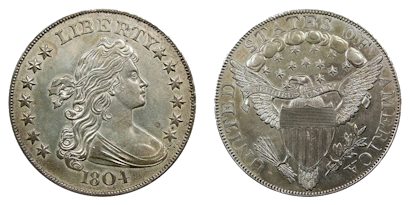
Zero were struck in 1804. The coins dated 1804 were struck decades later as diplomatic gifts — and the 15 known specimens are among the most valuable coins in the world.
The King of American CoinsThe 1804 Draped Bust silver dollar holds the title "King of American Coins" — a designation it has carried for over 150 years and shows no sign of surrendering. It is simultaneously one of the most historically fascinating, most studied, and most valuable coins in American numismatic history. The central paradox: not a single 1804-dated silver dollar was actually struck in 1804. Every known example was produced decades later, as diplomatic gifts or as specimens for collectors, using dies bearing the 1804 date. Of the 15 known specimens across three distinct classes, the finest have sold for over $7 million.
The Three Classes — and Their Values
Class I
Class II
Class III
Record Auction Sales
The Full Story — Why No 1804 Dollars Were Struck in 1804
In 1804, the Philadelphia Mint was producing silver dollars — but was using 1803-dated dies that had been made the previous year. It was standard Mint practice to continue striking coins with old dies until they wore out, regardless of the calendar year. The Mint's own records from 1804 show 19,570 silver dollars were struck — but these were almost certainly struck from 1803 or earlier dies, not a new 1804-dated die. No contemporary 1804-dated dollars are known to have entered circulation.
The story picks up thirty years later. In 1834, the State Department commissioned special coin sets as diplomatic gifts for rulers in Asia. These sets needed to include one of every denomination of U.S. coin currently produced, presented in a fitted case. To fill the silver dollar slot, the Mint produced new coins using a newly made die bearing the 1804 date — reasoning that 1804 was the last year silver dollar production was officially recorded (not quite accurate, but close enough for the State Department's purposes).
Eight of these diplomatic-gift dollars were produced in 1834–1835. These became the Class I specimens. Later, in the 1850s and 1870s, additional 1804-dated dollars were produced at the Mint — apparently for sale to collectors — using different die combinations. These are the Class II (one known, at the Smithsonian) and Class III specimens. The exact circumstances of the later productions remain debated by numismatic historians.
The 15 Known Specimens — Where Are They?
| Class | Known Examples | Notable Locations |
|---|---|---|
| Class I (Original Strikes) | 8 known | Smithsonian (2), various private collections |
| Class II (Unique Restrike) | 1 known | Smithsonian Institution — not available for sale |
| Class III (Later Restrikes) | 6 known | Various private collections |
| Total Known | 15 specimens | 13 privately held; 2 at Smithsonian (Class I) |
Of the 13 privately held specimens, appearances at auction are rare — typically one every several years. Each sale generates significant numismatic press coverage and typically sets or approaches the previous record. The Smithsonian's Class I and Class II specimens are not available for sale under any circumstances.
Counterfeits and the Authentication Requirement
The 1804 dollar is one of the most counterfeited coins in American numismatic history — its enormous fame has driven fake production for well over a century. Early counterfeit techniques included altering the date on common 1801, 1802, or 1803 dollars by modifying the last digit. Modern fakes range from crude castings to sophisticated struck counterfeits that can fool casual observers.
PCGS and NGC have authenticated all 15 known genuine specimens and maintain detailed records of each coin's specific die characteristics, provenance, and weight. Any claimed 1804 dollar without a PCGS or NGC holder from a recognized major auction house should be treated as a counterfeit until proven otherwise. The probability of encountering a genuine undiscovered 1804 dollar is extremely low — all known specimens have extensive documented provenance stretching back to the 19th century.
Explore early American silver dollar collecting — Draped Bust dollars and key dates.
🛍️ Shop on eBay 📚 Reference Books on AmazonFrequently Asked Questions
How much is the 1804 silver dollar worth?
Why is the 1804 dollar called the King of American Coins?
Were any 1804 silver dollars actually struck in 1804?
Can I buy a replica 1804 dollar?
What other early American silver dollars are collectible?
Explore early American coinage and rare U.S. dollar history.
🛍️ Browse on eBay '
'