Error Coins Value Guide —
How, Why & Where Mint Errors Happen
Doubled dies, off-center strikes, wrong planchets, and more — how these mistakes happen at the Mint, why collectors pay a premium for them, and where to find or buy one yourself.
Mint error coins are among the most fascinating collectibles in American numismatics. Unlike date-and-mint set collecting — where the goal is simply to acquire one example of every regular issue — error collecting rewards knowledge, sharp eyes, and an understanding of how coins are made. Every error is unique in some way, telling a specific story about what went wrong at the Mint.
This guide focuses on the questions a value chart can't answer on its own: how these mistakes actually happen during production, why some errors are worth thousands while similar-looking ones are worth almost nothing, and where collectors actually find and buy them. For exact date-by-date values on a specific denomination, use the links below — each one leads to a full value chart with current pricing by error type and grade.
Browse by Denomination
Each card opens in a new tab, so this guide stays put while you check out a specific denomination's full value chart.


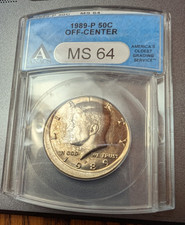


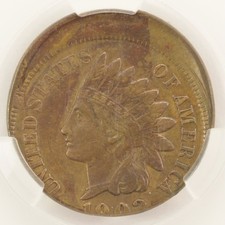


Error Types That Span All Denominations
Certain error types occur across every denomination — understanding them at a conceptual level lets you identify and evaluate errors regardless of which coin you're holding.
Doubled Die
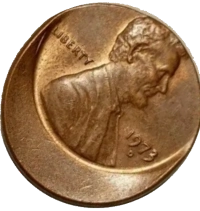
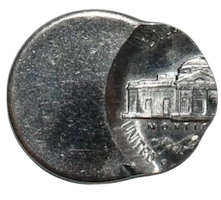
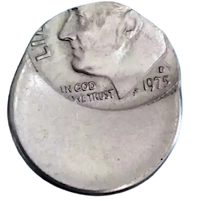
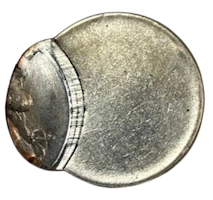
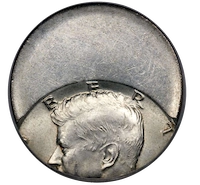
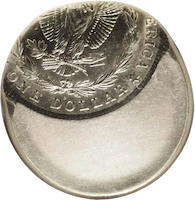
Off-Center Strike
Wrong Planchet
Missing Clad Layer
Clipped Planchet
Double Strike
Die Cap
Struck Through
Why Mint Errors Are Valuable
Survival count, not mintage figures, is what actually drives an error coin's price — the U.S. Mint's quality control catches the overwhelming majority of mistakes before a coin ever leaves the building, so what a collector is really paying for is one of a small number that slipped past inspection. From there, a handful of specific factors separate a $30 error from a $30,000 one.
Attribution & Cataloging
Errors formally cataloged in a recognized reference — Fivaz-Stanton FS numbers for doubled dies and die varieties, VAM numbers for Morgan and Peace dollars — sell for real premiums over similar-looking but uncataloged pieces. Buyers can verify exactly what they're getting and compare it against known population data, which removes guesswork from the price.
Certification Premium
Third-party authentication from PCGS or NGC removes the single biggest barrier to a confident sale: the fear of buying a fake, an altered coin, or ordinary machine doubling mislabeled as a genuine doubled die. Certified examples consistently bring more than raw coins of the same error type and apparent grade, because the buyer isn't pricing in that risk.
Crossover Demand
The most famous errors escape the error-collecting niche entirely and become must-own pieces for date-and-mint-set collectors and general rare coin investors. That crossover demand — not just error specialists bidding against each other — is why a small handful of errors post results comparable to major classic rarities rather than staying a specialty-market curiosity.
Visual Drama
An error visible to the naked eye tends to outsell a subtle one at the same rough rarity tier. A dramatic off-center strike, a missing clad layer, or a wrong-planchet coin markets itself at a glance; a doubled die that needs a loupe to appreciate has a smaller buyer pool willing to pay top dollar for it, even when the underlying rarity is similar.
How Mint Errors Are Made
The Four Stages of Production — Where Things Go Wrong
Planchet preparation is the first stage. Metal strip is fed through a blanking press that punches out circular blanks. If the strip feeds incorrectly, blanks can be punched from already-punched areas, creating clipped planchets. If the wrong strip enters the press, wrong planchet errors originate here. If the cladding process fails, missing clad layer errors are born at this stage.
Die preparation is where doubled dies originate. A master hub impresses its design into a working hub, which in turn impresses working dies. If this hubbing process is repeated at a slightly different angle, the doubled image is permanently embedded into the die — and every coin struck from that die carries the doubling forever. The 1955 Lincoln DDO is the most celebrated example in the series.
The striking process produces the broadest category of errors. Off-center strikes happen when a planchet isn't properly centered under the dies. Double strikes happen when a coin isn't ejected before the next strike. Die caps form when a coin adheres to a die. Wrong planchet errors that originated in planchet prep are confirmed here when the wrong-size blank is actually struck.
Post-striking handling produces errors unique to certain modern coins. Presidential Dollar edge lettering is applied after striking — meaning the missing edge lettering error could only exist at this final stage. The Presidential Dollar "In God We Trust" missing motto errors were among the most widely publicized modern coin errors in recent decades.
Where to Find & Buy Error Coins
Error coins turn up in more places than most new collectors expect — some purely by luck, others through dedicated searching or a targeted purchase.
- Pocket Change & Bank Rolls
Minor modern doubled dies, die cracks, and occasional off-center strikes still surface in day-to-day circulation. Roll hunting — buying bank-wrapped rolls of a specific denomination and searching them coin by coin — remains the most accessible and least expensive way to hunt, especially paired with a magnifying loupe and a denomination-specific variety reference.
- Online Marketplaces
eBay carries the largest live inventory of error coins across every price tier, from a few dollars to five and six figures for certified rarities. Searching by the specific error name, date, and grading service turns up certified examples with photos and population context.
- Specialist Auction Houses
Heritage Auctions, Stack's Bowers, and GreatCollections handle most five- and six-figure error sales, and their searchable auction archives are useful for research even when you're not actively bidding — they're one of the best ways to see what a similar coin has actually realized recently.
- Coin Shows & Dealers
Regional and national shows let you handle a piece in person before buying, which matters more for errors than almost any other coin category — condition and eye appeal are hard to judge from photos alone. Specialist error dealers frequently carry inventory that never gets listed online.
- Estate Sales & Inherited Collections
A meaningful share of significant error discoveries come from old accumulations rather than deliberate purchases. Most errors entered circulation decades ago and were pulled by ordinary people, not dedicated collectors — so an inherited jar of change or an old collection bought at an estate sale is a legitimate place to look, not just a beginner's fantasy.
Getting Your Error Coins Graded
For any error coin worth more than $75–$100, third-party grading from PCGS or NGC is strongly recommended. Both services authenticate the error type, assign a grade, and encapsulate the coin in a tamper-evident holder. The certification label explicitly states the error type — "Off-Center Strike," "Doubled Die Obverse," "Wrong Planchet," and so on — which provides market confidence that the error is genuine and correctly identified.
Certified error coins consistently sell for premiums over raw examples of the same grade. Buyers purchasing raw error coins face authentication uncertainty, which they price into their offers. A PCGS or NGC slab eliminates that uncertainty and makes selling significantly easier — particularly on eBay and at coin shows. For most collector-grade errors worth $100–$500, the Economy or Standard service tier ($20–$40 per coin) is appropriate.
Related Coin Guides
Shop Certified Error Coins on eBay
PCGS and NGC authenticated errors across all denominations — doubled dies, off-center strikes, wrong planchets, and more.
Error Coin Books on Amazon
Frequently Asked Questions
What is the most valuable error coin in U.S. history?
Among confirmed, legally transferable specimens, the 1943 Copper Lincoln Cent and 1944 Steel Lincoln Cent are among the most valuable single error coins — the finest known 1943-D copper cent last changed hands for $1.7 million in a private sale brokered through a major numismatic dealer, and auction-sold 1943 copper cents have brought $300,000-plus. The unique Sacagawea/State Quarter mule is in similar territory. For the broadest category of documented and sold errors, high-grade Morgan Dollar VAMs represent the deepest value concentration in a single series.
Why are some errors worth thousands and others worth almost nothing?
It comes down to survival count, attribution, and visibility. An error that's been formally cataloged (an FS number or VAM number) with a known, low surviving population commands a real premium over an uncataloged coin that merely looks similar. Errors that are dramatic and visible at a glance also tend to outsell subtle ones — like small doubled dies that need magnification — even when the underlying rarity is comparable. See the "Why Mint Errors Are Valuable" section above for the full breakdown.
How do I know if I have a genuine error coin or just a damaged coin?
The key distinction is origin: genuine mint errors occur during the production process before the coin leaves the Mint. Post-mint damage — dents, gouges, acid etching, grinding — occurs after the coin enters circulation. Genuine off-center strikes show a clean blank crescent with a normal rim on the struck portion. Genuine doubled dies show fully formed secondary images with depth. Damage shows irregular surfaces, tool marks, and disrupted metal flow. When in doubt, PCGS or NGC authentication is the definitive answer.
What is machine doubling and why doesn't it have value?
Machine doubling (also called MD or shelf doubling) occurs during the striking process when die bounce creates a flat, smeared secondary image on the coin's surface. Unlike genuine hub doubling — which embeds two complete, separate images into the die itself — machine doubling produces a shallow, flat shelf with no depth or detail. It has zero collector premium because it's not a die variety, it can't be attributed to a specific catalogued variety, and it occurs on millions of coins.
Can I find error coins in pocket change?
Yes — modern errors including die cracks, minor doubled dies, and occasionally off-center strikes still appear in circulation. Presidential Dollar edge errors were widely found in circulation in 2007–2008. Die gouges like the 2005-P Speared Bison nickel still turn up in rolls. The most productive hunting approach is roll searching specific denominations from bank-wrapped rolls, supplemented by a magnifying loupe and denomination-specific variety reference guides. See "Where to Find & Buy Error Coins" above for more approaches beyond pocket change.
What reference books should every error coin collector own?
The core library: Alan Herbert's Official Price Guide to Mint Errors (general errors across all denominations); the Cherrypicker's Guide to Rare Die Varieties Volumes 1 and 2 by Fivaz and Stanton (die varieties by denomination); and for Morgan Dollar specialists, the VAM World website plus the Van Allen-Mallis reference. The Error Coin Encyclopedia by Margolis and Weinberg covers modern errors in depth. PCGS CoinFacts and NGC Coin Explorer are invaluable free online references for population data and auction records.
The Ultimate U.S. Error Coin Guide 2027 is a practical and easy-to-use reference designed to help you confidently identify, evaluate, and collect U.S. error coins.
 '
'