Dime Error Coins
The 1982 no mint mark Roosevelt, missing clad layers, Mercury dime doubled dies, and the full spectrum of valuable dime errors — values, identification, and where to find them.
Collector's Value GuideDimes are the smallest U.S. coin in circulation, but the errors they produce can be among the most dramatic in American numismatics. From the famous 1982 no mint mark Roosevelt — a coin so significant it caused a national coin hunt — to missing clad layers that expose the pure copper core, dime errors offer collectors an accessible entry point and real upside potential. A discerning eye and a basic loupe are all you need to start hunting.
Most Valuable Dime Error Types
Dimes are clad coins (since 1965) and solid silver before that, which creates two distinct error categories: clad-layer errors unique to post-1964 issues, and the full range of die and mechanical errors spanning both eras.
| Error Type | Series Affected | Typical Value Range |
|---|---|---|
| No Mint Mark (1982-P) | Roosevelt Dime | $75 – $300+ |
| Missing Clad Layer (full) | Post-1965 Roosevelt | $50 – $400+ |
| Wrong Planchet Strike | All series | $100 – $2,000+ |
| Doubled Die Obverse | Mercury & Roosevelt | $25 – $3,000+ |
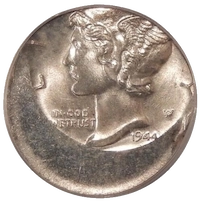
| Off-Center Strike (50%+) | All series | $30 – $300+ |
| 1916-D Mercury Dime (key date) | Mercury Dime | $800 – $50,000+ |
| Clipped Planchet | All series | $10 – $100+ |
| Die Cap Error | All series | $200 – $1,500+ |
Featured Dime Errors

1982 No Mint Mark Roosevelt Dime
In 1982, the Philadelphia Mint accidentally shipped dies to the presses without adding the required P mint mark — the only time this happened after P marks became standard in 1980. Hundreds of thousands entered circulation before the error was caught.
🛍️ View on eBay
Missing Clad Layer Roosevelt Dime
When the copper-nickel outer layer was omitted during planchet manufacturing, the result is a dime with a distinctly different color on one or both sides — exposing the pure copper core underneath the normal silver-colored surface.
🛍️ View on eBay
Mercury Dime Doubled Die Varieties
Several Mercury Dime dates exhibit strong doubling — most notably on the date, LIBERTY, and the fasces on the reverse. The 1942/41 overdate is the series' most famous variety, where the underlying 41 is visible beneath the 42.
🛍️ View on eBay
Dime on Wrong Planchet
When dime dies strike cent or cent dies strike dime planchets, the result is dramatically off-size. A dime die striking a cent planchet produces a copper-colored "dime" — immediately recognizable and highly collectible as a major error type.
🛍️ View on eBayDime Error Coin Explorer
Browse errors by series — click any card for full details and current eBay listings.
The 1982 No Mint Mark Roosevelt Dime
The 1982 no mint mark Roosevelt dime is the most famous modern dime error and one of the most widely collected error coins of the 20th century. The story begins with a procedural lapse at the Philadelphia Mint: after Congress mandated the P mint mark on all Philadelphia coinage in 1980 (except cents), the mark was punched into working dies as part of the normal preparation process. In 1982, at least one set of dies for the dime was shipped to the production floor without the P mark — an oversight that wasn't caught until the affected coins had already entered circulation.
The exact number of no-P dimes produced is unknown, but estimates range from several hundred thousand to over a million. This means they're genuinely findable — not extreme rarities — which is part of their appeal. Coin roll searching through dimes from the 1982 era still occasionally turns one up. In circulated condition, these typically trade for $75–$100. Choice uncirculated examples (MS-65 and above) bring $200–$300, and fully struck gems can exceed those figures at auction.
Shop certified 1982 no mint mark Roosevelt dimes and other major dime errors.
🛍️ Shop on eBay 📚 Reference Books on AmazonHow to Find Dime Errors in Circulation
Dimes are excellent roll-searching targets because of their small size and high mintage volumes — meaning errors are produced in quantity, even if the percentage remains small. Start by requesting 1982 dime rolls from your bank and searching for the no-P variety. Examine each coin under a 5x loupe and check the area above Roosevelt's shoulder for the mint mark. This alone can make a search worthwhile.
For missing clad layer dimes, look for coins with an obviously copper or bi-colored appearance. A partial missing clad layer will show a section of copper-colored metal on an otherwise normal-appearing coin. Full missing clad layer examples are rarer and dramatically more striking — one side will be entirely copper-toned.
When hunting for doubled dies, focus on the date and LIBERTY on the obverse. Even minor doubling can add significant value on key dates. A basic 10x loupe and a good printed variety reference are your best tools for this type of search.
Frequently Asked Questions
How do I find the 1982 no mint mark dime?
What is a missing clad layer dime worth?
Is the 1942/41 Mercury Dime overdate an error or a variety?
Can I still find 1982 no-P dimes in circulation?
What's the difference between a doubled die and machine doubling?
What reference books cover dime errors and varieties?
Ready to add a certified dime error to your collection?
🛍️ Browse Certified Dime Errors on eBay '
'