1964 Kennedy Half Dollar Value, Mint Marks & Key Varieties
The last year of 90% silver — and one of the most widely collected U.S. coins ever minted. Here's everything you need to know about what yours is worth.
90% Silver • Philadelphia • Denver • Accented Hair • Proof1964 Kennedy Half Dollar Value Chart
Values below reflect the current collector market. Silver-melt-based values assume approximately $32/oz silver. Actual realized prices vary with silver spot price and auction demand.
| Coin | Grade / Condition | Estimated Value | Shop |
|---|---|---|---|
| 1964 Philadelphia | Good to Very Fine (circulated) | $11–$14 (melt) | eBay → |
| 1964 Philadelphia | Extremely Fine (EF-40 to EF-45) | $13–$18 | eBay → |
| 1964 Philadelphia | About Uncirculated (AU-50 to AU-58) | $16–$24 | eBay → |
| 1964 Philadelphia | Mint State MS-63 | $22–$35 | eBay → |
| 1964 Philadelphia | Mint State MS-65 | $45–$80 | eBay → |
| 1964 Philadelphia | Mint State MS-67 | $300–$600+ | eBay → |
| 1964-D Denver | Good to Very Fine (circulated) | $11–$14 (melt) | eBay → |
| 1964-D Denver | Mint State MS-63 | $22–$40 | eBay → |
| 1964-D Denver | Mint State MS-65 | $55–$100 | eBay → |
| 1964-D Denver | Mint State MS-67 | $400–$900+ | eBay → |
| 1964 Proof (S) | PR-65 | $20–$40 | eBay → |
| 1964 Proof (S) | PR-67 Deep Cameo | $150–$350+ | eBay → |
| 1964 Accented Hair | EF to AU (circulated) | $25–$60 | eBay → |
| 1964 Accented Hair | Mint State MS-63 | $60–$130 | eBay → |
| 1964 Accented Hair | Mint State MS-65 | $150–$350 | eBay → |
| 1964 Proof Accented Hair | PR-65 to PR-67 | $75–$400+ | eBay → |
| 1964 SMS | SP-65 and above | $50,000–$156,000+ | eBay → |
Values are estimates for reference only and fluctuate with silver prices and market conditions. Always verify against current auction data before buying or selling.
Denomination: 50 cents | Composition: 90% Silver, 10% Copper | Silver Content: 0.3617 troy oz
Designer: Gilroy Roberts (obverse) / Frank Gasparro (reverse) | Diameter: 30.6 mm | Weight: 12.50 g
When President John F. Kennedy was assassinated on November 22, 1963, Congress moved quickly to honor him on U.S. coinage. The Kennedy Half Dollar entered circulation in 1964 — just months after his death — and the public responded with overwhelming demand. Millions of Americans pulled these coins from circulation and saved them as keepsakes, which is why finding a worn 1964 half dollar in pocket change today is all but impossible.
What many collectors don't realize is that 1964 was the last year the U.S. Mint struck half dollars in 90% silver. The Coinage Act of 1965 reduced silver content to 40% for 1965–1970 halves, then eliminated it entirely. That silver content alone gives every 1964 Kennedy Half Dollar real precious metal value — regardless of condition. If you're researching other dates in the series, see the full Kennedy Half Dollar Value Chart covering every year from 1964 to present.
History & Background
The design came together in a matter of weeks. Chief Engraver Gilroy Roberts based the obverse portrait on a medal he had already created for the Kennedy inaugural — a stroke of luck that accelerated production. Frank Gasparro designed the heraldic eagle reverse, adapted from the Presidential Coat of Arms. The finished dies were ready by January 1964, and the Philadelphia Mint began striking coins on February 11, 1964.
Demand was immediate and enormous. The Mint struck over 430 million Kennedy Half Dollars in 1964 between Philadelphia and Denver — a staggering number — and still couldn't keep up. People hoarded them. Banks reported constant shortages. The Treasury eventually had to issue public statements urging Americans to spend their coins rather than collect them. Few listened.
The 1964 Kennedy Half Dollar remains one of the most produced 90% silver U.S. coins in history, yet it's rarely found in circulation today precisely because so many were saved. Most surviving examples show minimal wear.


Mint Marks: Philadelphia vs. Denver vs. San Francisco
🏛️ Philadelphia (No Mint Mark)
🦅 Denver (D Mint Mark)
✨ San Francisco Proof (S)
Silver Content & Melt Value
Every 1964 Kennedy Half Dollar contains 0.3617 troy ounces of pure silver. That gives even a well-worn, circulated example meaningful precious metal value well above its 50-cent face value.
At $32/oz silver → 0.3617 × $32 = ~$11.57 melt value
At $35/oz silver → 0.3617 × $35 = ~$12.66 melt value
Circulated examples typically sell at or slightly above melt. Use our silver coin melt calculator to get the exact current value, or check our current coin prices guide for the latest silver spot reference.
This silver content also makes 1964 Kennedy Half Dollars a popular component of junk silver coin stacks. Many bullion buyers purchase these coins by the roll or bag purely for their silver weight — a market that provides a reliable pricing floor.
Key Varieties
Accented Hair Variety
The most significant variety for Philadelphia coins is the Accented Hair. Early production dies featured more detailed, deeply cut lines in Kennedy's hair above his ear. Jacqueline Kennedy reportedly requested a revision, finding the original too stylized, so the Mint polished back those hair lines mid-production. Coins struck from the earlier dies show the more pronounced hair detail — these are the Accented Hair variety.
The Accented Hair variety is rarer than the standard issue and commands a meaningful premium in higher grades. In MS-64 and above, expect prices 2–4× the standard Philadelphia coin. Proof Accented Hair examples exist as well and are similarly scarce.
1964 SMS (Special Mint Set)
An extraordinarily rare variety — only an estimated 10 to 15 specimens are known to exist. The 1964 SMS Kennedy Half Dollar was struck with a special satin finish, different from both standard business strikes and Proof coins. These were not made for public sale; they were produced as presentation pieces and test strikes.
In 2019, a 1964 SMS Kennedy Half Dollar graded SP-67 by PCGS sold at auction for $108,000 at Heritage's CSNS Platinum Night sale — a record at the time. That record has since been surpassed: the finest known example, graded SP-68, sold for $156,000 at Stack's Bowers in August 2019. If you believe you have one, it requires third-party authentication through PCGS or NGC. The surface texture is distinctly different from circulation strikes and standard Proofs — a satin sheen rather than mirror-like fields or typical business-strike luster.
What to Look For When Grading
Grading a 1964 Kennedy Half Dollar comes down to three areas: the high points of Kennedy's portrait on the obverse, the eagle's breast feathers on the reverse, and the fields (flat areas) surrounding both.
Obverse high points: Check Kennedy's cheekbone, the hair above his ear, and the back of his neck. These areas wear first in circulation. Coins showing sharp detail with no flattening across all three are candidates for Mint State grades.
Reverse high points: The eagle's breast feathers and the top of the shield show wear earliest. Full, well-defined breast feathers on an otherwise clean coin suggest AU or better.
Luster and contact marks: Mint State coins should show original luster — a cartwheel-style sheen when rotated under a light. Contact marks (small nicks from other coins in mint bags) distinguish MS-60 to MS-63 examples from the cleaner MS-64 and MS-65 coins that command real premiums.
Where to Buy & Sell
The 1964 Kennedy Half Dollar is one of the most liquid U.S. silver coins in existence. Buyers include coin dealers, bullion dealers, and collectors — meaning you'll rarely have trouble moving them at fair market value.
For circulated coins and rolls, local coin shops and online dealers offer quick prices tied to silver spot. Expect to sell at 90–100% of melt for circulated examples, and pay a modest premium above melt when buying (typically $1–3 per coin).
For high-grade and variety coins, auction houses and eBay certified sales are your best option. PCGS and NGC slabbed coins in MS-65+ or with Accented Hair attribution attract serious collector interest and trade at strong premiums.
Where to Buy 1964 Kennedy Half Dollars
🪙 Certified Examples
🔍 Accented Hair Variety
✨ Deep Cameo Proofs
🥈 Circulated Rolls & Junk Silver
🦅 1964-D Denver
📚 Albums & Supplies
Shop 1964 Kennedy Half Dollars on eBay
Certified and raw examples — from circulated rolls to high-grade MS-65+ slabs, Accented Hair varieties, and Deep Cameo proofs.
Albums & Supplies on Amazon
Affiliate links — FindRareCoins.com may earn a commission when you purchase through links on this site.
Frequently Asked Questions
How much is a 1964 Kennedy Half Dollar worth?
A circulated 1964 Kennedy Half Dollar is worth its silver melt value — approximately $11 to $14 depending on current silver prices. Uncirculated examples in MS-63 grade fetch $22–$35, while high-grade MS-65 coins sell for $45–$80 or more. The Accented Hair variety and top Proof examples command significantly higher premiums.
Is a 1964 Kennedy Half Dollar real silver?
Yes. The 1964 Kennedy Half Dollar is composed of 90% silver and 10% copper, containing 0.3617 troy ounces of pure silver. Starting in 1965, half dollars were reduced to 40% silver, and after 1970 they contained no silver at all. The 1964 issue is the last 90% silver Kennedy half dollar ever produced for circulation.
What is the rarest 1964 Kennedy Half Dollar?
The 1964 SMS (Special Mint Set) Kennedy Half Dollar is by far the rarest, with only an estimated 10 to 15 known examples. One graded SP-67 sold at auction in 2019 for $108,000, and the finest known example, graded SP-68, sold for $156,000 that same year. For coins accessible to most collectors, the Accented Hair variety in high mint-state grades (MS-65 and above) is the most sought-after and difficult to find.
How do I tell if my 1964 Kennedy Half Dollar is an Accented Hair variety?
Examine the hair just above President Kennedy's left ear on the obverse with a magnifier or loupe. The Accented Hair variety shows sharper, more deeply cut individual hair lines in that area. The standard variety has those lines polished back for a smoother appearance. The difference is subtle but clear under magnification.
Where is the mint mark on a 1964 Kennedy Half Dollar?
The mint mark appears on the reverse (eagle side) below the eagle's left talon, just above the "F" in "HALF." Philadelphia coins carry no mint mark. Denver coins show a "D." San Francisco Proof coins show an "S." All three mint mark positions are in the same location on the reverse.
Should I clean my 1964 Kennedy Half Dollar?
No. Cleaning a coin — even gently — almost always reduces its numismatic value. Collectors and graders can detect cleaning through altered surface texture and unnatural luster. A cleaned coin that might otherwise grade MS-63 could drop to a details grade ("cleaned") and sell for far less. Store your coins in coin flips, holders, or albums and leave surfaces untouched.
Is a 1964 Kennedy Half Dollar a good investment?
For a coin with a built-in silver floor, real collector demand, and wide market liquidity, the 1964 Kennedy Half Dollar makes a reasonable entry-level silver coin holding. Common circulated examples track silver prices closely. The real upside is in high-grade slabbed examples and Accented Hair varieties, which can appreciate beyond melt value as collector interest grows.
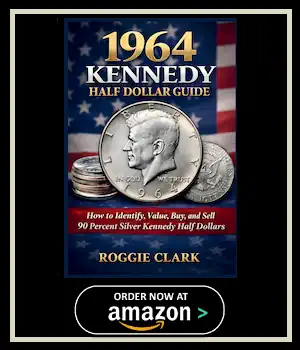
The 1964 Kennedy half dollar remains one of the most recognized and widely collected coins in the United States, and it continues to attract collectors, silver stackers, and everyday people who discover these coins.

 '
'