Coin Collecting Guide
Everything you need to start and grow a serious coin collection — grading, key dates, buying strategies, storage, and the market knowledge that separates informed collectors from casual ones.
Coin collecting — officially called numismatics — spans over 2,500 years of human history. From ancient Greek silver tetradrachms to modern American Eagle bullion coins, every coin is a physical artifact of the civilization that produced it. This guide covers everything you need to start and grow a serious collection: grading standards, key dates, storage, buying strategies, and the market knowledge that separates informed collectors from casual ones.
This guide is for educational and hobby purposes. It does not constitute investment advice or recommendations to buy or sell coins for financial gain.
Why Coin Collecting Endures
No other hobby combines art, history, metallurgy, economics, and treasure hunting in a single pursuit. A 1909-S VDB Lincoln cent tells the story of public outrage over a designer's initials on a government coin — 484,000 were minted before the Mint pulled them, and today a problem-free example in Fine condition is worth over $1,000. A 1921 Morgan dollar tells the story of a government suddenly needing to resume silver dollar production after a decade-long gap. Context transforms metal into meaning.
Coin collecting also has a practical dimension. Unlike stamps or trading cards, coins are denominated currency with an intrinsic metal value floor. A silver Morgan dollar in the most worn, problem-ridden condition imaginable is still worth its melt value in silver — currently around $52, tracking the live spot price. That floor doesn't exist in most other collectibles markets.
The Sheldon Grading Scale: What Every Collector Must Know
Coin values are almost entirely determined by condition. A 1881-S Morgan dollar in MS-65 is worth $300+. The same coin in VF-20 brings under $60. Understanding the Sheldon scale — a 70-point numeric system developed by Dr. William Sheldon in 1948 — is the single most important skill in numismatics.
| Grade | Number | Description | What to Expect |
|---|---|---|---|
| Poor | P-1 | Barely identifiable | Date and type visible, heavily worn smooth |
| Fair | F-2 | Heavily worn | Type clear, most detail worn flat |
| About Good | AG-3 | Very heavily worn | Outline visible, date barely readable |
| Good | G-4 / G-6 | Heavily worn | Design clear but flat, no detail in relief |
| Very Good | VG-8 / VG-10 | Well worn | Main features clear, some detail visible |
| Fine | F-12 / F-15 | Moderate wear | All lettering visible, even wear throughout |
| Very Fine | VF-20 to VF-35 | Light to moderate wear | High points show wear, good detail remains |
| Extremely Fine | EF-40 / EF-45 | Light wear | Slight wear on highest points only |
| About Uncirculated | AU-50 to AU-58 | Trace wear | Nearly full luster, slight friction on high points |
| Mint State | MS-60 to MS-70 | No wear | MS-65 = Gem; MS-70 = Perfect (extremely rare) |
Key Date U.S. Coins Every Collector Wants
Every major U.S. coin series has key dates — coins with low mintage, high demand, and values that far exceed the rest of the series. These are the coins that define a collection and separate a complete set from a type set.
Shop Certified Coins on eBay




What to Collect: Building a Strategy
The biggest mistake new collectors make is buying randomly. Every serious collector eventually settles on a collecting focus — and the earlier you define yours, the faster your collection gains coherence and value.
By Series
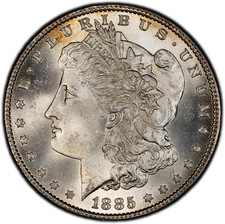
Completing a date-and-mint-mark set of a single coin series is the classic approach. Popular targets include Lincoln cents (1909–present), Mercury dimes (1916–1945), Morgan dollars (1878–1921), and Washington quarters (1932–present). Each series has its own key dates, die varieties, and grading challenges that keep the pursuit engaging for years.
By Type
Type collecting means acquiring one example of each major design — one Flowing Hair cent, one Draped Bust half dollar, one Capped Bust dime, and so on. This approach builds a broad survey of U.S. coin history without the pressure of completing every date and mint mark. It's also more forgiving of budget constraints since you only need one example per type, not every issue.
By Theme
Some collectors focus on a theme that cuts across series: coins featuring eagles, coins from a specific mint, coins from a single decade, or coins tied to a historical event. Mint error coins — doubled dies, off-centers, wrong planchets — attract a passionate subset of collectors who find the mistakes more interesting than the perfect strikes.
How to Buy Coins the Right Way
More money is lost buying coins than in any other part of the hobby. Counterfeits, cleaned coins sold as original-surface, and overgraded examples are everywhere. These steps will protect you:
- Buy certified first. For any coin over $100, only buy examples certified by PCGS or NGC — the two leading third-party grading services. Slabbed coins come in tamper-evident holders with an assigned grade and serial number you can verify on their websites.
- Check sold prices, not asking prices. eBay's completed listings and NGC's price guide show what coins actually sell for. A dealer asking $500 for a coin that sold for $200 three times last month is overpriced regardless of what any price guide says.
- Attend a coin show. The ability to hold a coin, examine it under a loupe, and compare it to adjacent examples in a dealer's case is irreplaceable. The ANA World's Fair of Money and regional shows are the best places to build dealer relationships and learn quickly.
- Learn the series before you buy. Every coin series has specific problem areas — Morgan dollars have cleaning issues, early American copper has environmental damage, commemoratives have artificial toning. Read before you spend.
- Start with common dates in high grade. A common-date Morgan in MS-65 teaches you more about grading than a hundred problem-ridden key dates. Build your eye on affordable, well-struck examples before chasing keys.
Storing and Preserving Your Collection
Coins are remarkably durable — many have survived 200+ years in excellent condition — but improper storage destroys value quickly. The enemies are PVC (polyvinyl chloride), humidity, fingerprints, and air pollution.
What to Use
For circulated coins: Mylar flips (non-PVC) or 2x2 cardboard holders with Mylar windows. For Mint State coins: PCGS or NGC slabs are the gold standard. For working collections: Dansco or Whitman albums with original slides — never soft PVC pages. Store everything in a cool, dry environment away from direct sunlight. A dedicated safe or safe deposit box is ideal for high-value pieces.
What to Avoid
Never use old soft plastic flips — the PVC leaches onto coin surfaces over time, creating a green slime that permanently damages the coin. Never store coins loose together where they can contact each other. Never keep coins in a basement or bathroom where humidity fluctuates. And above all — never clean a coin.
Mint Marks: The Small Letters That Mean Everything
A mint mark is a small letter stamped on a coin indicating which U.S. Mint facility struck it. The same date coin from two different mints can differ in value by a factor of 100 or more. The current U.S. mint marks are P (Philadelphia), D (Denver), S (San Francisco), and W (West Point). Historically, O (New Orleans), CC (Carson City), and C (Charlotte) also appear on 19th-century issues — and Carson City Morgan dollars command significant premiums over their Philadelphia counterparts.
Location of the mint mark varies by series and era. On Lincoln cents, it moved from the reverse (1909–1967) to the obverse below the date (1968–present). On Morgan dollars, it appears on the reverse above the "DO" in DOLLAR. Knowing where to look — and what you're looking at — is fundamental to correct identification.
Beyond U.S. Coins: Expanding Your Collection
U.S. coins are the most collected series in the world, but some of the most historically significant — and affordable — coins come from other civilizations. Ancient Greek, Roman, and Byzantine coins are widely available, with authentic Roman bronzes available for under $50. Colonial coinage — including Spanish pillar dollars that circulated as legal tender in America before the U.S. Mint opened — connects directly to American founding history. World gold coins from the British, French, and Austrian mints combine numismatic collectibility with precious metal content.
For collectors interested in the stories behind famous individual coins, our pages on the 1933 Double Eagle and the 1909-S VDB Lincoln Cent cover the history, controversy, and current market values for two of the most famous coins ever minted.
Continue Your Research
Coin collecting rewards depth of knowledge more than any other hobby. The more you know, the better you buy — and the more you appreciate what's in your collection.
- Coin Price Guide — Current market values across all U.S. series
- Mint Error Coins Guide — Doubled dies, off-centers, wrong planchets, and more
- Coin Grading Simulator — Test and sharpen your grading skills interactively
- Morgan Silver Dollars — Complete guide to the most popular U.S. coin series
- Junk Silver Coins — How to buy silver at melt value
- Ancient Coins — Greek, Roman, and Byzantine coins for U.S. collectors
 Find Coins on eBay
Money Back Guarantee
Find Coins on eBay
Money Back Guarantee
FindRareCoins.com is a member of the eBay Partner Network and may earn a commission from qualifying purchases made through links on this page, at no extra cost to you.
Frequently Asked Questions
What is the best coin series for a beginning collector?
Lincoln cents (1909–present) are the traditional starting point — the series is long enough to be challenging, affordable enough to complete in circulated grades, and historically rich enough to remain interesting for years. Jefferson nickels and Roosevelt dimes are also excellent beginner series with relatively affordable key dates. For collectors with a larger budget, Morgan dollars offer the most satisfying combination of beauty, history, and market depth. Whatever you choose, pick one series and learn it deeply before branching out.
Do I need to get my coins graded by PCGS or NGC?
For any coin worth more than $100, PCGS or NGC certification is strongly recommended. Third-party grading protects you from counterfeits, cleaned coins, and overgraded raw examples — all of which are common in the coin market. For common circulated coins worth under $50, raw examples in Mylar flips or 2x2 holders are fine. The grading fee (typically $20–$50 per coin at standard service levels) is quickly offset by the premium that certified grades command and the protection against problem coins.
What does it mean when a coin has been cleaned?
Cleaning refers to any process that alters a coin's original surface — polishing, dipping in acid or chemicals, rubbing with abrasives, or even rinsing with water. Professional graders can detect cleaning under magnification because it removes metal, alters luster, and leaves characteristic hairlines or tooling marks. PCGS and NGC label cleaned coins as "details" grades (e.g., "VF Details — Cleaned") rather than numerical grades, and these coins sell at 50–80% discounts to original-surface examples. Never clean a coin under any circumstances.
Where is the best place to sell coins?
eBay is the largest market with the most active buyers — ideal for certified coins in popular series where buyers can compare your listing to recent comps. Heritage Auctions and Stack's Bowers are the premier auction houses for high-value pieces ($500+), offering the deepest pool of serious collectors and the best realized prices for key dates and rarities. Local coin dealers offer immediate cash but typically pay 50–70% of retail. Coin shows allow direct collector-to-collector sales that often split the dealer markup. For any coin worth over $1,000, get multiple quotes before selling.
How do I know what my coins are worth?
Start with eBay completed sold listings — search for your exact coin (date, mint mark, approximate grade) and sort by "Sold" to see what buyers have actually paid in the last 90 days. PCGS CoinFacts and NGC Coin Explorer both provide free price guides updated from auction records. The Red Book (A Guide Book of United States Coins) gives retail values but updates only annually. For certified coins, the PCGS and NGC population reports show how many examples have been graded at each level — a key factor in understanding rarity and value at the top of the grade spectrum.
What's the difference between face value, melt value, and numismatic value?
Face value is the denomination stamped on the coin ($1, 25¢, etc.) and is the legal minimum it's worth. Melt value is what the raw metal content is worth at the current spot price — with silver near $67/oz as of late August 2026, a 90% silver Morgan or Peace dollar (0.773 oz of silver) carries a melt floor around $52, regardless of condition. Numismatic value sits on top of that floor and reflects rarity, condition, and collector demand — it's why a common-date Morgan in worn condition sells close to melt while a key date like the 1893-S in top grade sells for hundreds of thousands. Only coins with real collector demand carry meaningful numismatic value above melt; most modern circulating coins are worth only face value.
With over 400 high-resolution images and detailed explanations, you'll learn to spot rare and valuable coins still found in U.S. circulation today.
 '
'