

Silver Bullion
Silver Bars • Bullion Coins • Certified Silver • Vintage 90%
The Case for Silver Bullion
Dual Demand, Industrial Uses & The Affordable Precious Metal
Silver bullion occupies a unique position in the precious metals world — more affordable than gold per ounce, yet backed by both investment demand and robust industrial consumption that no other metal can match. Over half of annual global silver production is consumed by industry: solar panels, electronics, medical equipment, and electric vehicles all depend on silver's unmatched conductivity and antimicrobial properties. That industrial floor gives silver a supply-and-demand dynamic that pure monetary metals like gold do not share.
For collectors and investors alike, silver bullion comes in a remarkable variety of forms — from government-minted coins with legal tender status to privately refined bars with minimal premiums over spot, certified numismatic specimens, and vintage 90% silver U.S. coins that carry both metal value and historical appeal. Whether you are stacking ounces at low premiums or building a collection of high-grade certified pieces, silver offers more options per dollar than any other precious metal.
Silver Bars — Maximum Metal, Minimum Premium
From 1 oz Stackers to 100 oz Institutional Bars
Silver bars consistently offer the lowest premiums over spot price among all silver bullion products — making them the preferred choice for investors focused purely on accumulating silver content at the lowest cost. The trade-off is liquidity: bars, especially large 100 oz pieces, can be slightly harder to sell quickly compared to widely recognized government coins. For most investors, a mix of bar sizes strikes the right balance between low premiums and ease of future sale.
Among private mint bars, a handful of names command collector premiums above their silver content. Vintage Engelhard bars — struck by the legendary American refinery before it ceased operations in the 1980s — are the most prized, with poured Engelhard bars commanding $15 or more over spot in pristine condition. PAMP Suisse bars in sealed assay cards, Johnson Matthey bars, and Scottsdale Mint hand-poured designs similarly attract collector interest beyond their melt value. For government-backed bars, the Royal Canadian Mint produces .9999 fine silver bars with advanced anti-counterfeiting technology that makes them among the most trusted in the world.
Government Silver Coins — Legal Tender Bullion
American Eagles, Maple Leafs, Britannias & More
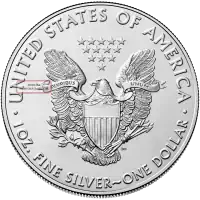
Government-minted silver bullion coins are the most widely traded silver products in the world, combining guaranteed weight and purity with legal tender status and global recognition. The American Silver Eagle — introduced in 1986 with Adolph Weinman's Walking Liberty design — remains the single most popular silver coin globally, with annual sales regularly exceeding 30 million ounces. Its government guarantee of one troy ounce of .999 fine silver, paired with its iconic design, makes it the benchmark against which all other silver coins are measured.
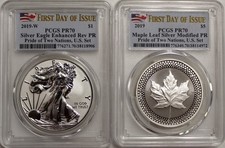
Beyond the Eagle, a rich world of government silver coins awaits. The Canadian Maple Leaf delivers .9999 fine silver with advanced radial-line security features. The Austrian Philharmonic celebrates Vienna's musical heritage in a coin produced by a mint with over 800 years of history. The British Britannia offers capital gains tax exemption for UK residents. For collectors, the Chinese Silver Panda — with its annually changing reverse design — and the Perth Mint's Lunar Series command premiums well above spot due to their limited mintages and dedicated followings.
Silver Bullion — Forms, Purity & Typical Premiums
Quick Reference for Buyers at Every Level
| Product Type | Purity | Typical Premium Over Spot | Best For |
|---|---|---|---|
| 100 oz Silver Bar | .999+ fine | $1 – $2/oz | Maximum stack, lowest cost |
| 10 oz Silver Bar | .999 fine | $2 – $4/oz | Stackers, mid-range investors |
| 1 oz Silver Bar | .999 fine | $3 – $5/oz | Entry-level, gifting |
| American Silver Eagle | .999 fine | $5 – $8/oz | Liquidity, IRA eligible |
| Canadian Maple Leaf | .9999 fine | $4 – $7/oz | Maximum purity, security features |
| Chinese Silver Panda | .999 fine (30g) | $8 – $15/oz | Collector/annual design series |
| Vintage 90% U.S. Silver | 90% silver | Near melt value | Junk silver stackers, barter prep |
| Certified MS70 Silver Eagle | .999 fine | $50 – $200+ over spot | Collectors, registry sets |
Top Silver Bullion Categories
Where Silver Collectors & Investors Focus Their Buying
Silver Bars
1 oz to 100 oz bars from private mints and major refiners. Lowest premiums over spot — the investor's choice.
Government Silver Coins
Eagles, Maple Leafs, Britannia, Philharmonics — legal tender coins with guaranteed purity from sovereign mints.
Certified Silver
PCGS and NGC graded MS70 and PR70 coins. Perfect-grade specimens for registry collectors and top-tier buyers.
Vintage 90% Silver
Morgan and Peace Dollars, Walking Liberty Halves, pre-1965 dimes and quarters. History plus real silver content.
World Silver Coins
Pandas, Lunar Series, Somalian Elephants, Mexican Libertads — international coins with devoted collector followings.
Special Strike Silver
Reverse proofs, enhanced uncirculated, burnished, privy marks — limited-edition finishes commanding collector premiums.
Silver Bullion Explorer
Browse by Category • Click Any Product for Details & eBay Listings


Vintage & 90% Silver — Junk Silver Worth Knowing
Pre-1965 U.S. Coins as an Affordable Silver Entry Point
Before 1965, virtually all U.S. dimes, quarters, and half dollars were struck in 90% silver. Today these circulated coins — collectively called "junk silver" despite their genuine precious metal content — trade at prices close to their melt value, making them one of the most affordable ways to own physical silver with historical character. A $1 face value bag of pre-1965 90% silver coins contains approximately 0.715 troy ounces of silver. At current spot prices, that makes every Mercury dime, Roosevelt dime, Washington quarter, and Kennedy half dollar worth tracking.
Beyond junk silver, the Morgan Dollar and Peace Dollar series represent the pinnacle of American silver coinage artistry. Morgan Dollars — minted from 1878 to 1921 — are the most widely collected U.S. coins in history, available in everything from heavily circulated examples near melt value to gem uncirculated specimens worth hundreds or thousands of dollars depending on date and mint mark. The 1893-S Morgan, the 1895 proof-only issue, and a handful of Carson City mint marks represent the true rarities — coins that blur the line between silver bullion and serious numismatic collectibles.
Grading & Certification for Silver Bullion
When PCGS or NGC Certification Adds Real Value
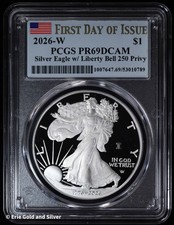
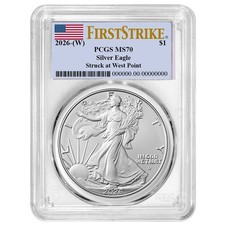
For modern silver bullion coins, PCGS and NGC certification makes the most sense at the top of the grading scale — MS70 and PR70 (perfect grade) specimens command meaningful premiums over raw coins, particularly for American Silver Eagles where registry set competition is intense. An MS70 First Strike Eagle from a key year can sell for $50–$200 above spot; a PR70 Deep Cameo Proof Eagle can command $100–$400 or more. The math only works when the premium paid for certification is less than the premium you'll receive at sale.
For vintage silver — Morgan Dollars, Peace Dollars, Walking Liberty Half Dollars — professional grading is almost always worthwhile for coins you believe grade MS64 or higher. The difference between an MS63 and MS65 Morgan Dollar can be hundreds of dollars on common dates and thousands on key dates. PCGS and NGC holders also eliminate grade disputes at resale and provide counterfeit protection critical for higher-value pieces.
Shop Silver Bullion on eBay
Browse thousands of silver bars, bullion coins, certified slabs, and vintage 90% silver from dealers and private sellers worldwide.
🛍️ Shop Silver Bullion on eBay 📚 Silver Investing Books on AmazonFindRareCoins.com participates in the eBay Partner Network and Amazon Associates program. Purchases made through links on this page may earn us a commission at no additional cost to you.
Frequently Asked Questions
What is the difference between silver bars and silver coins?
Silver bars are privately or commercially manufactured ingots with no face value — their worth is determined entirely by their silver content and any collector premium. Silver coins are struck by government mints, carry legal tender face values, and come with sovereign guarantees of weight and purity. Bars typically offer lower premiums over spot price; coins offer higher liquidity and broader global recognition. For pure investment purposes, large bars minimize cost per ounce. For flexibility and resale ease, government coins are generally preferred.
What is "junk silver" and is it worth buying?
Junk silver refers to pre-1965 U.S. dimes, quarters, and half dollars struck in 90% silver — coins with no numismatic premium that trade purely on their silver content. Despite the unflattering name, junk silver is a genuinely useful and cost-effective way to accumulate silver. It typically sells at or near melt value, it's highly recognizable and widely accepted, and its small denominations make it practical for barter scenarios that large bars cannot serve. A $100 face value bag of 90% silver coins contains roughly 71.5 troy ounces of silver. Buying junk silver from reputable coin dealers at competitive premiums is a solid strategy for silver stackers on a budget.
What is the American Silver Eagle and why is it so popular?
The American Silver Eagle, introduced in 1986, is the official silver bullion coin of the United States government. It contains exactly 1 troy ounce of .999 fine silver, is backed by a U.S. government guarantee of weight and purity, and features the beloved Walking Liberty design by Adolph Weinman — the same design used on the Walking Liberty Half Dollar of 1916–1947. Its combination of government backing, iconic design, extreme global liquidity, and IRA eligibility make it the most popular silver coin in the world. Annual mintages regularly exceed 30 million ounces, ensuring a deep and liquid secondary market.
How do I store silver bullion safely?
Silver tarnishes over time when exposed to air, humidity, and certain chemicals — unlike gold, which is inert. For bullion coins, keep them in their original mint packaging, airtite capsules, or hard plastic flips. Store bars in protective sleeves or original assay packaging. For larger collections, a quality home safe rated for both fire and theft is a worthwhile investment. Safe deposit boxes at banks offer security but limit access. For very large holdings, professional vault storage through a custodian or depository provides maximum protection and insurance — and is required if the silver is held in an IRA. Avoid PVC flips for long-term coin storage as PVC off-gasses and can damage silver surfaces.
Is silver a good investment right now?
Silver's investment case rests on several factors: its role as an inflation hedge and store of value alongside gold, its growing industrial demand from solar energy and electric vehicle manufacturing, and its historically low gold-to-silver ratio that some analysts argue signals undervaluation relative to gold. However, silver is also more volatile than gold, can experience sharp price swings, and is heavily influenced by industrial economic conditions. Most financial advisors treat physical silver as a portfolio diversifier — typically 5–10% of a portfolio — rather than a primary investment. Whether silver is "a good investment right now" depends on your financial situation, time horizon, and overall portfolio composition. Consult a qualified financial advisor before making significant precious metal purchases.
What silver coins are best for beginning collectors?
For beginners focused on silver bullion with collector appeal, the American Silver Eagle is the obvious starting point — affordable, universally recognized, and easy to resell. For vintage silver with history, a circulated Morgan Dollar in VF or EF condition can be had for $35–$60 on common dates and provides a tangible piece of 19th-century American history. Pre-1965 Washington quarters and Roosevelt dimes offer a budget-friendly way to accumulate 90% silver in small increments. For international coins, the Austrian Philharmonic and Canadian Maple Leaf both offer .999+ purity at modest premiums and make beautiful first additions to any collection.
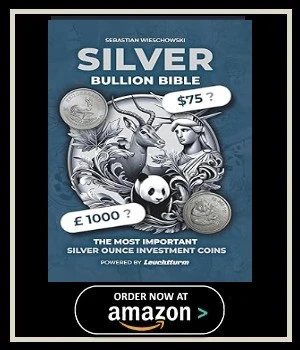
Silver Bullion Bible is a globe‑spanning guide that explores the investment appeal of one‑ounce silver bullion coins—from iconic series like the Maple Leaf, Panda, Koala, Libertad, Britannia, to the American Silver Eagle

 '
'