1914-D Wheat Penny Value —
Key Date Lincoln Cent Price Guide
Key Date Lincoln Cent • Denver Mint • 1,193,000 Struck • 1914
1914-D Wheat Penny Value by Grade
Values below reflect certified PCGS and NGC retail prices for problem-free examples as of 2026. Cleaned, holed, or altered coins trade at steep discounts — many 1914-D cents in the market have been cleaned or altered from 1944-D coins, and these are essentially worthless as collectibles. Always buy certified.
| Grade | Description | Value | Shop |
|---|---|---|---|
| Poor-1 / Fair-2 | Barely identifiable — date and mint mark visible | $150–$200 | eBay → |
| Good-4 (G-4) | Heavily worn. Date and LIBERTY visible; design outline clear | $200–$260 | eBay → |
| Very Good-8 (VG-8) | Well worn. All lettering visible; LIBERTY complete | $320–$400 | eBay → |
| Fine-12 (F-12) | Moderate even wear; all features sharp | $500–$620 | eBay → |
| Very Fine-20 (VF-20) | Light to moderate wear on high points; hair detail visible | $800–$1,000 | eBay → |
| Very Fine-35 (VF-35) | Light wear on high points; strong detail throughout | $1,200–$1,500 | eBay → |
| Extremely Fine-40 (EF-40) | Slight wear on highest points only; all detail sharp | $1,800–$2,200 | eBay → |
| Extremely Fine-45 (EF-45) | Trace wear; nearly full detail; strong luster traces | $2,400–$3,000 | eBay → |
| About Uncirculated-50 (AU-50) | Trace wear on high points; half luster or more present | $3,500–$4,500 | eBay → |
| About Uncirculated-58 (AU-58) | Slight friction; nearly full mint luster; exceptional detail | $5,500–$7,000 | eBay → |
Looking for a circulated 1914-D? Always buy PCGS or NGC certified — raw coins carry substantial authentication risk.
Find on eBay →| Grade | Description | Value | Shop |
|---|---|---|---|
| MS-60 (Mint State) | No wear; significant bag marks and contact marks | $9,000–$11,000 | eBay → |
| MS-62 | No wear; several noticeable marks; acceptable luster | $11,000–$14,000 | eBay → |
| MS-63 (Choice) | No wear; few distracting marks; good luster and appeal | $14,000–$18,000 | eBay → |
| MS-64 (Choice+) | No wear; minor marks in secondary areas; strong luster | $22,000–$28,000 | eBay → |
| MS-65 (Gem) | Strong luster; only minor marks in secondary areas | $35,000–$50,000+ | eBay → |
| MS-65 RD (Gem Red) | Full original red mint color; exceptional eye appeal | $55,000–$100,000+ | eBay → |
Gem Mint State 1914-D cents are extremely rare — fewer than 50 are known above MS-64. Population reports from PCGS and NGC are the definitive guide.
Shop Mint State →Key Date Lincoln Cents & Related Guides
The 1914-D — Lincoln's Most Deceptive Key Date
The 1914-D Lincoln cent is the second most valuable regular-issue wheat penny in existence — outranked only by the 1909-S VDB. With a Denver Mint production of just 1,193,000 pieces, it is the lowest-mintage Lincoln cent of the 1910s and one of the most frequently counterfeited coins in American numismatics. That last fact is what separates the 1914-D from nearly every other wheat cent key date: a huge portion of "1914-D" pennies on the market are actually 1944-D cents with the "4" partially removed, creating a convincing-looking "1" at casual inspection.
For collectors, the 1914-D represents both a genuine rarity and a collecting challenge. Finding an authentic, uncleaned, problem-free example in even circulated grades is not trivial — and finding one in Mint State is a serious achievement. Values range from roughly $200 in heavily worn Good condition to $35,000+ in gem Mint State, with certified examples commanding significant premiums over raw coins at every grade level. For context on where the 1914-D sits in the full Lincoln cent series, see the complete wheat penny value chart.
How to Grade the 1914-D Lincoln Cent
Grading the 1914-D is complicated by two factors: the coin's age and typical heavy circulation, and the widespread existence of counterfeits. Before grading your coin, authenticate it. A genuine 1914-D will have the correct "1" numeral style — the crossbar of the "1" in "1914" is distinctive. A 1944-D altered to look like a 1914-D will have a different "1" style and different spacing between the digits.
Good (G-4 to G-6)
Fine (F-12 to F-15)
Very Fine (VF-20 to VF-35)
Extremely Fine (EF-40 to EF-45)
About Uncirculated (AU-50 to AU-58)
Mint State (MS-60+)
How to Spot a Fake 1914-D Penny
The 1914-D is the most counterfeited wheat penny in existence. The primary fake is a 1944-D cent with the first "4" altered to look like a "1." Here is exactly what to check:
Check the "1" Numeral Style
Check Digit Spacing
Check for Tooling Marks
Added Mintmarks
Weigh It
Buy Certified — Always
1914-D Error Varieties & Die Varieties
The 1914-D was struck from multiple dies over the course of the year, producing several documented varieties. None command the premiums of the top Morgan dollar VAMs, but attributed examples do trade at modest premiums over generic examples in the same grade.
Doubled Die Obverse (DDO)
Repunched Mintmark (RPM)
Die Cracks & Cuds
Off-Center Strikes
Lamination Errors
Die Clash
Find a Certified 1914-D Wheat Penny
Browse PCGS and NGC certified examples — the only safe way to buy this heavily counterfeited key date. Filter by grade to find the right example for your collection or budget.
📚 Lincoln Cent References on AmazonFindRareCoins.com participates in the eBay Partner Network and Amazon Associates program.
Where to Buy a 1914-D Wheat Penny
Certified Only · Authentication Essential · Grade-Matched Pricing
The 1914-D is one of the most counterfeited coins in American numismatics. Every purchase should be a certified PCGS or NGC example — no exceptions. The price premium for certification is minimal compared to the risk of buying a fake or altered coin.
eBay — Certified Examples
Heritage Auctions on eBay
PCGS-Certified 1914-D on eBay
Related Lincoln Cent Guides

Frequently Asked Questions
How do I know if my 1914-D penny is real?
The safest answer is PCGS or NGC certification — they have reference coins, die variety databases, and expert authenticators who examine thousands of Lincoln cents. If you want to do a preliminary check yourself, examine the "1" in 1914 under 5–10x magnification. A genuine 1914-D "1" has specific serif and crossbar characteristics. Altered 1944-D coins have a different "1" style and typically show disturbed metal around the altered digit. Also check mintmark placement and digit spacing — both should be consistent with known genuine examples documented in PCGS CoinFacts.
What is the most valuable 1914-D penny ever sold?
The auction record for the date is $158,625, set by a PCGS MS-66+ Red example sold at Legend Rare Coin Auctions in May 2018 — the finest certified grade the date has reached. Among the more commonly available MS-65 Red examples, recent sales at Heritage Auctions and Stack's Bowers have generally landed in the $55,000 to $100,000 range depending on eye appeal and market conditions at time of sale.
Is a 1914 penny without a D worth anything?
The 1914 Philadelphia cent (no mintmark) had a mintage of 75,238,432 — over 63 times more common than the 1914-D. In Good condition a 1914-P is worth $0.25–$1.00. In Mint State MS-65 Red it's worth $200–$400. The value difference between the 1914-D and the 1914-P is dramatic — the D mintmark is everything on this date. Always check under magnification: the mintmark on a 1914-D appears just below the date on the obverse.
What grade 1914-D should I buy for a collection?
For most collectors, a certified Fine-12 or Very Fine-20 example represents the best combination of authenticity confidence, visible detail, and price efficiency. A Fine-12 at $500–$620 shows all major design elements clearly and is an unambiguous key date addition to any Lincoln cent collection. Very Fine examples at $800–$1,000 show hair detail and stronger design definition. AU and Mint State examples are for serious advanced collectors — at those price levels, PCGS or NGC certification and population awareness are essential before buying.
How many 1914-D pennies are known to exist?
The exact survival population is unknown, but PCGS has certified fewer than 500 examples across all grades — a remarkably small number. The combined PCGS and NGC population in all grades is estimated at 700–900 total certified examples. Most circulate in grades of Good through Very Fine. Mint State survivors are exceptionally rare — the number of MS-64+ examples known is estimated at fewer than 50 total across both services. This population data is why certified examples command strong premiums and why the authentication issue is so serious: the number of fake "1914-D" cents in circulation likely exceeds the number of genuine certified examples.
Where can I look up current 1914-D wheat penny prices?
The most current prices come from three sources: the PCGS Price Guide at PCGS.com (updated monthly), recent eBay sold listings filtered to certified examples (the actual market), and Heritage Auctions' free price archive going back decades. This page is updated periodically but for real-time data use eBay sold listings and PCGS. Our wheat penny value chart covers the full series in one place, and the coin price guide provides broader context across all U.S. denominations.
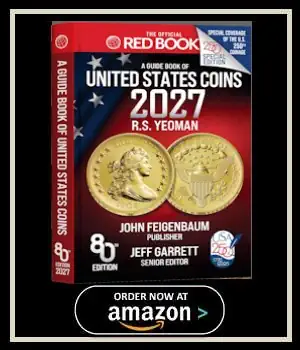
The Official Red Book® A Guide Book of United States Coins marks the 80th anniversary of the world’s best-selling coin price guide and the hobby’s most trusted reference
 '
'