Buffalo Nickel Value ChartKey Dates, Rare Varieties & Collector Guide
Indian Head Nickel • 1913–1938 • Key Dates • 3-Legged Buffalo
Most Valuable Buffalo Nickels & Related Guides
Complete Buffalo Nickel Value Chart (1913–1938)
Values below are for problem-free, unaltered examples and reflect typical retail levels, not auction-record highs. G = Good-4, VG = Very Good-8, F = Fine-12, VF = Very Fine-20, EF = Extremely Fine-40, MS-63 = Choice Uncirculated, MS-65 = Gem Uncirculated. Dateless Buffalo nickels — where the date has worn completely flat — are worth $1.00–$2.00 regardless of date or mint. Type 1 coins (1913 only) have the denomination ON the mound; Type 2 coins have it below.
| Date | G-4 | VG-8 | F-12 | VF-20 | EF-40 | MS-63 | MS-65 | Shop |
|---|---|---|---|---|---|---|---|---|
| 1913-P Type 1 | $14 | $18 | $22 | $28 | $38 | $90 | $200 | eBay → |
| 1913-D Type 1 | $18 | $24 | $30 | $40 | $60 | $160 | $380 | eBay → |
| 1913-S Type 1 | $28 | $38 | $50 | $70 | $110 | $280 | $700 | eBay → |
| 1913-P Type 2 | $18 | $24 | $30 | $40 | $60 | $160 | $380 | eBay → |
| 1913-D Type 2 | $80 | $120 | $170 | $240 | $360 | $900 | $2,200 | eBay → |
| 1913-S Type 2 KEY | $100 | $160 | $220 | $280 | $420 | $2,200 | $4,200 | eBay → |
| 1914-P | $18 | $24 | $30 | $42 | $65 | $170 | $400 | eBay → |
| 1914-D | $28 | $40 | $55 | $80 | $130 | $380 | $950 | eBay → |
| 1914-S | $22 | $30 | $42 | $60 | $100 | $280 | $700 | eBay → |
| 1915-P | $16 | $22 | $28 | $38 | $60 | $160 | $380 | eBay → |
| 1915-D | $30 | $45 | $62 | $90 | $145 | $420 | $1,050 | eBay → |
| 1915-S | $40 | $60 | $85 | $125 | $200 | $580 | $1,450 | eBay → |
| 1916-P DDO VARIETY | $5,000 | $7,000 | $9,500 | $15,000 | $22,000 | $85,000 | None known | eBay → |
| 1916-P | $10 | $14 | $18 | $24 | $38 | $100 | $240 | eBay → |
| 1916-D | $18 | $26 | $36 | $52 | $85 | $240 | $600 | eBay → |
| 1916-S | $22 | $32 | $45 | $65 | $110 | $320 | $800 | eBay → |
| 1917-P | $10 | $14 | $18 | $26 | $42 | $120 | $300 | eBay → |
| 1917-D | $22 | $32 | $48 | $75 | $130 | $400 | $1,000 | eBay → |
| 1917-S | $22 | $32 | $48 | $75 | $130 | $400 | $1,000 | eBay → |
| 1918-P | $12 | $16 | $22 | $32 | $55 | $160 | $400 | eBay → |
| 1918-D | $22 | $34 | $50 | $80 | $140 | $440 | $1,100 | eBay → |
| 1918-S | $18 | $28 | $42 | $65 | $115 | $360 | $900 | eBay → |
| 1919-P | $10 | $14 | $18 | $26 | $42 | $120 | $300 | eBay → |
| 1919-D | $30 | $48 | $72 | $115 | $200 | $620 | $1,550 | eBay → |
| 1919-S | $22 | $36 | $55 | $90 | $160 | $500 | $1,250 | eBay → |
The 1913-S Type 2 and 1916 DDO are the premier rarities of the early series — both require PCGS or NGC certification.
Shop 1913–1919 →| Date | G-4 | VG-8 | F-12 | VF-20 | EF-40 | MS-63 | MS-65 | Shop |
|---|---|---|---|---|---|---|---|---|
| 1920-P | $10 | $14 | $18 | $26 | $42 | $120 | $300 | eBay → |
| 1920-D | $20 | $32 | $48 | $78 | $140 | $450 | $1,100 | eBay → |
| 1920-S | $14 | $22 | $34 | $55 | $100 | $320 | $800 | eBay → |
| 1921-P SEMI-KEY | $20 | $32 | $50 | $80 | $145 | $460 | $1,150 | eBay → |
| 1921-S SEMI-KEY | $30 | $50 | $80 | $130 | $240 | $780 | $5,000 | eBay → |
| 1923-P | $9 | $12 | $16 | $22 | $36 | $100 | $250 | eBay → |
| 1923-S | $14 | $22 | $34 | $55 | $100 | $320 | $800 | eBay → |
| 1924-P | $10 | $14 | $18 | $26 | $42 | $120 | $300 | eBay → |
| 1924-D | $28 | $45 | $68 | $110 | $195 | $620 | $1,550 | eBay → |
| 1924-S SEMI-KEY | $50 | $80 | $120 | $185 | $320 | $1,100 | $8,000 | eBay → |
| 1925-P | $9 | $12 | $16 | $22 | $36 | $100 | $250 | eBay → |
| 1925-D | $20 | $32 | $48 | $78 | $140 | $450 | $1,100 | eBay → |
| 1925-S | $16 | $26 | $40 | $65 | $120 | $380 | $950 | eBay → |
| 1926-P | $8 | $11 | $14 | $20 | $32 | $90 | $220 | eBay → |
| 1926-D | $14 | $22 | $34 | $55 | $100 | $320 | $800 | eBay → |
| 1926-S KEY | $75 | $120 | $180 | $280 | $520 | $3,200 | $25,000 | eBay → |
| 1927-P | $8 | $11 | $14 | $20 | $32 | $90 | $220 | eBay → |
| 1927-D | $12 | $18 | $26 | $40 | $70 | $210 | $520 | eBay → |
| 1927-S | $12 | $18 | $28 | $46 | $85 | $280 | $4,500 | eBay → |
| 1928-P | $8 | $11 | $14 | $20 | $32 | $90 | $220 | eBay → |
| 1928-D | $10 | $14 | $20 | $30 | $50 | $150 | $370 | eBay → |
| 1928-S | $10 | $14 | $20 | $32 | $55 | $170 | $420 | eBay → |
| 1929-P | $8 | $11 | $14 | $20 | $32 | $90 | $220 | eBay → |
| 1929-D | $10 | $14 | $20 | $30 | $50 | $150 | $370 | eBay → |
| 1929-S | $10 | $14 | $18 | $26 | $44 | $130 | $320 | eBay → |
The 1926-S is a major key — 970,000 minted, the lowest mintage of any regular-issue Buffalo nickel. Buy certified.
Shop 1920s →| Date | G-4 | VG-8 | F-12 | VF-20 | EF-40 | MS-63 | MS-65 | Shop |
|---|---|---|---|---|---|---|---|---|
| 1930-P | $8 | $11 | $14 | $20 | $32 | $90 | $220 | eBay → |
| 1930-S | $10 | $14 | $18 | $26 | $44 | $130 | $320 | eBay → |
| 1931-S KEY | $60 | $90 | $120 | $160 | $240 | $900 | $8,000 | eBay → |
| 1934-P | $1.50 | $2 | $3 | $5 | $7 | $60 | $110 | eBay → |
| 1934-D | $10 | $14 | $20 | $30 | $55 | $175 | $440 | eBay → |
| 1935-P | $1.50 | $2 | $3 | $5 | $7 | $60 | $110 | eBay → |
| 1935-D | $8 | $11 | $15 | $22 | $38 | $115 | $290 | eBay → |
| 1935-S | $2 | $2.50 | $3.50 | $5 | $7 | $100 | $250 | eBay → |
| 1936-P | $1.50 | $2 | $3 | $5 | $7 | $60 | $110 | eBay → |
| 1936-D | $2 | $2.50 | $3.50 | $5 | $7 | $105 | $260 | eBay → |
| 1936-S | $2 | $2.50 | $3.50 | $5 | $7 | $100 | $250 | eBay → |
| 1937-P | $1.50 | $2 | $3 | $5 | $7 | $60 | $110 | eBay → |
| 1937-D | $2 | $2.50 | $3.50 | $5 | $7 | $60 | $110 | eBay → |
| 1937-D 3-Leg ERROR | $500 | $650 | $800 | $1,000 | $1,600 | $5,750 | $26,000 | eBay → |
| 1937-S | $2 | $2.50 | $3.50 | $5 | $7 | $60 | $110 | eBay → |
| 1938-D | $2 | $2.50 | $3.50 | $5 | $7 | $60 | $110 | eBay → |
| 1938-D/S | $12 | $17 | $22 | $30 | $48 | $130 | $320 | eBay → |
The 1937-D 3-Legged Buffalo is widely faked — always buy PCGS or NGC certified. The 1931-S has the second-lowest mintage in the series.
Shop 1930–1938 →The Buffalo Nickel — An American Icon in Five-Cent Form
The Buffalo nickel — officially the Indian Head nickel — is one of the most recognizable and artistically celebrated coins in American numismatic history. Designed by sculptor James Earle Fraser and first struck in 1913, it features a composite portrait of three Native American chiefs on the obverse and an American bison — modeled from Black Diamond, a resident of the Central Park Zoo — on the reverse. Fraser's design was considered a departure from the classical European tradition and a genuinely American artistic statement, and it remains one of the most beloved coin designs ever produced by the U.S. Mint.
The Buffalo nickel was struck from 1913 through 1938 at the Philadelphia, Denver, and San Francisco mints. The series is characterized by several dramatic key dates, a famous error variety (the 1937-D 3-legged buffalo), and the well-known problem of date wear — the date on Buffalo nickels sits on a raised mound that wears rapidly, producing the ubiquitous "dateless" Buffalo nickel found in countless junk boxes. This guide covers every date from 1913 through 1938 with values for circulated and mint-state grades, the key dates that define the series, and what your dateless Buffalo nickel is actually worth. For context across all U.S. nickels, see the full coin price guide.
Buffalo Nickel Key Dates & Famous Varieties
The 1913-S Type 2, at 1,209,000 struck, has the lowest mintage of the series' first year and the third-lowest overall, behind the 1926-S and 1931-S — that scarcity makes it the coin many date-set collectors chase first. The Buffalo nickel series has more significant key dates than almost any other 20th-century U.S. series, and the 1913 Type 1 / Type 2 split, several tiny-mintage dates, and one of the most famous error coins in American numismatics (the 1937-D 3-legged buffalo) all compound the challenge of completing a set.
1913-S Type 2
1916 Doubled Die Obverse
1937-D 3-Legged Buffalo
1926-S
1931-S
1921-S & 1924-S
Dateless Buffalo Nickels — What Are They Worth?
The most common question about Buffalo nickels: "I have one but I can't read the date — is it worth anything?" The answer is yes, but not much. Dateless Buffalo nickels are worth $1.00–$2.00 each at most coin dealers, primarily as filler pieces or novelty items.
Why Buffalo Nickels Lose Their Date
What a Dateless Buffalo Is Worth
Acid Date Restoration
Could My Dateless Be a Key Date?
Lots vs Individual Coins
What Makes a Buffalo Valuable
Building a Buffalo Nickel Collection
Whether you're chasing a full date-and-mintmark set, hunting the 1937-D 3-legged error, or just curious what's in that jar of change, certified PCGS and NGC examples are the safest way to buy key dates and varieties with confidence.
📚 Buffalo Nickel References on AmazonFindRareCoins.com participates in the eBay Partner Network and Amazon Associates program.
Where to Buy Buffalo Nickels
Certified Dealers · Key Date Specialists · Dateless Lots
Buffalo nickels are struck in 75% copper and 25% nickel — no gold, silver, platinum, or palladium content — so precious-metals dealers like JM Bullion, Kitco, Money Metals Exchange, and SD Bullion don't carry them regardless of numismatic rarity. eBay is the deepest market for certified key dates and the 3-legged error; for common circulated dates, raw coins are perfectly acceptable, and dateless lots are widely available in bulk at low cost.
eBay — Certified Buffalo Nickels
3-Legged Buffalo on eBay
Buffalo Nickel References on Amazon
FRC Coin Price Guide
Related Coin Value Guides
Mercury Dime Value Chart
Wheat Penny Value Chart
Full Coin Price Guide
Error Coins Value Guide
Coin Value Estimator
Nickel Error Coins
FindRareCoins.com participates in the eBay Partner Network. This site may earn a commission from qualifying purchases.
Frequently Asked Questions
What is the most valuable Buffalo nickel?
By mintage, the 1926-S is the rarest regular-issue Buffalo nickel at 970,000 struck, followed by the 1931-S (1,200,000) and the 1913-S Type 2 (1,209,000); a PCGS MS67+ 1913-S Type 2 brought $84,000 at auction in August 2025. But the 1916 Doubled Die Obverse is the single most valuable Buffalo nickel overall — a major die variety with only about 200 authentic examples known across all grades. A PCGS MS64, the finest graded, set the variety's auction record at $281,750 in an August 2004 Bowers & Merena sale. The 1937-D 3-legged buffalo is the most famous Buffalo nickel error, with a PCGS MS66+ auction record of $99,875.
How do I tell if my 1937-D buffalo nickel is the 3-legged variety?
On the genuine 3-legged 1937-D, the buffalo's right front leg (the one closest to the viewer) is completely absent — polished away by an overzealous Mint worker who was trying to remove die gouges. The area where the leg should be is smooth and flat. On a fake, the leg has been ground or filed away — this typically leaves tool marks or an unnatural surface texture. Additionally, on the genuine 3-legged variety, you can often see a remnant of the leg at the belly — a slight bulge where it connects to the body. Always buy PCGS or NGC certified examples. Any claimed raw 3-legged should be treated as suspect.
What is a dateless Buffalo nickel worth?
$1.00–$2.00. Dateless Buffalo nickels — where the date has worn completely flat — have no numismatic premium regardless of what date might be underneath. The date sits on a raised mound that wears away first in circulation, producing the common dateless coins found in junk boxes at every coin show. Acid restoration (using a product called Nic-A-Date) can sometimes reveal a faint date, but acid-date coins are still only worth $2–$5 — far less than naturally readable examples of the same date.
What is the difference between Type 1 and Type 2 Buffalo nickels?
Both types were struck in 1913 only. Type 1 (also called the Mound Type) has the denomination FIVE CENTS written on a raised mound on the reverse — the bison stands on a raised earth formation. Type 2 (the Line Type) has the denomination on a recessed line below the mound — the mound was removed after concerns that the denomination would wear away rapidly, as it did on Type 1. Both types were struck at Philadelphia, Denver, and San Francisco in 1913. After 1913, all Buffalo nickels are Type 2.
Are Buffalo nickels a good investment?
Investment decisions should be made with professional guidance — nothing here constitutes financial advice. The factual case for key-date Buffalo nickels is that they are universally recognized, liquid across the U.S. coin dealer network, and backed by transparent PCGS/NGC certified price discovery. Key dates in certified grades have historically maintained value across long time horizons. Common-date Buffalos in circulated grades trade at minimal premiums above face value and are primarily collected rather than invested. The 1937-D 3-legged buffalo has an unusually stable collector base given its famous story — demand from non-specialists keeps prices supported even in soft markets.
Where can I find current Buffalo nickel prices?
This value chart is checked periodically against the PCGS Price Guide and Greysheet, most recently in August 2026. For real-time prices, use the PCGS Price Guide at PCGS.com (updated monthly), recent eBay sold listings filtered to certified examples, and Heritage Auctions' free price archive. The FRC coin price guide covers the Buffalo nickel series alongside all major U.S. denominations. For a complete set checklist and population data, PCGS CoinFacts provides free access to survival estimates and auction records by date and grade.
What's the difference between a "typical" value and an "auction record" on this chart?
The grade-by-grade chart above reflects typical retail value — what a normal, problem-free example in that grade generally sells for. Auction records, called out separately in the key-dates section and FAQ, are the single highest verified price ever paid for that variety, usually for an exceptional, top-population example with strong eye appeal or a notable pedigree. A coin's auction record is not what a typical collector should expect to pay, or receive, for a similarly graded piece — it represents the ceiling, not the market average.
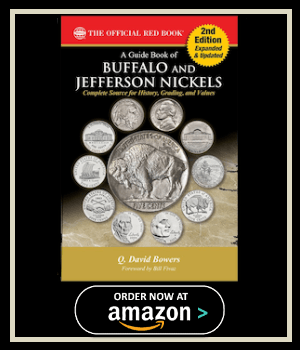
A complete study of Buffalo nickels (1913–1938) and Jefferson nickels (1938 to date), richly illustrated in full color with high-resolution enlargements for overdates and varieties.
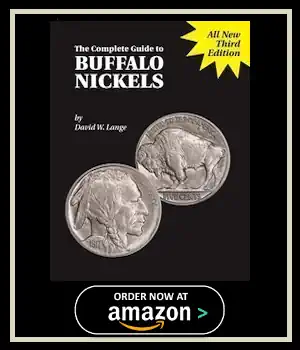
 '
'