Eisenhower Dollar Values —Silver Ikes, 1972 Type 2 & Bicentennial Price Guide
1971–1978 • 40% Silver Issues • 1776-1976 Bicentennial • Complete Date-by-Date Values
Eisenhower Dollar Key Facts
| Issue Type | Years | Composition | Typical Retail Range |
|---|---|---|---|
| Clad (Circulation Strikes) | 1971–1978 | Copper-nickel clad | $1 – $2 circulated |
| 40% Silver Uncirculated ("Blue Ike") | 1971–1976 | 40% silver | $18 – $30 |
| 40% Silver Proof ("Brown Ike") | 1971–1976 | 40% silver | $18 – $40 |
| 1972 Type 2 (key variety) | 1972 | Cu-Ni clad | $15 – $325+ (MS64), $1,900+ in MS65 |
| 1776-1976 Type 1 (bold lettering) | 1975–1976 | Cu-Ni clad | $3 – $150 |
| Gem MS-65+ Clad (any date) | Various | Cu-Ni clad | $30 – $500+ |
1971–1972: The First Two Years
The Eisenhower dollar debuted in 1971 to mixed reviews — the coin was popular as a collectible but too large and heavy for everyday transactions, and it never gained real traction in circulation outside of casino use in Nevada. 1971-D holds a specific reputation among condition-conscious collectors: despite a mintage over 68 million, PCGS population data shows fewer than ten examples graded MS67 or higher, making a truly mark-free 1971-D a genuine "grading cliff" coin even though the date itself is common.


| Date / Mint | Type | Circulated | MS-63 | MS-65 | Shop |
|---|---|---|---|---|---|
| 1971 (Philadelphia) | Clad | $1.50 – $2 | $10 – $18 | $45 – $75 | eBay → |
| 1971-D | Clad | $1.50 – $2 | $8 – $15 | $35 – $60 | eBay → |
| 1971-S "Blue Ike" | 40% Silver Unc. | — | $18 – $25 | $28 – $45 | eBay → |
| 1971-S "Brown Ike" | 40% Silver Proof | — | $18 – $25 | $30 – $50 | eBay → |
| 1972 Type 1 (flat Earth) | Clad | $1.50 – $2 | $10 – $18 | $40 – $70 | eBay → |
| 1972 Type 2 (high-relief Earth) ★ | Clad — key variety | $15 – $30 | $200 – $325 | $1,900+ | eBay → |
Checking a 1972 dollar for the Type 2 reverse? Certified examples move fast.
Shop 1972 Type 2 on eBay →| Date / Mint | Type | Circulated | MS-63 | MS-65 | Shop |
|---|---|---|---|---|---|
| 1972 Type 3 | Clad | $1.50 – $2 | $8 – $15 | $30 – $50 | eBay → |
| 1972-D | Clad | $1.50 – $2 | $8 – $16 | $30 – $60 | eBay → |
| 1972-S "Blue Ike" | 40% Silver Unc. | — | $18 – $25 | $28 – $45 | eBay → |
| 1972-S "Brown Ike" | 40% Silver Proof | — | $18 – $25 | $30 – $50 | eBay → |
Where to Buy



1973–1974: The Mint-Set-Only Year & Aluminum Ghost
1973 is the strangest year in the series. Existing clad dollar inventory from 1971–1972 was still sitting unsold, so the Mint did not release 1973 or 1973-D business strikes into circulation at all — the only way to get one directly from the Mint was inside an official Uncirculated Mint Set. That makes 1973 and 1973-D functionally scarcer in raw numbers than their mintage figures suggest, though because so many sets have survived intact, prices stay modest outside of top grades. 1974 also carries a well-known footnote: a small batch of aluminum pattern dollars was struck as a weight-reduction test, almost all recalled and destroyed, with only a single publicly known survivor that was eventually returned to the Mint. It isn't something you'll find in circulation, but it's one of the most talked-about "what if" rarities in modern U.S. coinage.
| Date / Mint | Type | Circulated | MS-63 | MS-65 | Shop |
|---|---|---|---|---|---|
| 1973 (Mint Set only) | Clad | — | $10 – $16 | $45 – $80 | eBay → |
| 1973-D (Mint Set only) | Clad | — | $10 – $16 | $45 – $80 | eBay → |
| 1973-S Clad Proof | Clad Proof | — | $10 – $16 | — | eBay → |
| 1973-S "Blue Ike" | 40% Silver Unc. | — | $20 – $28 | $30 – $50 | eBay → |
| 1973-S "Brown Ike" | 40% Silver Proof | — | $25 – $40 | $45 – $70 | eBay → |
| 1974 (Philadelphia) | Clad | $1.50 – $2 | $8 – $14 | $30 – $50 | eBay → |
| 1974-D | Clad | $1.50 – $2 | $8 – $14 | $20 – $40 | eBay → |
| 1974-S "Blue Ike" | 40% Silver Unc. | — | $18 – $28 | $28 – $45 | eBay → |
| 1974-S "Brown Ike" | 40% Silver Proof | — | $18 – $30 | $32 – $55 | eBay → |
Have a 1973 or 1973-D still sealed in its original Mint Set? Condition matters more than most collectors think.
Shop 1973 Ikes on eBay →1975–1976: The 1776-1976 Bicentennial Dollar
No date "1975" Eisenhower dollar exists — every coin struck in 1975 and 1976 carries the dual date "1776-1976" as part of the nationwide Bicentennial coinage program, which also touched the quarter and half dollar. The reverse was redesigned by Dennis R. Williams to show the Liberty Bell superimposed over the moon, replacing the standard Apollo 11 eagle design for these two years only. Two distinct reverse lettering styles exist: Type 1 has bold, low-relief lettering and is the scarcer of the two, while Type 2 has finer, more delicate lettering and is far more common. Telling them apart just takes a side-by-side look at the word "LIBERTY" — worth doing before assuming a common bicentennial dollar is worth pocket change.
| Date / Mint | Type | Circulated | MS-63 | MS-65 | Shop |
|---|---|---|---|---|---|
| 1776-1976 Type 1 (bold letters) | Clad — scarcer type | $3 – $8 | $25 – $45 | $75 – $150 | eBay → |
| 1776-1976 Type 2 (fine letters) | Clad — common | $1.50 – $3 | $8 – $14 | $30 – $60 | eBay → |
| 1776-1976-D Type 1 (bold letters) | Clad — scarcer type | $3 – $8 | $20 – $40 | $60 – $120 | eBay → |
| 1776-1976-D Type 2 (fine letters) | Clad — common | $1.50 – $3 | $8 – $12 | $25 – $50 | eBay → |
| 1776-1976-S Clad Proof | Clad Proof | — | $8 – $15 | — | eBay → |
| 1776-1976-S "Blue Ike" | 40% Silver Unc. | — | $18 – $28 | $28 – $45 | eBay → |
| 1776-1976-S "Brown Ike" | 40% Silver Proof | — | $18 – $30 | $32 – $50 | eBay → |
Bold letters or fine letters? A close look at "LIBERTY" tells you which bicentennial type you have.
Shop Bicentennial Ikes on eBay →1977–1978: The Final Years
The Eisenhower dollar's regular eagle-and-moon reverse returned in 1977 after the two-year bicentennial break, and the series wrapped up in 1978 as the Mint prepared to replace it with the smaller Susan B. Anthony dollar in 1979. Quality control had improved somewhat by this point, but the coin's large planchet still made it prone to bag marks during shipping and storage, so genuinely mark-free gem examples from these final two years remain harder to find than their mintage numbers would suggest.
| Date / Mint | Type | Circulated | MS-63 | MS-65 | Shop |
|---|---|---|---|---|---|
| 1977 (Philadelphia) | Clad | $1.50 – $2 | $8 – $15 | $40 – $70 | eBay → |
| 1977-D | Clad | $1.50 – $2 | $8 – $14 | $30 – $55 | eBay → |
| 1977-S Clad Proof | Clad Proof | — | $10 – $18 | — | eBay → |
| 1978 (Philadelphia) | Clad | $1.50 – $2 | $10 – $18 | $50 – $90 | eBay → |
| 1978-D | Clad | $1.50 – $2 | $8 – $16 | $35 – $65 | eBay → |
| 1978-S Clad Proof (final year) | Clad Proof | — | $12 – $22 | — | eBay → |
Grading Reference: Understanding the "Grading Cliff"
Eisenhower dollars are notorious among modern-coin collectors for what's often called the grading cliff — the enormous value gap that can open up between MS64 and MS66 on the same date. Because these were struck for general circulation and shipped in bulk canvas bags, contact marks on the large, flat fields were nearly unavoidable. A coin grading MS63 or MS64 is common and inexpensive; the same date in a true MS66 can be worth ten to fifty times as much, simply because so few survived the minting and bagging process undamaged. Clad business strikes are typically found in MS60–MS64; they become genuinely scarce in MS65, rare in MS66, and virtually unobtainable in MS67. The 40% silver collector issues fare better in high grade, since they were struck with greater care and packaged individually rather than bagged in bulk.
For any coin that looks like it could grade MS65 or higher, or for die varieties like the 1972 Type 2, third-party certification through PCGS or NGC is worth the cost — the price difference between a raw coin and a certified one at this level is often larger than the grading fee itself, and grade is the single biggest driver of Eisenhower dollar value beyond composition. See the Coin Price Guide for certified values across the wider U.S. series lineup.
Error Varieties & Genuine Rarities
Beyond the mainline date-and-mintmark values, a handful of Eisenhower dollar varieties and errors command real collector premiums. The 1971-S "Peg Leg" variety — named for a die flaw that leaves the serif missing from the R in LIBERTY — adds a noticeable premium even in modest grades. Doubled-die varieties turn up across several years, particularly on 1972-S and 1976-S silver proofs, where doubling on the date or motto can multiply a coin's value several times over. Off-center strikes, missing clad layers, and wrong-planchet errors are rare on a coin this large, but they do surface occasionally in dealer inventories and error-coin auctions — genuinely findable if you know what to look for. The 1974-D aluminum pattern remains the series' most famous "unicorn," with essentially none available to collectors. Our full Error Coins Value Guide covers doubled dies, off-center strikes, and other varieties in more depth.
About Eisenhower Dollar Values
Eisenhower dollar value comes down to one question above all others: is it clad or silver? The Eisenhower dollar, minted from 1971 to 1978, is the largest U.S. coin most people will ever hold in pocket change — and also one of the more misunderstood series among casual finds. The vast majority of Eisenhower dollars in circulation are copper-nickel clad and worth exactly what's stamped on them: one dollar. But a meaningful minority were struck in 40% silver for collectors, sold directly by the U.S. Mint in "Blue Ike" (uncirculated) and "Brown Ike" (proof) packaging, and those carry real premiums tied to both silver content and collector demand.
Knowing which is which comes down to three checks: the mint mark (all silver Ikes carry an S), the weight (24.59 grams for silver versus 22.68 grams for clad), and — for the highest-value pieces — the specific date and variety. The 1972 "Type 2" reverse and the 1776-1976 bicentennial dual-date issues are the two areas where casual collectors most often leave money on the table by not looking closely enough. Our Coin Value Estimator tool can help narrow things down further, and the full Coin Price Guide covers certified values across the entire U.S. series lineup.
Above you'll find Eisenhower dollar value by date and mint mark for every regular-issue coin from 1971 through 1978, organized by era, along with a breakdown of the silver issues, the bicentennial varieties, and the handful of genuine rarities the series is known for.
Related Coin Value Guides
🪙 Eisenhower Dollars Overview
🔢 Silver Coin Melt Calculator

Frequently Asked Questions
How much is an Eisenhower silver dollar worth?
Standard clad Eisenhower dollars are worth face value — around $1 to $2 — in circulated condition. The 40% silver versions, sold by the Mint in "Blue Ike" (uncirculated) and "Brown Ike" (proof) packaging from 1971 through 1976, are typically worth $18 to $40 depending on year and condition. Gem uncirculated clad examples (MS65 and above) and key varieties like the 1972 Type 2 can bring significantly more.
What makes a 1776-1976 Eisenhower dollar rare?
The bicentennial dollar itself isn't rare — it was struck in enormous quantities — but the Type 1 reverse, identified by bold, low-relief lettering on "LIBERTY," is noticeably scarcer than the more common Type 2 fine-lettering version. Type 1 examples in uncirculated grades bring meaningfully more than Type 2 of the same date and mint. The 40% silver bicentennial issues, sold separately in collector packaging, also carry a premium over the common clad circulation version.
What is the 1972 Type 2 Eisenhower dollar and why is it valuable?
The 1972 Type 2 is the key variety of the entire series. Philadelphia struck three distinct reverse types that year, distinguished by the level of detail on the Earth globe. Type 2 — struck from proof dies mistakenly used on business strikes — shows a high-relief, sharply detailed Earth and is far scarcer than Types 1 and 3. It commands a real premium even in circulated grades and can reach four figures in gem mint state.
How can I tell if my Eisenhower dollar is silver or clad?
Every 40% silver Eisenhower dollar carries an S mint mark, though not every S-mint coin is silver — clad proofs with an S mint mark were also struck from 1973 onward. The most reliable test is weight: a silver Ike weighs 24.59 grams versus 22.68 grams for a clad coin. Original Blue Ike or Brown Ike Mint packaging is also a strong indicator if the coin is still sealed.
Why are 1973 and 1973-D Eisenhower dollars considered special?
The Mint didn't release 1973 or 1973-D business strikes into general circulation — existing inventory from prior years was still unsold, so 1973-dated clad dollars were only available to the public inside official Uncirculated Mint Sets. That makes them a genuine mint-set-only issue, though because so many sets survive intact today, values stay moderate outside of top condition.
What is the rarest Eisenhower dollar?
The 1974-D aluminum pattern is the most famous rarity in the series — a weight-reduction test piece that was almost entirely recalled and melted, with essentially none available to collectors today. Among regular-issue coins, the 1972 Type 2 is the standout key variety, and gem-condition clad dollars from any date (MS66 and above) are legitimate condition rarities due to the "grading cliff" caused by bag-mark damage during minting.
Are Eisenhower dollars a good coin to start collecting?
Yes — the Eisenhower dollar is a widely recommended entry point for modern U.S. coin collecting. A complete date-and-mintmark set in circulated clad condition is affordable to assemble, the 40% silver issues add a precious-metal component, and the 1972 Type 2 and bicentennial varieties give the series a genuine "hunt" element for collectors who enjoy variety attribution.

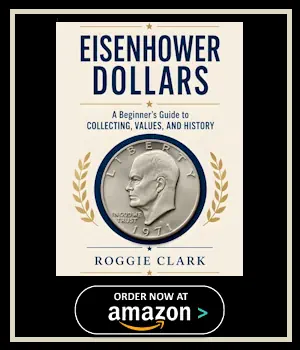
A Guide Book of Modern U.S. Dollar Coins - Features hundreds of full-color coin photos plus rare behind-the-scenes historical images.
 '
'