Advertising Disclosure: This page contains affiliate links. As an eBay Partner Network affiliate, FindRareCoins.com earns from qualifying purchases. As an Amazon Associate, we earn from qualifying purchases. We may also earn commissions from other dealers linked on this site, at no extra cost to you. Full disclosure
Have you ever dumped a handful of change onto a table and wondered if any of those coins might be worth more than their face value? It may sound unbelievable, but rare and valuable coins are still being discovered in circulation today. Of course, most pocket change is worth exactly what is stamped on it. However, certain coins can be worth hundreds, thousands, or even tens of thousands of dollars because of minting errors, low production numbers, or collector demand.
Every year, collectors and casual treasure hunters report finding valuable coins in bank rolls, cash registers, estate sales, and change jars sitting around the house. We've started with the ten coins most worth knowing by sight, followed by fifteen more that reward a closer look. If you turn up something promising, our What's My Coin Worth guide and coin price guide can help you narrow down what you have before you spend it.
The Top 10 Valuable Coins to Look for in Pocket Change
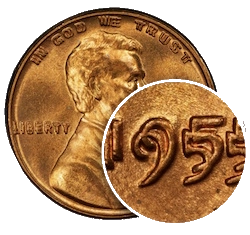
1. 1955 Doubled Die Lincoln Cent
The 1955 Doubled Die Penny is one of the most famous error coins in American history. The date and lettering on the obverse appear noticeably doubled — visible to the naked eye on strong examples. As a result, collectors eagerly seek even worn specimens. See our wheat penny value chart for how it compares with the rest of the series.
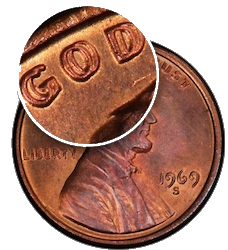
2. 1969-S Doubled Die Lincoln Cent
Another legendary doubled die error, the 1969-S Lincoln Cent displays dramatic doubling on the obverse lettering and date. Because counterfeits exist, authentication by PCGS or NGC is strongly recommended if you believe you've found one. Our penny error coins guide covers how to tell genuine doubled dies from look-alikes.
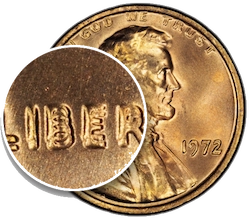
3. 1972 Doubled Die Lincoln Cent
Unlike many valuable errors that require magnification to identify, the doubling on many 1972 Doubled Die Pennies can be seen with the naked eye. The date and "LIBERTY" on the obverse show clear separation. Our 1972 doubled die penny value guide covers this variety in more detail, and you can compare yours against the other major Lincoln cent errors.
4. 1983 Doubled Die Reverse Lincoln Cent
This popular variety shows doubling on the reverse side, particularly in the lettering. Even today, patient searchers keep finding examples in circulation and bank coin rolls.
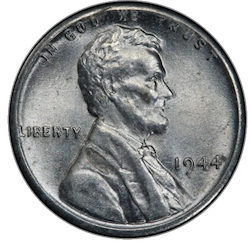
5. 1944 Steel Lincoln Cent
After returning to bronze in 1944, a small number of leftover steel planchets were mistakenly used. Today, these are among the most valuable Lincoln cents ever produced. Fortunately, a simple magnet test can identify steel composition.
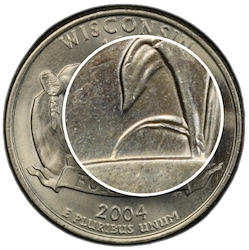
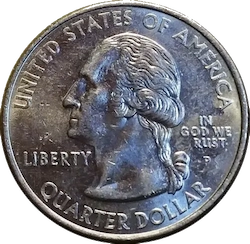
6. 2004 Wisconsin Extra Leaf Quarter
The Wisconsin State Quarter became famous when collectors noticed an extra leaf on the corn stalk design — apparently caused by deliberate or accidental die damage. Today, both the High Leaf and Low Leaf varieties command premiums.
7. 2005 Kansas "In God We Rust" Quarter
A grease-filled die caused part of the motto "TRUST" to read "RUST," creating one of the most entertaining error coins ever released into circulation. Even so, many examples remain unnoticed in everyday change.
8. 1999 Delaware Spitting Horse Quarter
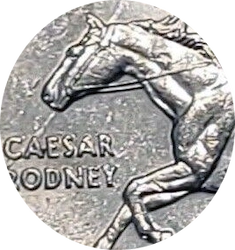
A die crack on the Delaware Statehood Quarter appears to make the horse look like it is spitting. These dramatic-looking die cracks are exactly the kind of variety that casual collectors and newcomers find exciting.
9. 1937-D Three-Legged Buffalo Nickel
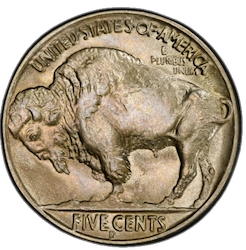
One of the most famous U.S. nickels, the buffalo appears to have only three legs because a Mint worker over-polished the reverse die during maintenance, removing the front right leg. Even now, it occasionally turns up in old collections and estate sales.
10. 1965 Lincoln Memorial Cent "Double Dot"
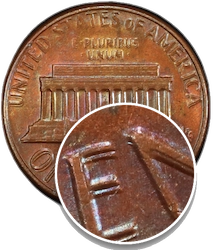
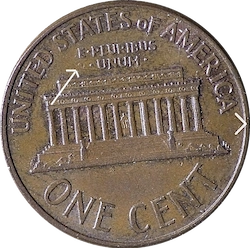
On the reverse of the 1965 Lincoln Memorial Cent, the motto E PLURIBUS UNUM is positioned directly above the memorial building. Look closely around UNUM — some 1965 cents show a small extra raised dot beside the word, which gave this variety its "Double Dot" nickname. It was heavily promoted in 1960s hobby ads as a supposed way to identify Denver-struck cents after mint marks were dropped from 1965 to 1967, but modern specialists generally regard the extra dot as minor die damage carrying little premium on its own. In short, it's a fun find and a great conversation piece, but the real money in 1965 cents is in high-grade, full-red examples.
One of the more modern doubled die varieties, the 1995 Lincoln Cent is a favorite among coin roll hunters. Strong doubling is visible on "LIBERTY" and the date without magnification.
12. 1943 Bronze Lincoln Cent
During World War II, pennies were struck on steel planchets to conserve copper. A small number of bronze planchets were accidentally used instead. Finding one would be the coin collecting equivalent of winning the lottery — fewer than 30 are known to exist. Values for regular 1943 steel cents and the rest of the series are in our wheat penny value chart.
13. 1970-S Small Date Lincoln Cent
The Small Date variety can be difficult to identify without a reference comparison, but collectors pay strong premiums for well-preserved examples. The difference in date size is subtle but confirmed by specialists. See our 1970-S small date penny value guide for a closer look at this variety.
14. 1982 No Mint Mark Roosevelt Dime
A small number of Philadelphia dimes were accidentally produced without a P mint mark — the first year that mint mark appeared on dimes. This modern rarity is one of the most famous dime errors and thousands of examples are known.
15. 1968 No S Roosevelt Dime
A proof issue missing its San Francisco mint mark, this coin commands significant collector interest. Fewer than 10 examples are confirmed. Any No S proof Roosevelt Dime should be authenticated immediately.
16. 1976 Bicentennial Quarter with Errors
Millions of Bicentennial Quarters were produced, but certain error varieties — including double strikes, off-center strikes, and wrong planchet errors — can be worth substantial amounts. For that reason, they're worth examining carefully.
17. 1950-D Jefferson Nickel
Collectors have long pursued the 1950-D because of its low mintage of just 2.63 million — the lowest of any regular-issue Jefferson Nickel. Because collectors hoarded it at the time of release, most survivors are in high grades.
18. 1942–1945 Silver War Nickels
During World War II, nickels were struck with 35% silver to conserve strategic metals. Identified by the large mint mark above Monticello on the reverse. Yet many people spend these without realizing their silver content exceeds face value.
19. 1914-D Lincoln Cent
Although increasingly rare in circulation, examples still surface in inherited collections and old coin jars. Denver struck just 1.19 million examples — a genuine key date in the Lincoln cent series with strong collector demand across all grades.
20. 1931-S Lincoln Cent
With a mintage of just 866,000, the 1931-S is one of the key dates in the Lincoln cent series. Together, low mintage and strong collector demand make this coin highly desirable whenever it surfaces.
21. 1958 Doubled Die Lincoln Cent
One of the rarest doubled die pennies ever discovered — only three confirmed examples exist. So if you find a 1958 cent with doubling, have it authenticated immediately. This is a significant numismatic rarity.
22. Off-Center Error Coins
Coins struck off-center can be worth substantial premiums depending on the severity of the error and the denomination. Errors where 50% or more of the design is missing but the date is still visible command the strongest prices.
23. Broadstruck Coins
When a coin is struck without the retaining collar, it spreads beyond its normal size and shape. These dramatically misshapen coins are highly collectible and often surface in circulation unnoticed by the average person.
24. Clipped Planchet Errors
A clipped planchet occurs when part of the metal blank is missing before striking. The resulting coin has a distinctive curved or straight bite taken out of one edge. Unfortunately, non-collectors often overlook these unusual pieces.
25. Double-Struck Coins
A coin accidentally struck multiple times displays overlapping designs and dramatic distortions. Major double-strike errors are among the most visually striking of all error coins and collectors pay strong premiums for dramatic examples.
How to Check Your Change for Valuable Coins
Look at the Date
First, remember that certain years are far more valuable than others. Familiarize yourself with key dates for each denomination — a 1955, 1969-S, or 1914-D penny is worth a long look; a 1982 dime deserves immediate attention.
Check for Mint Marks
The tiny letter beneath the date can make a huge difference in value. Coins from certain branch mints in certain years are dramatically scarcer than their Philadelphia counterparts. The presence, absence, or size of a mint mark matters.
Search for Errors and Varieties
Use a magnifying loupe to inspect lettering, dates, and design elements. In particular, look for doubling, missing details, unusual shapes, or strike abnormalities. Error coins reward careful, patient examination.
Examine Condition
In general, coins in better condition bring higher prices. Above all, never clean a coin — even light cleaning can reduce collector value by 50–90%. A coin with natural wear is always worth more than a cleaned example of the same date.
Weigh Suspicious Coins
Many valuable error coins were struck on the wrong metal planchet. A basic digital gram scale can help identify unusual pieces — a 1943 cent that doesn't stick to a magnet, for example, demands immediate authentication.
Where Valuable Coins Are Still Being Found
Many people assume all valuable coins have already been discovered. In reality, that simply isn't true. Rare coins continue to surface in bank coin rolls, cash register change, estate sales, garage sales, inherited collections, coin jars, vending machine returns, and antique stores. Some of the most significant finds in recent decades came from ordinary people who took the time to look carefully at coins others had ignored.
Final Thoughts
Coin collecting remains one of the few hobbies where genuine treasures can still be found in everyday life. Admittedly, the odds of discovering a six-figure rarity are slim. Still, valuable coins surface across the United States every year. The next time you get change from a store, spend a moment examining the dates, mint marks, and designs — a penny, nickel, dime, or quarter in your pocket might be worth far more than its face value. For deeper research on any of these coins, see our FRC Coin Price Guide and our Error Coins guide.
FindRareCoins.com participates in the eBay Partner Network. Purchases made through links on this page may earn us a commission at no additional cost to you.
Frequently Asked Questions
What's the easiest way to start checking my change for valuable coins?
Start with pennies and nickels — they're the most common source of valuable circulation finds because of their long production history and frequent minting errors. Check the date and mint mark first against a key-date list, then look closely at the lettering and design elements for doubling or other anomalies. A cheap magnifying loupe makes this dramatically easier than relying on the naked eye alone.
How do I know if a coin has a doubled die error and not just wear or damage?
True doubled die doubling shows a clean, consistent shadow-like duplication of design elements — most visibly in lettering like "LIBERTY" or the date — with both layers evenly raised. Damage or machine doubling (a much more common and far less valuable phenomenon) tends to look flat, shelf-like, or smeared rather than fully separated. If you're unsure, compare your coin against verified photos of the specific variety, or send it to PCGS or NGC for authentication before assuming it's valuable.
Should I clean a coin before selling it or having it appraised?
No — never clean a coin you think might be valuable. Cleaning, even gently, can strip the coin's original surface and luster, which collectors and grading services can usually detect. A cleaned coin can lose 50 to 90 percent of its collector value compared to an identical uncleaned example, even if the cleaning made it look "nicer" to the naked eye.
What should I do if I think I've found a genuinely rare coin?
Handle it by the edges only, store it in a protective holder, and avoid any cleaning or alteration. For coins that could be worth more than a few hundred dollars, submit them to PCGS or NGC for professional grading and authentication before selling — this protects you from underselling a genuine rarity and protects buyers from unknowingly purchasing a counterfeit or altered coin.
Are coin roll hunting and bank searching still worthwhile in 2026?
Yes, though it takes patience. Most rolls won't contain anything beyond face value, but silver coins, key dates, and error varieties genuinely do still surface — some of the finds referenced on this page were discovered exactly this way. Banks generally allow customers to purchase rolled or boxed coins and return the ones they don't want, making it a low-cost hobby with a real, if modest, chance of a meaningful find.
Why are some error coins worth so much more than others?
Value comes down to a combination of rarity, visibility, and demand. A dramatic, easy-to-spot error on a coin with very few known survivors — like the three known 1958 doubled die cents — commands far more than a subtle error found on thousands of surviving examples. Collector recognition matters too: well-documented, widely known varieties tend to hold and grow in value more reliably than obscure errors few buyers have heard of.
The Ultimate U.S. Error Coin Guide 2027 is a practical and easy-to-use reference designed to help you confidently identify, evaluate, and collect U.S. error coins.
Strategies for Maximizing Returns from Rare Mint Errors is a practical guide designed to help identify mint errors, understand their value, and make informed collecting and selling decisions.
Advertising Disclosure: This page contains affiliate links. As an eBay Partner Network affiliate, FindRareCoins.com earns from qualifying purchases. As an Amazon Associate, we earn from qualifying purchases. We may also earn commissions from other dealers linked on this site, at no extra cost to you. Full disclosure Strategies for Buying Coins Online — A Smart…
Advertising Disclosure: This page contains affiliate links. As an eBay Partner Network affiliate, FindRareCoins.com earns from qualifying purchases. As an Amazon Associate, we earn from qualifying purchases. We may also earn commissions from other dealers linked on this site, at no extra cost to you. Full disclosure Declaration of Independence Quarter — July 4 Privy…
Advertising Disclosure: This page contains affiliate links. As an eBay Partner Network affiliate, FindRareCoins.com earns from qualifying purchases. As an Amazon Associate, we earn from qualifying purchases. We may also earn commissions from other dealers linked on this site, at no extra cost to you. Full disclosure 1964 Kennedy Half Dollar Value, Mint Marks &…
Advertising Disclosure: This page contains affiliate links. As an eBay Partner Network affiliate, FindRareCoins.com earns from qualifying purchases. As an Amazon Associate, we earn from qualifying purchases. We may also earn commissions from other dealers linked on this site, at no extra cost to you. Full disclosure How AI Data Centers Are Fueling the Historic…
Advertising Disclosure: This page contains affiliate links. As an eBay Partner Network affiliate, FindRareCoins.com earns from qualifying purchases. As an Amazon Associate, we earn from qualifying purchases. We may also earn commissions from other dealers linked on this site, at no extra cost to you. Full disclosure 1804 Silver Dollar “The King of American Coins”…
🏅 The Complete Collector’s Guide $5 Gold Half Eagle Coins: Full History, Rare Dates & Collector’s Guide The $5 gold Half Eagle is one of the most historically significant coins in American numismatics. Minted continuously from 1795 to 1929 — and revived in modern commemorative form — the Half Eagle spans the full arc of…
We use cookies for the purposes of statistical analysis, improving the friendliness and usability of our website, tailoring content to your interests and engaging with social media. By visiting and using our website, you consent to our use of cookies as described in our cookie policy.
This website uses cookies to improve your experience while you navigate through the website. Out of these cookies, the cookies that are categorized as necessary are stored on your browser as they are essential for the working of basic functionalities of the website. We also use third-party cookies that help us analyze and understand how you use this website. These cookies will be stored in your browser only with your consent. You also have the option to opt-out of these cookies. But opting out of some of these cookies may have an effect on your browsing experience.
Necessary cookies are absolutely essential for the website to function properly. This category only includes cookies that ensures basic functionalities and security features of the website. These cookies do not store any personal information.
Any cookies that may not be particularly necessary for the website to function and is used specifically to collect user personal data via analytics, ads, other embedded contents are termed as non-necessary cookies. It is mandatory to procure user consent prior to running these cookies on your website.
 Some coin images courtesy of PCGS CoinFacts.
 Shop Error Coins & Key Dates on eBay
Money Back Guarantee
Shop Error Coins & Key Dates on eBay
Money Back Guarantee
 '
'