Coin Grading Photo Guide
Coin grading is the single most important factor in determining a coin's value — a Morgan dollar in Good-4 might sell for $30, while the same date in MS-65 can bring $3,000 or more. The difference is condition, and condition is measured using the Sheldon scale: a standardized 1–70 point system used by every professional grader, dealer, and auction house in the world.
This guide covers every grade from Poor-1 to MS-70, with detailed descriptions of what each grade looks like, how to identify it, and how much it affects the value of your coin. Whether you're buying, selling, or simply trying to understand what your coins are worth, understanding grades is essential. For actual dollar figures at each grade for a specific series, see our Coin Price Guide or run your coin through the What's My Coin Worth tool.
Why grades matter: The jump from MS-63 to MS-65 on a key-date Morgan dollar can mean the difference between $500 and $5,000. Even on common coins, a coin in EF-40 is often worth 3–5× a G-4 example. Grading is the most important skill any collector can develop.
The lowest grades on the Sheldon scale. These coins are heavily worn — most design detail is gone, and in Poor-1 the coin may be barely identifiable. Collectible only for key dates where any genuine example has significant value.
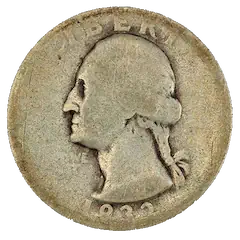
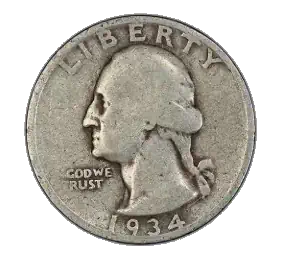
The most common circulated grades for heavily worn but clearly identifiable coins. Good is the baseline grade for most coin values listed in price guides. Very Good shows more detail with the design outline fully visible.
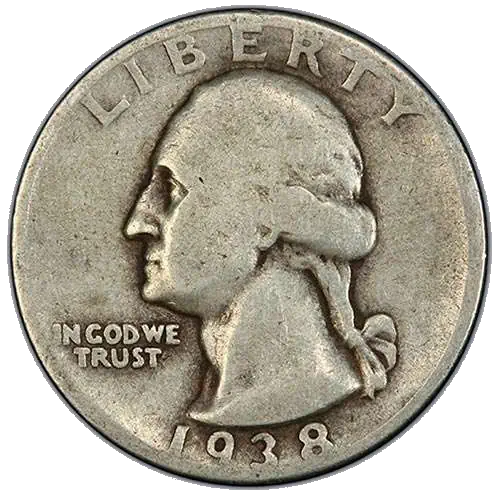
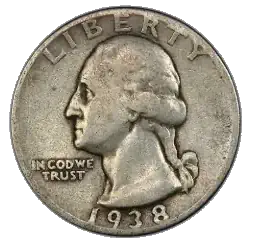
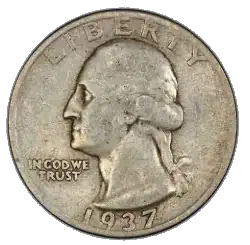
The most collectible circulated grades for the average collector. Fine coins show moderate wear with all major design elements visible. Very Fine shows light to moderate wear with much of the original detail intact — an attractive circulated coin.
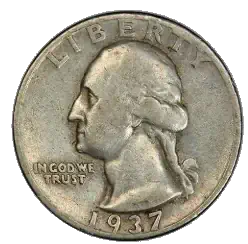
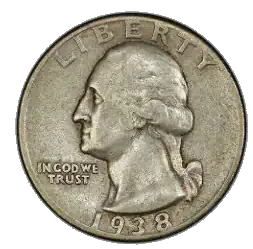
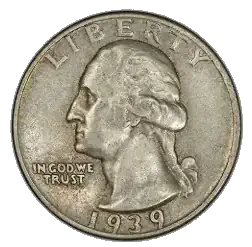
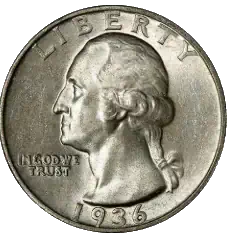
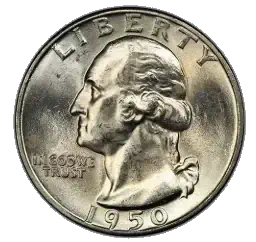
Premium circulated grades where coins retain most of their original design sharpness. EF coins show only slight wear on high points. AU coins have just a trace of wear — and AU-58 is often indistinguishable from Mint State to the untrained eye. These grades command significant premiums over lower circulated grades.
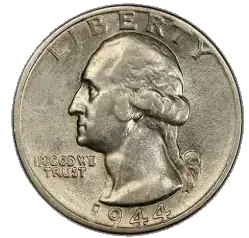
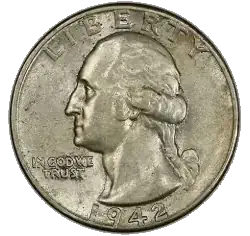
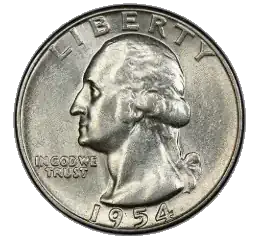
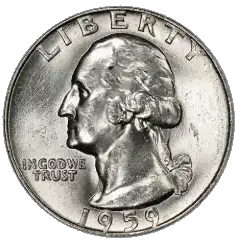
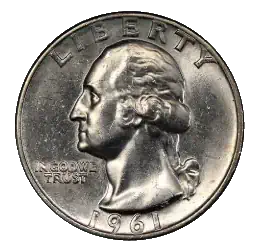
Mint State coins show zero wear — they were never circulated. The MS scale from 60 to 70 grades the quality of the surfaces: the number and severity of contact marks (bagmarks), luster quality, and strike sharpness. The jump from MS-63 to MS-65 is where values increase most dramatically for most series.
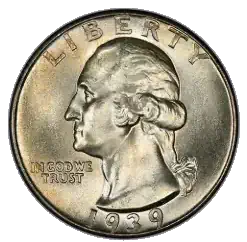
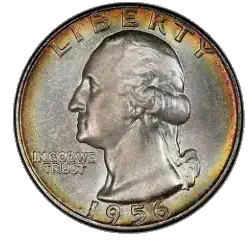
How Coin Grade Affects Value
A key-date coin in Gem Mint State (MS-65) can be worth 50 to 150 times the same coin in Good-4 condition — grade is the single biggest driver of numismatic value, more than rarity of the date itself in most cases. The table below shows approximate multipliers across the full grading scale for a typical key-date U.S. silver coin. These are illustrative ranges — specific coins vary dramatically based on date, series, and current demand.
| Grade | Name | Typical Multiplier vs G-4 | Visual Range |
|---|---|---|---|
| G-4 | Good | 1× (baseline) | |
| VG-8 | Very Good | 1.3–1.8× | |
| F-12 | Fine | 1.5–2.5× | |
| VF-20 | Very Fine | 2–4× | |
| VF-35 | Choice VF | 3–6× | |
| EF-40 | Extremely Fine | 4–8× | |
| AU-50 | About Uncirculated | 6–12× | |
| AU-58 | Choice AU | 8–18× | |
| MS-63 | Choice Mint State | 15–40× | |
| MS-65 | Gem Mint State | 50–150× | |
| MS-67 | Superb Gem | 200–1,000×+ |
The complete U.S. coin photograde reference — from Colonials through $20 Gold & Bullion — is available free at PCGS Photograde™ Online. Every denomination, every grade, with actual coin photos for direct visual comparison. The most comprehensive free grading reference in numismatics.
 View PCGS Photograde™ Online →
Proof Coins — PR/PF Grades
Proof coins are specially struck collector coins — not a grade, but a method of manufacture. They are struck multiple times with polished dies on polished planchets, producing mirror-like fields and frosted design elements (called "cameo" contrast). Proof coins use the same 60–70 scale but are prefixed PR or PF rather than MS.
PR-65 Cameo (CAM) and PR-65 Deep Cameo (DCAM) are the most desirable designations — coins with the strongest contrast between frosted devices and mirror fields. DCAM examples typically sell for 2–5× the value of a non-cameo proof of the same grade.
Proof coins issued before 1970 are particularly valuable because the modern proof production process wasn't fully standardized. Pre-1965 proof silver coins — dimes, quarters, halves — in PR-65 or better are highly sought after by collectors.
Ready to Start Grading Your Own Coins?
The fastest way to build a reliable eye for grading is to compare your coins directly against certified reference examples in every grade — PCGS Photograde above is the best free starting point.
PCGS vs NGC — The Two Major Grading Services
Professional grading eliminates subjectivity and protects both buyers and sellers. Both PCGS and NGC are universally respected — coins in their holders trade freely at consistent prices worldwide.
- Generally considered slightly more conservative grading standards
- Blue plastic holders ("slabs") with gold label
- PCGS Price Guide is an industry-standard value reference
- CoinFacts database: most comprehensive reference photos online
- PCGS-certified coins often bring a small premium at auction
- Population Report shows how many coins certified at each grade
- Submission fees: $30–$150+ per coin depending on tier
- Slightly more liberal grading on some series — more NGC-certified coins at top grades
- Blue holders with white/silver label
- NGC Price Guide and Census Report widely used
- NGC Registry for competitive set building
- Stronger international presence — preferred for world coins
- NGC also grades ancients, tokens, and world coins
- Submission fees similar to PCGS
Which service to use? For U.S. coins, either is fine — both are universally accepted. For key dates and high-value coins, submit to whichever service historically commands a premium for that specific series. For ancient coins or world coins, NGC is generally preferred. For Morgan dollars and Lincoln cents, PCGS-certified examples often bring slightly higher realized prices at auction.
How to Get a Coin Graded
Submitting a coin to PCGS or NGC typically costs $30 to $75 per coin and takes four to six weeks under standard service, with faster turnaround tiers available for an added fee. The process is straightforward, but a few decisions early on affect both the cost and the grade your coin comes back with.
Most collectors submit through an authorized PCGS or NGC dealer rather than mailing coins in directly — dealer submissions often get bulk-rate pricing and access to lower minimum-value tiers than individual walk-in submissions. Direct membership accounts are worth setting up if you plan to submit coins regularly.
- Choose a service. PCGS and NGC are both widely accepted; pick based on which one commands a stronger premium for your specific series, or use whichever an authorized dealer already has a relationship with.
- Select a submission tier. Tiers are priced by the coin's declared value and turnaround speed — economy tiers cost less but can take 20+ business days, while express tiers return a grade in a few days for a premium.
- Package and ship securely. Coins should be placed in individual flips or capsules, never touched bare-handed, and shipped with tracking and insurance matching their declared value.
- Wait for grading. Graders examine each coin under magnification for wear, marks, luster, and strike, then assign a numeric grade and encapsulate ("slab") the coin with a tamper-evident holder and label.
- Receive and verify your coin. Check the assigned grade and certification number against the service's online population report to confirm authenticity before reselling or adding it to your collection.
Tips for Grading Your Own Coins
Where to Buy Graded Coins
The safest way to buy coins at a known grade is to purchase PCGS or NGC certified examples from these trusted sources.
 Find Certified Coins on eBay
Money Back Guarantee
Find Certified Coins on eBay
Money Back Guarantee
FindRareCoins.com is an eBay Partner and earns from qualifying purchases made through links on this page.
Frequently Asked Questions
What is the most important grade to know for buying coins?
MS-63, MS-64, and MS-65 are the grades where value changes most dramatically for Mint State coins — understanding the difference between them saves or earns you significant money. For circulated coins, the VF-20 to AU-55 range is where most attractive coins trade. Knowing these grades fluently is more important than memorizing the entire 1–70 scale.
What does "details grade" mean?
A details grade (e.g. "EF-40 Details — Cleaned") means a coin has the wear characteristics of that grade but has a problem that prevents it from receiving a straight numerical grade. Common details designations include Cleaned, Polished, Scratch, Rim Damage, Environmental Damage, and Altered Surfaces. Details-graded coins are worth significantly less than problem-free examples — often 20–50% of the straight-graded value, sometimes less.
Is it worth getting my coin graded by PCGS or NGC?
Generally yes if your coin is likely worth $200 or more in the grade you believe it is. Grading fees typically run $30–$75 per coin for standard service. The certification adds buyer confidence that usually returns the fee cost and more on the selling price. For coins worth under $100, the fee often doesn't make economic sense unless you want certainty for personal reasons.
What is a CAC sticker and does it matter?
CAC (Certified Acceptance Corporation) is an independent service that verifies PCGS and NGC-graded coins meet the high end of their assigned grade. A green CAC sticker means the coin was approved; a gold sticker means it's exceptional for the grade. CAC-approved coins command premiums of 10–30% over non-stickered examples in many series, and they tend to sell faster at auction. While optional, a CAC sticker is strong validation of a coin's quality.
Can I grade my own coins accurately?
With practice, yes — but most beginners overgrade by 1–2 points consistently. The best way to calibrate your eye is to handle certified coins in multiple grades of the same series and compare them side by side. The ANA Grading Standards book ($30 on Amazon) has reference photos for every major U.S. series. For coins you intend to buy or sell at significant prices, rely on PCGS or NGC certification rather than self-grading.
Why does MS-65 cost so much more than MS-63?
Two reasons: scarcity and demand. Most coins that survive in Mint State are MS-60 to MS-63 — they got tossed into bags at the mint and acquired bagmarks immediately. True Gem (MS-65+) coins were somehow protected from contact marks throughout their entire life. For popular series like Morgan dollars, an MS-65 might be 1 in 100 certified coins at that grade, creating both rarity and strong collector demand. That combination drives exponential rather than linear price increases.
Grading is a skill that improves with every coin you handle. Start by learning the circulated grades — Good through AU — for the series you collect most, then work your way into Mint State grading. Our Coin Price Guide shows values across multiple grades for all major U.S. coins, and our Morgan Dollar Research Guide covers grading for that series in depth. For error coin varieties, see our Error Coins Value Guide.
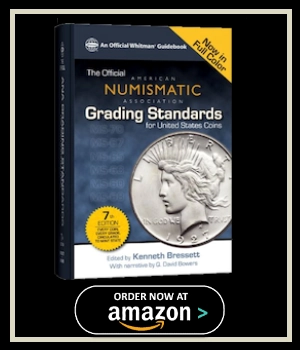
Every coin minted since 1793, from half cents to gold double eagles to commemoratives is studied in 384 pages of easy-to-follow text and photographs.
 '
'