FindRareCoins.com Tools & Price Guides — Everything a Collector Needs in One Place
Your complete guide to the FRC coin value estimator, melt calculators, error-coin library, bullion charts, and more
Whether you just pulled a suspicious-looking cent from a roll of pocket change or you're managing a six-figure numismatic portfolio, one thing never changes: you need reliable, current information to make smart decisions. That's exactly what FindRareCoins.com was built to deliver.
FRC is more than a coin website. It's a comprehensive research hub that brings together price-lookup tools, melt value calculators, error-coin identification guides, series-by-series coin databases, live bullion price charts, and in-depth research articles — all designed around the way real collectors actually work. Every tool on the site is free, and every piece of data is grounded in certified market sources rather than guesswork.
- Coin Value Estimator — Grade-specific price ranges pulled from certified market data
- Silver & Gold Melt Calculators — Real-time metal floor prices for any U.S. coin
- PCGS Cert Lookup — Verify a certified coin's grade and price guide value by cert number
- Error Coin Guide Library — Identification, attribution, and value for mint errors and die varieties
- U.S. Coin Category Pages — Series-level research, key dates, and collector checklists
- Bullion Price Charts — Live and historical spot prices for gold, silver, platinum, and palladium
- Research Articles — Long-form numismatic education on history, grading, and market trends
- Coin Price Guide — Comprehensive series-by-series value reference at findrarecoins.com/coin-prices/
The Coin Value Estimator: Your Starting Point for Any Coin
What It Does
The FRC Coin Value Estimator is the most-used tool on the site — and for good reason. Enter a coin's denomination, date, mint mark, and approximate grade, and the estimator returns a price range drawn from recent auction results, dealer buy lists, and graded-coin population data from services like PCGS and NGC. It's fast, free, and detailed enough to be useful for common dates and genuine rarities alike.
How Collectors Use It in the Field
You're at an estate sale and you spot a 1916-D Mercury Dime in a dealer's box, priced at $700. You have maybe thirty seconds to decide. Pull up the FRC Coin Value Estimator on your phone, enter the details, and you'll see immediately that a genuine circulated example in VF-20 typically trades between $1,200 and $1,600. That $700 price tag is potentially a serious find — and now you know it before the opportunity walks away.
Advanced collectors use the estimator differently. They'll run a date-by-date comparison across an entire series — say, Walking Liberty Half Dollars from 1916 through 1947 — to identify which dates are undervalued relative to their actual scarcity. That's the kind of edge that separates a casual hobbyist from a serious numismatic investor.
Why the Data Is Trustworthy
FRC sources its valuation data from established grading services and verified auction records. The estimator flags coins where market data is thin, so you're never relying on a guess dressed up as a price. Values are updated regularly to reflect current market conditions rather than stale price-guide editions from two years ago.
Silver & Gold Melt Calculators: Know the Metal Floor Before You Negotiate
Why Melt Value Matters
Before you can evaluate a coin's numismatic premium — the collector value above and beyond its raw metal content — you need to know its melt value. FRC's melt calculators handle silver, gold, and copper coins, pulling live spot prices and automatically applying the correct metal weight for each coin type. No math required.
As an example: a 1964 Kennedy Half Dollar contains 0.3617 troy ounces of silver. If silver is trading at $58 per ounce, the coin's melt value sits at roughly $21. Any price above that is pure numismatic premium. Understanding where the floor is helps you avoid overpaying for a coin whose so-called "value" is mostly just the metal and nothing more — a trap that catches new collectors constantly.
Three Ways Collectors Put This Tool to Work
- Bulk purchases: Buying a roll of pre-1965 Washington Quarters? Run the lot through the silver melt calculator to establish your absolute floor price before you open negotiations. If the dealer won't go below melt, walk away.
- Selling decisions: When a coin's numismatic premium has collapsed to near-melt levels — common with heavily circulated key dates in heavily worn condition — it may genuinely be worth more as raw silver than as a collectible. The calculator tells you where that line is.
- Portfolio tracking: Long-term holders can monitor the melt component of their holdings independently from collector demand using the Coin Collection Portfolio Tracker. This separation is especially useful when metal markets move sharply and you want to understand how much of a price move is metal-driven versus market-driven.
For collectors who also track the investment side of numismatics, pairing the melt calculator with FRC's Coin Price Guide gives you a complete top-to-bottom picture: raw metal value at the bottom, full numismatic market value at the top, and everything in between explained.
Error Coin Guides: Turning Oddities Into Real Opportunities
The FRC Error Coin Library
Error coins are among the most exciting — and most misunderstood — corners of numismatics. A coin with a genuine doubled die, off-center strike, clipped planchet, or major die cap can be worth hundreds or thousands of dollars above face value. But identifying real mint errors versus post-mint damage or simple die wear requires specific, detailed knowledge that most beginners don't have.
FRC's error coin guides are organized by error type and by coin series, making them genuinely useful whether you're a beginner who just found something strange or an experienced attributor double-checking a variety assignment. Each guide covers:
- Photographs of genuine examples showing exactly what each error type looks like
- Side-by-side comparisons of authentic errors versus damage versus die varieties
- Known value ranges for each error category organized by grade
- Guidance on which error types are most commonly faked or misrepresented in the marketplace
A collector in Ohio was hunting through a box of Lincoln cents when she noticed a 1995 cent with doubling on the lettering. She wasn't sure whether she had a genuine doubled die or mere machine doubling — two very different things with very different values. She pulled up the FRC Error Coin Guide for Lincoln Cents, found the 1995 doubled die entry, and compared her coin's characteristics against the photographs. The doubling pattern matched. That one cent, worth one penny at face value, turned out to be a $50–$150 coin in circulated condition. That kind of discovery happens every day to collectors who know what to look for.
For variety attribution on more obscure die marriages and doubled dies, FRC's guides work well alongside resources from the U.S. Mint and established numismatic research institutions. See also the full Error Coins Value Guide, plus denomination-specific guides for pennies, nickels, dimes, quarters, half dollars, and dollars.
U.S. Coin Category Pages: Deep-Dive Research by Series
Series-by-Series Organization
FRC organizes its U.S. coin content by denomination and series — Lincoln Cents, Buffalo Nickels, Mercury Dimes, Morgan Dollars, Peace Dollars, Saint-Gaudens Double Eagles, and dozens more. Each category page functions as a mini-encyclopedia covering the series history and design context, a complete date-and-mintmark checklist, key dates and condition rarities, grading tips specific to that series, and market commentary on which segments are active or cooling.
Why Series-Level Context Changes Everything
Too many new collectors approach numismatics coin-by-coin without understanding the broader series context. A 1909-S VDB Lincoln Cent is famous, but understanding why — the low mintage, the political controversy over the designer Victor David Brenner's initials, the role it played in igniting public interest in the Lincoln cent series — adds depth that makes the coin more meaningful and the collection more intentional.
Series pages also help collectors build systematic, completable sets rather than accumulating random coins with no unifying logic. A collector who decides to assemble a date-and-mint set of Mercury Dimes walks away from the category page with a clear roadmap: 76 date/mint combinations, seven key dates that will challenge the budget, and a realistic cost range to complete the set in Fine versus Extremely Fine condition. That's the difference between collecting and collecting well.
Key Series Available on FRC
- Cents: Indian Head, Lincoln Wheat, Lincoln Memorial, Lincoln Shield
- Nickels: Liberty, Buffalo, Jefferson
- Dimes: Barber, Mercury, Roosevelt
- Quarters: Barber, Standing Liberty, Washington, Statehood
- Half Dollars: Barber, Walking Liberty, Franklin, Kennedy
- Dollars: Morgan, Peace, Eisenhower, Susan B. Anthony, Sacagawea, Presidential — full coverage at findrarecoins.com/dollars/
- Gold Coinage: Liberty Head, Indian Head, Saint-Gaudens series
All FRC Tools at a Glance
Coin Value Estimator
Silver Melt Calculator
Gold Melt Calculator
Gold Coin Premium Calculator
PCGS Cert Verification
Error Coin Identifier
Coin Value Checker
Coin Grading Simulator
Coin Grading Photo Guide
U.S. Mint Mintage Lookup
Coin Collection Portfolio Tracker
Pocket Change Treasure Finder
Error Coin Guide Library
Bullion Price Charts
Coin Price Guide
Bullion Dealer Comparison
Bullion Price Charts: Staying Ahead of the Metal Markets
Live Spot Prices
For collectors who hold bullion coins — American Silver Eagles, Gold American Eagles, Gold Maple Leafs, or pre-1933 U.S. gold — knowing where metal prices stand is as important as knowing collector premiums. FRC's bullion price charts display live spot prices for gold, silver, platinum, and palladium, updated in real time during market hours.
Historical Chart Views and Why They Matter
Beyond the current price, FRC offers historical chart views across multiple time horizons. This matters because dealer premiums compress and expand with spot price volatility. When silver drops sharply, dealer premiums often balloon as supply tightens. When silver rallies, premiums can compress as sellers come forward. Understanding that relationship helps collectors time purchases and sales more intelligently rather than reacting emotionally to price moves.
Connecting Spot Prices to Your Holdings
The bullion charts integrate with FRC's melt calculator so you can see, in real time, how today's spot price affects the metal value of any coin in your collection. A collector holding 200 pre-1965 U.S. silver coins can check the chart, see that silver has moved up $1.50 from last week, and know immediately that the melt value of those holdings increased by roughly $107 — without doing any math manually. For anyone managing a meaningful silver or gold position, that kind of instant clarity is genuinely valuable.
For a deeper look at how silver content intersects with collector demand, see FRC's guides on junk silver coins, the silver coin melt calculator, and the Morgan Silver Dollar series page.
Research Articles: Building a Real Numismatic Knowledge Base
Educational Content That Goes Beyond Price Lookup
FRC's research article library covers territory that no price guide can touch: the history behind coin designs, the stories of famous rarities, proper coin storage and preservation practices, explanations of grading standards and grading services, and analysis of long-term market trends. These aren't thin listicles — they're substantive articles written for people who take the hobby seriously.
Topics in the FRC research library include step-by-step grading guides for individual series, explainers on the difference between PCGS and NGC certification and when each service makes more sense for your coins, collector guides to building type sets on a realistic budget, and analysis of which market segments have historically rewarded patient long-term collectors. See the dedicated Coin Grading Guide, the Coin Roll Hunting Guide, and the Counterfeit Coin Detection Guide for a few of the most-read entries.
E-E-A-T and Why It Matters in Numismatic Research
Numismatic decisions can involve significant money, and bad information is expensive. Every FRC article is written to meet Google's E-E-A-T standard — Experience, Expertise, Authoritativeness, Trustworthiness — by citing verifiable sources including the U.S. Mint, PCGS, and NGC, and by grounding every factual claim in documented market data rather than anecdote.
A Complete Collector Workflow: Using FRC Tools Together
The real power of FRC's toolkit shows up when you use the tools in combination. Here's a workflow a collector might run when evaluating a coin at a show — the whole process takes under fifteen minutes and can be the difference between a smart purchase and an expensive lesson:
-
Category Page — Establish Context Navigate to the series page to understand where this coin fits. Is it a key date, a semi-key, or a common date in an unusually sharp grade? Context changes everything about how you interpret a price.
-
Error Coin Guide — Check for Known Varieties Quickly confirm whether this date/mint combination has known error varieties that could dramatically change the coin's value. A common coin with a major doubled die is an uncommon coin with a significant premium.
-
Melt Calculator — Establish the Metal Floor For silver or gold coins, set the absolute minimum value regardless of collector demand. This anchors your negotiation and prevents you from paying a premium on a coin that's worth roughly melt.
-
Coin Value Estimator — Price the Grade Get a grade-specific price range to evaluate whether the asking price is fair, a genuine deal, or frankly overpriced. Compare this to the seller's ask and negotiate from a position of knowledge.
-
PCGS Cert Lookup — Verify Any Certified Coin If the coin is already slabbed, confirm the certification number matches a real PCGS record before you pay a premium for third-party grading.
-
Research Articles — Fill Any Knowledge Gaps If it's an unfamiliar series or a coin with a complicated history, a quick read while you're still at the show prevents costly mistakes that are easy to make when you're operating on incomplete information.
Who FindRareCoins.com Is Built For
New Collectors
If you're just getting started, FRC is one of the most accessible places to build real numismatic knowledge without getting lost in jargon. The category pages explain series history in plain language. The error coin guides help you understand what you're actually looking at when a coin looks strange. The Coin Value Estimator gives you confidence at flea markets, estate sales, and coin shows before you've had years of experience to fall back on. And the research articles — including the Coin Collecting Guide and How to Sell Coins — are built to develop genuine knowledge, not just surface-level trivia that sounds impressive but doesn't help you make better decisions.
Intermediate Hobbyists
For collectors who've been in the hobby a few years and are starting to think more systematically, FRC's tools support that evolution. The melt calculators introduce the investment-side logic of numismatics with clear, numbers-based reasoning. The series checklists support set completion planning. The bullion charts bring real market awareness to a collection that may be developing a meaningful metal component. The Coin Value Estimator and Portfolio Tracker are particularly useful at this stage, when a collector is handling coins of genuine but uncertain value regularly and wants to track a growing collection's total worth.
Advanced and Investment-Grade Collectors
Serious numismatic investors need data they can rely on — not estimates, not approximations, not optimistic price guides from five years ago. FRC pulls from the same certified market data sources that professional dealers consult, and the site's research articles frequently address investment-grade topics: population report analysis, registry set competition dynamics, market cycles across major series, and the long-term performance of specific coin categories as stores of value. Whether you're tracking a PCGS Set Registry position or managing coins inside a numismatic IRA, FRC's certification verification tool and research hub give you the foundation to do it with clarity.
Where to Buy & Sell Rare Coins
Whether you're adding to a collection, liquidating duplicates, or looking for certified key dates, these are the platforms and dealers the FRC team trusts.
JM Bullion
Kitco
Money Metals Exchange
SD Bullion
Silver Gold Bull
eBay
Amazon
FRC Coin Price Guide
Related Guides & Resources

Frequently Asked Questions
Are the FindRareCoins.com tools free to use?
Yes — all core FRC tools are completely free, including the Coin Value Estimator, silver and gold melt calculators, PCGS cert lookup, error coin guides, bullion price charts, and all U.S. coin category pages. No account or subscription is required to access any of them.
How often are coin values updated on FRC?
Coin valuations are refreshed regularly to reflect current auction results and active dealer market prices. Bullion spot prices shown in the melt calculators and bullion charts update in real time during market hours, so the metal floor prices you're seeing are always current.
Can I use the FRC error coin guides to identify varieties on modern coins?
Yes. FRC's error coin library covers both classic U.S. series and modern coinage, including error varieties on Lincoln cents, Jefferson nickels, and Washington quarters from recent decades. The 1995 doubled die Lincoln cent and the 2004-D Wisconsin quarter extra leaf errors, for example, are covered in detail with photographs and value guidance.
What is the difference between melt value and numismatic value?
Melt value is what a coin is worth purely as raw metal at current spot prices — the absolute floor. Use the FRC silver melt calculator to find it instantly. Numismatic (collector) value adds a premium based on rarity, condition, demand, historical significance, and eye appeal. For common-date silver coins in heavily worn condition, those two numbers may be nearly identical. For a high-grade key date, numismatic value can be many times the melt value — use the Coin Value Estimator to see the full picture.
Does FRC cover world coins or only U.S. coins?
FRC's primary depth is in U.S. coinage, with series-level coverage across cents, nickels, dimes, quarters, half dollars, dollars, and gold. Research articles occasionally address world coins — particularly high-value series like British sovereigns, Mexican Libertads, and Canadian Maple Leafs — especially where they intersect with precious metal investment themes.
How accurate is the FRC silver melt calculator?
The FRC silver melt calculator uses the precise silver weight for each specific coin type (not a generic estimate) and pulls live spot price data, making it highly accurate for the purpose of establishing a metal floor price. For bulk transactions involving large quantities of coins, it's always worth verifying the live spot price from a second source before completing the deal.
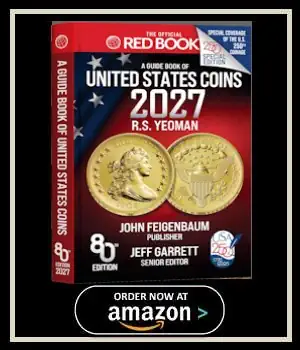
The all-new 2027 edition of The Official Red Book®: A Guide Book of United States Coins marks the 80th anniversary of the world’s best-selling coin price guide and the hobby’s most trusted reference
 '
'