The Last Pennies:
What the End of U.S. Penny Production Means for Collectors
For the first time in over 230 years, the U.S. Mint has stopped striking pennies for circulation. Here's what that means for your collection — and your wallet.
It's official: the humble penny — America's oldest continuously circulating coin denomination — has left the building. In February 2025, President Trump ordered the U.S. Treasury to halt penny production, the Mint placed its final order for penny blanks that May, and on November 12, 2025, U.S. Treasurer Brandon Beach struck the last circulation-strike one-cent coin at the Philadelphia Mint. As of 2026, no new pennies are being made for everyday change.
For most Americans, this is a minor inconvenience at the cash register. For coin collectors, it's a once-in-a-generation event — the kind of historic discontinuation that, looking back, always produces some of the most desirable coins in the hobby.
Quick Facts: The U.S. Mint spent approximately 3.69 cents to produce each 1-cent coin in 2024 — more than 3.5× face value, at a total loss of roughly $85.3 million that year alone. Halting production saves an estimated $56 million per year. An estimated 114 billion pennies currently in circulation remain legal tender indefinitely. Collector editions (Proof Sets, Mint Sets) continue to be struck in 2026 for numismatic sales only.
Why Did the U.S. Stop Making Pennies?
The economics had been unsustainable for years. Production costs rose from 1.3 cents per coin a decade ago to 3.69 cents by 2024 — meaning the Mint lost money on every single penny it struck. In 2024 alone, the Mint produced roughly 3.2 billion pennies at a cost that outstripped their combined face value by tens of millions of dollars.
Beyond the math, behavioral shifts sealed the penny's fate. Digital and card payments have surged — cash now makes up roughly 14% of consumer payments, down from 31% in 2016 — and cash transactions have declined accordingly. Pennies were increasingly being minted specifically to be ignored.
Other countries got there first. Canada eliminated its one-cent coin in 2013, followed by cash rounding to the nearest nickel. Australia and New Zealand did the same years earlier. The U.S. is simply the last major economy to catch up.
Historical Parallel: The 1943 Steel Cent
The last time the U.S. dramatically changed its penny was 1943, when wartime copper shortages forced a switch to zinc-coated steel blanks. Those coins looked wrong, felt wrong, and stuck to magnets. The public hated them. A small number of copper planchets from 1942 accidentally made it into the 1943 presses — producing one of the most famous error coins in American numismatic history. Today, a certified 1943 Copper Lincoln Cent can sell for well into six figures, and the unique 1943-D example sold privately for a record $1.7 million in 2010 (the same coin later realized $840,000 at public auction in 2021, when the Simpson Collection was deaccessioned).
The lesson: major disruptions to the penny's production always create collectible milestones. The end of penny production entirely is the biggest disruption of all. See our full guide: 1943 Steel Cents: Complete Collector's Guide.
The Last Pennies: Which Dates to Save Right Now
If you're a collector, the key question is simple: which pennies will matter most? Here's a breakdown of the final-year issues and why each deserves a place in your collection.
| Coin | Mint | Status | Why It Matters | Significance |
|---|---|---|---|---|
| 2025-P Lincoln Cent | Philadelphia | Last circulation P-mint penny | Final Philadelphia cent for commerce | ⭐⭐⭐⭐⭐ |
| 2025-D Lincoln Cent | Denver | Last circulation D-mint penny | Final Denver cent for commerce | ⭐⭐⭐⭐⭐ |
| 2026-S Lincoln Cent (Proof) | San Francisco | Collector only — Proof Set | Last official S-mint penny; Semiquincentennial year | ⭐⭐⭐⭐⭐ |
| 2026 Lincoln Cent (Uncirculated) | Philadelphia/Denver | Collector only — Mint Set | Final Mint Set cents ever produced | ⭐⭐⭐⭐ |
| 2025-P/D Error Coins | Both | Circulating (scarce) | Final-year errors — historically the most valuable | ⭐⭐⭐⭐⭐ (if found) |
The 2025 Omega (Ω) Lincoln Cent: The Rarest Modern Penny in American History
Of all the last pennies ever struck, one small group stands in a category entirely its own: the 2025 Lincoln Cent Omega Privy Mark series — arguably the most significant modern numismatic event of the 21st century.
What is the Omega (Ω) penny? The Omega symbol — the final letter of the Greek alphabet — has long represented conclusion and finality. The U.S. Mint chose it as a privy mark on a special ultra-limited run of 2025 Lincoln cents to officially designate them as the last circulating pennies ever struck by the United States Mint. No coin bears a clearer statement of historic finality than these.
The Story Behind the Omega Cents
On November 12, 2025, U.S. Treasurer Brandon Beach and Mint Acting Director Kristie McNally personally operated the coin presses at the Philadelphia Mint to strike the final circulating Lincoln cents — a ceremonial moment ending a 232-year production run that began in 1793. Each coin struck that day bore the small Ω privy mark, permanently branding it as the last of its kind.
To honor that 232-year legacy, the Mint produced exactly 232 three-coin sets — one set for each year the penny was produced. Every set contains three coins, all bearing the Omega privy mark:
| Coin | Mint | Composition | Mintage | Significance |
|---|---|---|---|---|
| 2025-P Lincoln Cent Ω | Philadelphia | Copper-plated zinc | 232 | Last Philadelphia circulation cent ever struck |
| 2025-D Lincoln Cent Ω | Denver | Copper-plated zinc | 232 | Last Denver circulation cent ever struck |
| 2025-P Lincoln Cent Ω (Gold) | Philadelphia | 24-karat gold (.9999) | 232 | First gold Lincoln cent ever struck by the U.S. Mint |
All 696 coins (232 × 3) were certified by PCGS ahead of the sale, with select examples also reviewed by CAC. Grades across the sale ranged roughly from MS-63 to MS-69 — genuinely excellent for a ceremonial strike event, though understandably shy of a perfect MS-70 given the handling involved.
The $16.76 Million Auction — December 2025
Stack's Bowers Galleries — selected by the U.S. Mint as the exclusive auction house, and the same firm behind the record 2002 sale of the 1933 Saint-Gaudens double eagle — offered all 232 sets in a single landmark sale with live bidding beginning December 11, 2025. The results were extraordinary, stretching across nearly four hours of competitive bidding and setting records that may stand for generations.
| Set | Realized Price | Notes |
|---|---|---|
| Set #232 (the very last) | $800,000 | Top lot; included the canceled dies; most valuable modern U.S. coin ever sold |
| Set #1 (the very first) | $200,000 | Second-highest result; MS-69 gold cent, MS-65 P and D cents |
| Set #212 (highest graded) | $180,000 | Best overall grades: MS-69 gold, MS-65 Philadelphia, MS-67 Denver |
| Majority of sets | $48,000–$110,000 | Averaged over $72,000 per set across the full sale |
| All 232 sets combined | $16,764,500 | Total — for 696 coins with a combined face value of $6.96 |
How Rare Are the Omega Cents?
Over 500 billion Lincoln cents have been minted since 1909. The Omega cents — just 232 examples per type — are more than 2,000 times rarer than the 1909-S VDB (484,000 struck). They represent the lowest official mintage of any Lincoln cent in the series' 116-year history. Only 232 collectors on earth will ever own a complete set with a genuine final-issue Omega coin.
Set #232's $800,000 result set a new record: it is now the most valuable modern U.S. numismatic item ever sold at auction, surpassing the previous record of $550,000 set by a Space Flown 24-karat Gold Sacagawea dollar sold earlier in 2025.
What Does This Mean for the Broader Penny Market?
The Omega sets themselves are out of reach for most collectors — they're museum-quality, institution-grade coins that will rarely trade hands. But their existence and the $16.76 million auction confirm something important: the numismatic community has recognized the end of penny production as a historically significant event.
The ripple effect benefits ordinary collectors too. Awareness of the Omega sets drives interest in the broader final-year story — standard 2025-P and 2025-D cents in high grade, final-year error coins, and the last collector-issue 2026-S Proof cents all benefit from the attention and narrative gravity the Omega auction created.
Pro tip: Save a few rolls of 2025-P and 2025-D Lincoln cents in original bank rolls, unopened. Coin rolls from a series' final production year have historically been sought after by type collectors wanting pristine, uncirculated examples decades later.
Final-Year Pennies Worth the Most Attention
2025-P Lincoln Cent
2025-D Lincoln Cent
2026-S Proof Lincoln Cent
2025 Omega (Ω) Cent Sets
1943 Copper Cent
1909-S VDB Lincoln Cent
Hunt the Last Pennies on eBay
Find certified 2025 Lincoln cents, final-year rolls, and historic error pennies from trusted eBay sellers — with full buyer protection.
Search eBay for Last Pennies →The Bigger Picture: What History Tells Us About Discontinued Coins
Numismatic history is full of examples where the discontinuation of a coin series created lasting collector demand. The pattern is consistent: when the Mint stops making something forever, collectors eventually want it.
The Standing Liberty Quarter (1916–1930) is now one of the most beloved 20th-century series. The Walking Liberty Half Dollar (1916–1947) commands premiums far above its silver melt value. The Buffalo Nickel (1913–1938) has a devoted collector base that dwarfs the series' original production numbers. Each was discontinued. Each became iconic.
Canada's 2012–2013 pennies offer the closest modern parallel. Canadian pennies from the final production years have steadily appreciated in collector demand. Rolls of uncirculated final-year Canadian cents trade at meaningful premiums today — less than a decade after they left the presses. The U.S. penny's 232-year run dwarfs Canada's, and the collector base is far larger.
Key takeaway for collectors: You don't need to make a big bet. Simply setting aside a few rolls of 2025-P and 2025-D cents in mint-state condition, plus ordering the 2026 Proof Set, costs very little today. A decade from now, those decisions could look very smart — especially if any 2025 error cents surface in significant quantities.
Error Coins to Watch for in Final-Year Production
The most valuable pennies in American numismatic history are almost all error coins: the 1943 Copper cent, the 1955 Doubled Die, the 1972 Doubled Die, and the 1970-S Small Date. It's no coincidence. Whenever the Mint is under production pressure — wartime shortages, supply chain stress, wind-down procedures — the chance of production anomalies increases.
With the deliberate wind-down of penny production in 2025, there's genuine reason to scrutinize final-run cents carefully. Errors to watch for:
- Doubled Die Obverse (DDO): Doubling visible on Lincoln's portrait, date, or motto. Compare to the legendary 1955 Doubled Die and 1972 Doubled Die.
- Off-Center Strikes: The design is noticeably shifted from center on the planchet. Final production runs sometimes see more of these as machinery tolerances loosen.
- Struck on Wrong Planchet: Extremely rare but not impossible — a cent struck on a dime or foreign coin planchet. Worth sending to PCGS or NGC immediately if suspected.
- Die Cracks & Cuds: Late-die-state coins from final production are more common. Dramatic cud breaks on the last pennies struck could become showpiece varieties.
For a complete guide to what makes mint errors valuable, see our Error Coins Value Guide and our page on Penny Error Coins.
The Great Lincoln Cent Series: A Legacy Worth Knowing
The Lincoln cent debuted in 1909 — replacing the Indian Head cent and becoming the first U.S. coin to feature a real historical figure on its obverse. Over 116 years and counting, the series evolved through multiple reverse designs (Wheat Ears, Lincoln Memorial, Bicentennial designs, Union Shield) and composition changes (bronze → steel → zinc-core). Now it's done.
For new collectors, this moment is actually an ideal entry point. The complete Lincoln cent series — from 1909-S VDB to 2025 — represents one of the most completable major U.S. series in the hobby. Most dates are inexpensive. The key dates are well-documented. And the series now has a definitive endpoint, which gives it the kind of completable narrative that drives long-term collecting passion.
Check our coin value reference pages for current pricing on Lincoln cent key dates and semi-key dates.
Where to Find Last Pennies & Lincoln Cent Rarities
From final-year rolls to PCGS/NGC certified key dates, here are the best places to buy the coins that matter most right now.
 Find These Coins on eBayMoney Back Guarantee
FindRareCoins.com participates in the eBay Partner Network and Amazon Associates program. Purchases made through links on this page may earn us a commission at no additional cost to you.
Frequently Asked Questions
What is the 2025 Omega penny and can I still buy one?
The 2025 Omega (Ω) Lincoln cent is an ultra-rare special issue struck by the U.S. Mint to mark the end of penny production. Only 232 three-coin sets were produced — one for each year of the penny's 232-year run (1793–2025). Each set contains a 2025-P cent, a 2025-D cent, and a 24-karat gold cent, all bearing the Ω privy mark. All 232 sets were sold exclusively through a Stack's Bowers auction with bidding beginning December 11, 2025, realizing a combined $16,764,500. Set #232 (the very last) sold for $800,000, the most valuable modern U.S. numismatic item ever sold at auction. The sets are now in private hands and would only be available on the secondary market, with prices likely to remain in the five-to-six figure range given their historic significance and microscopic mintage.
Are pennies still legal tender after production stopped?
Yes. All U.S. pennies currently in circulation remain legal tender indefinitely. The Mint stopping production does not demonetize existing coins — they can still be used for cash transactions, deposited at banks, or spent just like any other coin.
Will 2025 and 2026 pennies become valuable?
In circulated condition, probably not quickly — an estimated 114 billion pennies are already out in circulation. However, uncirculated rolls and certified high-grade examples (MS-66 or better) from the final production years have strong long-term collector potential, especially if kept in pristine condition. The 2026-S Proof cent in a top Proof Set is the strongest near-term hold.
What happens to cash prices at stores now?
Cash transactions are being rounded to the nearest five cents as penny supplies dwindle, following the same approach Canada adopted after eliminating its cent in 2013. States are issuing varying guidance on sales tax calculation, since most existing tax laws still calculate to the exact penny even as the coin itself phases out. Digital and card payments continue to process at exact amounts regardless.
How do I find error pennies in final-year production?
Check circulating 2025 cents carefully under a 5–10× loupe. Look for doubling on the date and inscriptions, off-center strikes where the design is shifted, and unusual planchet characteristics. Any potential errors should be submitted to PCGS or NGC for authentication before assuming a value — authentication is essential.
What's the most valuable Lincoln cent right now?
The 1943-D Bronze Lincoln Cent — the only known example struck at Denver — sold privately for a record $1.7 million in 2010, and later realized $840,000 when it returned to public auction in 2021 as part of the Simpson Collection. Among more accessible key dates, the 1909-S VDB remains the most universally sought, with circulated examples starting around $700 and Mint State coins reaching well into five figures. See our coin price pages for current values.
Should I pull all my pennies out of jars and save them?
Common circulated pennies from abundant years (1970s–2010s) are unlikely to appreciate meaningfully. Focus your attention on: (1) any 2025-P or 2025-D cents, especially in uncirculated condition; (2) potential error coins in any year; and (3) key dates already well-established as scarce. Bulk circulated cents from common years are best redeemed at face value.
Related Guides on FindRareCoins
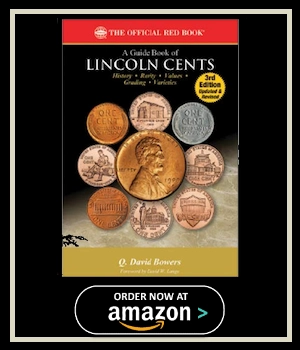
In this single volume you ll learn the history of the Lincoln cent s seven reverse designs, take an inside tour of the minting process, and learn how to grade your coins, including Proofs.
 '
'