U.S. Mint Mintage Lookup Tool
Search Mintage Figures Across Every Major Series
Mintage — the number of coins struck at each mint in a given year — is one of the most fundamental factors in a coin's value and collectibility. Low mintage creates scarcity; scarcity drives premiums. The 1893-S Morgan dollar had a mintage of just 100,000 coins and routinely sells for over $500,000 in top grades. The 1921-P Morgan had a mintage of 44 million and sells for around $30.
Use the lookup tool below to search mintage figures across the most collected U.S. coin series. Filter by series, search by year, and sort any column. Key dates (low mintage, high premium) are highlighted in gold.
How to use: Select a series from the dropdown to filter the table. Type a year in the search box to narrow results further. Click any column header to sort. Key dates are highlighted — these are the coins where mintage most directly drives significant value premiums.
Mintage Database
| Year | Mint | Mintage | Series | Notes |
|---|---|---|---|---|
| Select a series above to begin | ||||
Find Low-Mintage Coins on eBay
Key dates with low mintage figures command the strongest premiums. Browse reference guides on Amazon to research a date before you buy.
Coin Price Guides on Amazon →Affiliate links — we may earn a commission at no extra cost to you.
Understanding Mintage & Coin Value
Low mintage doesn't always mean high value — and high mintage doesn't always mean low value. Context matters. The 1927-S Peace Dollar had a mintage of only 866,000 coins, but it's worth around $200 in VF-20. The 1895 Morgan Dollar was struck in proof only with a mintage of just 880 — and is worth $50,000+ in any grade. Meanwhile, some low-mintage modern coins are worth little because collector demand is similarly low.
The key variable is survival rate. Many coins from the late 1800s and early 1900s were melted — particularly Morgan dollars, which were melted in massive quantities under the Pittman Act (1918) and the Treasury releases of the 1960s. A coin with a mintage of 5 million might have a surviving population of only 50,000; a coin with a mintage of 500,000 might have most of them still around. PCGS and NGC population reports reveal how many of each coin have actually been certified.
Mint marks matter as much as dates. The same date from different mints can vary enormously in value. The 1921-P Morgan sold for ~$30 — the 1921-D is worth ~$40. But the 1893-P is worth $500+ while the 1893-S is worth $500,000+. Always check both date and mint mark before assessing a coin's value.
Use this data with our value guides: Cross-reference mintage figures with our Coin Price Guide and Morgan Dollar Research Guide for a complete picture of both production rarity and current market value.
Where to Buy Key Date Coins
 Find Key Date Coins on eBay
Money Back Guarantee
Find Key Date Coins on eBay
Money Back Guarantee
FindRareCoins.com participates in the eBay Partner Network, Amazon Associates, and AWIN affiliate programs. Purchases made through links on this page may earn us a commission at no additional cost to you.
Frequently Asked Questions
What is the rarest U.S. coin by mintage?
The 1849 Double Eagle has a mintage of just 1 (pattern coin, not for circulation), but among business strikes, the 1870-S $3 gold piece has a known population of just 1–2 examples. Among commonly collected coins, the 1893-S Morgan Dollar (mintage 100,000) and the 1895 proof-only Morgan (880 struck) are among the rarest by surviving population. The 1913 Liberty Nickel with 5 known examples is perhaps the most famous rarity.
Why were so many Morgan dollars melted?
The Pittman Act of 1918 authorized the melting of up to 350 million silver dollars to sell the silver to Britain. Approximately 270 million Morgans were melted at that time. Additional millions were melted in 1942 and then in the early 1960s when the Treasury began releasing long-stored bags of Morgan and Peace dollars. This is why surviving populations of many dates are far lower than their original mintages suggest.
Does mintage directly predict a coin's value?
Mintage is one factor among several. The others are survival rate (how many weren't melted or lost), condition census (how many survived in high grades), and collector demand. A coin with a mintage of 1 million could be worth less than a coin with 10 million if the lower-mintage coin is a less popular series with fewer collectors. Mintage is best used as a relative indicator within the same series — comparing 1893-S to other S-mint Morgan dollars, for example.
Where do official mintage figures come from?
Official U.S. Mint production figures are the primary source, supplemented by numismatic research for historical coins. Some early mintage figures are approximate due to incomplete historical records. The most authoritative published references are the official U.S. Mint Annual Reports, the Red Book (A Guide Book of United States Coins), and the PCGS and NGC online databases.
What Kennedy half dollar years are the most valuable?
The 1964 (90% silver) is the most commonly collected and has a large mintage, but its silver content gives it a $8–$12 melt value floor. The 1970-D (mintage 2,150,000) and 1987-P/D (2,890,758 each) are the true key dates — all three were struck only for inclusion in special mint sets and were never released for general circulation. All 1965–1970 Kennedy halves are 40% silver and worth $3–$5 for metal alone. See our full Kennedy Half Dollar Value Chart for complete values.
How is a "key date" different from a "semi-key" in this table?
These labels reflect a date's relative scarcity within its own series, not an absolute value ranking across different denominations. A "key date" is the hardest date in a series to find in any condition and typically commands the strongest premium; a "semi-key" is meaningfully scarcer than the series' common dates but not as difficult as the true key. Because the labels are series-relative, a "semi-key" Morgan Dollar can still be worth far more than a "key date" modern Roosevelt Dime — always compare values within the same series, not across the color-coding alone.
Mintage figures are one piece of the puzzle — pair them with our Coin Price Guide for current market values, our Coin Grading Guide to understand how condition multiplies those values, and our Counterfeit Detection Guide to protect yourself when buying key dates.
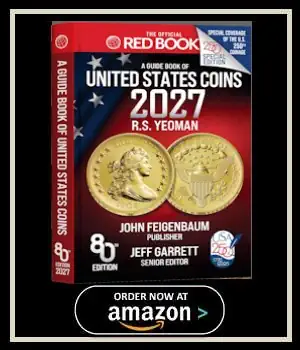
The all-new 2027 edition of The Official Red Book®: A Guide Book of United States Coins marks the 80th anniversary of the world’s best-selling coin price guide and the hobby’s most trusted reference
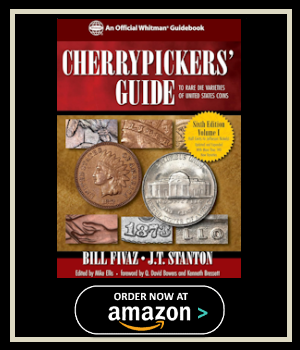
 '
'