Advertising Disclosure: This page contains affiliate links. As an eBay Partner Network affiliate, FindRareCoins.com earns from qualifying purchases. As an Amazon Associate, we earn from qualifying purchases. We may also earn commissions from other dealers linked on this site, at no extra cost to you. Full disclosure
Pocket Change Treasure Finder
An Interactive Checklist for Every Denomination
Millions of dollars in rare and valuable coins are still circulating in everyday pocket change — most people just don't know what to look for. A 1982 no-P Roosevelt dime is worth $75–$150. A 1972 doubled die Lincoln cent can bring $150–$400. Pre-1965 silver dimes and quarters turn up in rolls and jars all the time, worth $2–$6 in silver alone. You don't need to be a professional numismatist to find them. You just need this checklist.
Use the denomination tabs below to search through each coin type systematically. Check off every variety you've examined and track your finds. Values shown are approximate circulated grades — uncirculated or certified examples are worth significantly more.
$200K+
Potential value of a genuine 1943 copper penny
50+
Valuable varieties still found in circulation
$2–$6
Silver value per pre-1965 dime or quarter
How to use this tool: Click a denomination tab, then work through each coin on the list. Check the box when you've examined that variety in your collection or coin roll. Values shown are approximate for circulated (Good–Very Fine) examples unless noted. Always compare against our Coin Price Guide for current market values.
Search by Denomination
Pennies checked: 0 / 16
1943 Copper Penny JACKPOT
Should be steel/silver colored — if yours is copper-brown and non-magnetic, you may have struck gold. Weighs 3.11g vs steel's 2.70g. Magnet test first.
$60,000–$200,000+if genuine
1944 Steel Penny JACKPOT
Most 1944 cents are copper — a magnetic gray-silver 1944 is extremely rare. Test with a magnet. Weighs 2.70g.
$75,000–$180,000+if genuine
1969-S Doubled Die
Strong, dramatic doubling visible on "LIBERTY," "IN GOD WE TRUST," and the date. San Francisco "S" mintmark below date. One of the most valuable Lincoln cent errors.
Bold, obvious doubling on date and all obverse lettering. The "1955" date appears ghosted. One of the most famous U.S. error coins — still occasionally found in old collections.
$1,000–$3,500+circulated
1992 Close AM
On the reverse, look at "AMERICA" — the "A" and "M" are nearly touching (Close AM). Most 1992 cents have a gap (Wide AM). Requires magnification.
$1,000–$3,000+circulated
1972 Doubled Die
Clear doubling on "LIBERTY," "IN GOD WE TRUST," and the date. No mintmark (Philadelphia). Easier to spot with the naked eye than most doubled dies.
$75–$400+circulated
1983 Doubled Die Reverse
Doubling visible on reverse lettering "ONE CENT" and "E PLURIBUS UNUM." Obverse appears normal. No mintmark (Philadelphia). Use a loupe.
$50–$300+circulated
1984 Doubled Ear
Lincoln's earlobe shows a clear second lobe below the primary ear. Other obverse elements may show slight doubling. Philadelphia (no mintmark).
$75–$250+circulated
1999 Wide AM
Reverse "AMERICA" — gap between "A" and "M" (Wide AM variety). Most 1999 cents are Close AM. Philadelphia (no mintmark). Check reverse under magnification.
$25–$100+circulated
2000 Wide AM
Same Wide AM diagnostic as the 1999 — check gap between "A" and "M" in "AMERICA" on the reverse. Philadelphia (no mintmark).
$5–$50+circulated
1995 Doubled Die Obverse
Doubling visible on "LIBERTY" and "IN GOD WE TRUST" — easier to spot than many DDO errors. Philadelphia (no mintmark). Very findable variety.
$20–$75+circulated
1909-S VDB
"S" mintmark below date (San Francisco), "V.D.B." initials on reverse rim at 6 o'clock. Wheat reverse design. Only 484,000 minted. Extremely unlikely in change but possible from old hoards.
$700–$1,500+Good grade
1922 Plain (No D)
Denver was the only mint in 1922 — worn or missing "D" mintmarks create the "Plain" variety. Genuine examples show a weak but visible "D"; No-D coins have no trace of a mintmark.
"S" mintmark below date. Wheat-stalk reverse. Mintage only 866,000 — much rarer than most wheat cents. Look for the small "S" under the date.
$60–$250+circulated
Pre-1983 Copper Pennies COMMON FIND
Any Lincoln cent dated 1981 or earlier is 95% copper, worth ~$0.03 in metal — 3× face value. Post-1982 cents are zinc. Save them for their melt value or to cherry-pick varieties.
~$0.03copper melt
1982-D Small Date Copper
1982 is transitional — both copper and zinc were struck. Denver "D" mintmark + small date digits + copper planchet (heavier, 3.11g) = scarce variety. Weigh it to confirm.
$10,000+premium variety
Nickels checked: 0 / 6
1942–1945 War Nickels (Silver) COMMON FIND
Large mintmark (P, D, or S) above Monticello dome on the reverse — no other nickels have the mintmark there. These contain 35% silver. Worth $1.25–$2.50+ for silver content alone.
$1.25–$3+silver melt
1950-D Jefferson Nickel
"D" mintmark on reverse, right side of Monticello. Key date — only 2,630,030 minted, the lowest mintage Jefferson nickel for regular circulation. Check for strong strike on steps.
$10–$40+circulated
1939-D Jefferson Nickel
"D" mintmark on reverse. Low mintage (3,514,000). One of the more challenging dates in the early Jefferson series. Collect for its scarcity even in average grades.
$10–$60+circulated
1938-D/S Over Mintmark
First year of Jefferson nickels. Look for traces of an "S" beneath the "D" mintmark on the reverse — a repunched mintmark variety from the inaugural year.
$10–$35+circulated
Buffalo Nickel (1913–1938)
Any Buffalo nickel is collectable. Key dates: 1913-S Type 2 ($50+), 1916 Doubled Die ($500+), 1918/7-D overdate ($500+), 1937-D Three-Legged ($350+). Check mintmark and date carefully.
$1–$500+varies by date
1913 Liberty Head Nickel JACKPOT
Only 5 known to exist. Obverse shows Liberty head (same as pre-1913 design). If you somehow find one, do not spend it — contact a professional numismatist immediately.
$3–5 Millionif genuine
Dimes checked: 0 / 7
Pre-1965 Roosevelt or Mercury Dimes COMMON FIND
Any dime dated 1964 or earlier. No copper-colored stripe on the edge — the entire edge is silver. 90% silver composition. Check date and look at the edge when in hand.
$2–$4+silver melt
1982 No-P Roosevelt Dime POPULAR
Philadelphia dimes have carried a "P" mintmark since 1980 — the 1982 No-P is a major mint error. Look at the obverse above the date: no "P" mintmark. Still found in circulation.
$50–$150+circulated
1916-D Mercury Dime
Winged Liberty Head (Mercury) design, "D" mintmark on reverse left of fasces. Only 264,000 minted — the rarest regular-issue Mercury dime. Nearly impossible in change, but worth knowing.
$800–$5,000+circulated
1942/41 Mercury Dime Overdate
A "1" is visible beneath the "2" in the date "1942." Philadelphia (no mintmark) and Denver (D) varieties both exist. Use a loupe — the underlying "1" is visible at the top of the "2."
$400–$1,500+circulated
1996-W Roosevelt Dime
"W" (West Point) mintmark — only issued in 1996 mint sets, but occasionally spent into circulation. Extremely scarce in change. Look for the "W" mintmark above the date.
$10–$20+circulated
1949-S Roosevelt Dime
"S" mintmark on obverse above date. Semi-key date with a relatively low mintage for the Roosevelt series. Worth a significant premium over face in all grades.
$3–$15+circulated
Roosevelt Dime Doubled Dies
Notable years: 1955 (doubling on date), 1964 (DDO), 1974 (DDO), 1983 (DDR on reverse). Look for doubling on "LIBERTY," date, or "UNITED STATES OF AMERICA" with a 5–10× loupe.
$25–$200+variety dependent
Quarters checked: 0 / 7
Pre-1965 Washington Quarters COMMON FIND
Any quarter dated 1964 or earlier. Silver edge (no copper stripe). 90% silver — worth $4–$6+ in silver alone. Check your coin rolls and inherited jars carefully.
$4–$7+silver melt
1932-D Washington Quarter
"D" mintmark on reverse below eagle. First-year key date — only 436,800 minted. One of the most sought-after Washington quarters in any condition.
$100–$400+circulated
1932-S Washington Quarter
"S" mintmark on reverse. Only 408,000 minted — slightly rarer than the 1932-D. Both 1932 branch-mint issues are the coins that launched a quarter-collecting generation.
$90–$350+circulated
2004-D Wisconsin Extra Leaf Quarter POPULAR
Wisconsin State Quarter (2004) with "D" mintmark. On the reverse corn stalk, look for an extra leaf — either high or low on the left ear of corn. A genuine die error found in real circulation.
$50–$300+circulated
State / ATB Quarter Errors
Off-center strikes, double strikes, wrong planchet (struck on dime planchet), missing clad layers, and die cap errors all exist in State Quarter series. Worth $20–$500+ depending on error type.
$20–$500+error dependent
1965 Silver Transitional Error
In 1965, the Mint switched from silver to clad. A tiny number of 1965 quarters were accidentally struck on leftover 90% silver planchets. Check the edge — silver edge means no copper stripe and the coin will ring differently.
$7,000–$12,000+if genuine
1970-S Proof Quarter Overstruck on 1941 Canadian Quarter
Not a "find in your change" coin — this is a unique, NGC/PCGS-certified proof error that was never released into circulation. Included for interest: only one confirmed example exists (with a second, similar overstrike on an earlier-era Canadian quarter also known). Real-world sale/asking price has been $35,000.
90% silver. Any half dollar dated 1964 or earlier — Kennedy (1964 only), Franklin (1948–1963), Walking Liberty (1916–1947). Silver edge, no copper stripe. Worth $8–$12+ in silver.
$8–$15+silver melt
1965–1970 Kennedy Half Dollar (40% Silver)
Dates 1965–1970 are 40% silver — still worth $3–$5+ in silver. Look for a slightly darker edge than pure clad. These are the most commonly overlooked silver coins in pocket change.
$3–$6+silver melt
1970-D Kennedy Half Dollar
Only issued in mint sets — never released for general circulation. Any 1970-D half in a coin jar or roll was likely spent from a set. "D" mintmark on obverse. 40% silver.
$5–$20+circulated
1974-D Doubled Die Kennedy Half
"D" mintmark. Doubling is visible on Kennedy's hair detail, "LIBERTY," and the date. One of the more notable Kennedy half varieties — requires a loupe to confirm.
$50–$200+circulated
Franklin Half Dollar Key Dates
All Franklin halves (1948–1963) are 90% silver. Key dates: 1948 ($15+), 1953 ($15+), 1955 ($30+). Look for "Full Bell Lines" on the Liberty Bell for major premium — a grading designation worth hundreds more.
$10–$100+key date dependent
1776–1976 Bicentennial Half Dollar Silver Variety
Most Bicentennial halves are clad, but San Francisco struck silver (40%) collector versions. The silver proof version has a different surface than the clad. Check for "S" mintmark and heft vs clad.
$5–$15+silver version
Dollar coins checked: 0 / 6
Presidential Dollar Plain Edge Errors POPULAR
Presidential dollars (2007–2016) have edge lettering including "IN GOD WE TRUST." Missing edge lettering is a major mint error. Rotate the coin and check all around the edge. Most common on 2007 Washington.
$50–$200+error dependent
2000-P Sacagawea "Cheerios" Dollar
Early 2000-P Sacagawea dollars distributed in Cheerios cereal boxes (only about 5,500 struck) have enhanced tail feathers on the eagle reverse — more detailed than standard strikes. Compare reverse eagle feathers carefully under a loupe.
$2,500–$11,000+if Cheerios variety
2000-P Sacagawea / State Quarter Mule
One of the rarest modern errors: Sacagawea dollar reverse struck with a Washington quarter obverse die. Fewer than 20 known. Check for wrong design combination on either face.
1979-P SBA dollars come in Wide Rim (Near Date) and Narrow Rim (Far Date) varieties — the Wide Rim is scarcer and more valuable. Compare the distance between the date and rim edge.
$5–$30+circulated
1981-S SBA Dollar Type 2 Clear "S"
"S" mintmark — proof issue, but occasionally found spent. Type 2 has a distinctly cleaner, sharper "S" mintmark compared to Type 1's blobby appearance. Collector premium over face value.
$20–$75+circulated
Eisenhower Dollar Silver Varieties (1971–1974, 1976)
Regular Ike dollars are clad. "S" mintmark proof and uncirculated versions are 40% silver — occasionally spent. Look for "S" mintmark. Weigh it: clad = ~22.7g, silver = ~24.6g.
$8–$20+silver version
Found a Coin Worth Keeping?
Compare your find against sold listings to get a real-world value. eBay's completed sales are the most accurate market data available — no guesswork.
Get a loupe. A 5× to 10× loupe (magnifying glass) is the single most important tool for pocket change searching. Most doubled dies and mintmark varieties are invisible to the naked eye. A quality loupe costs under $20 and pays for itself the first time you find a 1982 No-P dime.
Check coin rolls from banks. Ordering $10–$50 in rolled coins from your bank is the fastest way to search large quantities. Half dollar rolls are especially productive for 40% silver Kennedy halves that most cashiers don't recognize.
Use a magnet for steel cents. Any cent that sticks to a magnet is a steel cent (1943). Any copper-colored cent that sticks is likely a plated 1943 fake — don't get excited. Any 1944 cent that sticks to a magnet could be a genuine 1944 steel cent worth tens of thousands.
Look at the edge. Pre-1965 silver coins have a solid silver edge with no copper stripe. Post-1964 clad coins show a copper-colored stripe on the edge. This is the fastest way to identify silver coins without checking each date.
Know what your coins are worth: Once you find a candidate, get an accurate value estimate using our Coin Price Guide. For silver coins, track the live price with our Gold & Silver Spot Price Tracker.
Where to Buy & Sell Valuable Coins
Once you've identified a valuable find, these are the most trusted destinations for buying, selling, and getting coins professionally graded.
JM Bullion
Top-rated dealer for buying certified and raw coins. Strong selection of 90% silver junk coins and key-date Lincoln cents.
FindRareCoins.com participates in the eBay Partner Network, Amazon Associates, and AWIN affiliate programs. Purchases made through links on this page may earn us a commission at no additional cost to you.
Frequently Asked Questions
What coins are most worth looking for in pocket change?
The most practical targets are pre-1965 silver dimes, quarters, and half dollars (worth $2–$12+ in silver), 1965–1970 Kennedy half dollars (40% silver), and Roosevelt dime doubled die varieties. For potentially high-value finds, look for the 1943 copper penny (use a magnet), the 1982 No-P Roosevelt dime, and Presidential dollar plain-edge errors.
How do I know if my 1943 penny is copper or steel?
The magnet test is the fastest method — steel 1943 cents will stick to a magnet, copper ones will not. A genuine copper 1943 cent weighs 3.11 grams (steel weighs 2.70g). Be aware that many fakes exist: copper-plated steel cents that don't stick to a magnet but are not genuine. If yours passes the magnet test, have it professionally authenticated by PCGS or NGC before assuming it's real.
Where can I get my coin authenticated and graded?
The two leading grading services are PCGS (Professional Coin Grading Service) and NGC (Numismatic Guaranty Company). Both charge fees per coin and return them sealed in a protective holder with a grade. For coins potentially worth $100+, professional grading is worth the cost — it significantly increases buyer confidence and can dramatically raise the realized sale price.
Are doubled die coins worth a lot of money?
It depends on the specific coin and the visibility of the doubling. The 1955 Doubled Die Lincoln cent is worth $1,000–$3,500 in circulated grades because the doubling is dramatic and famous. More recent doubled dies — like the 1995 DDO — are far more common and worth only $20–$75. The rarer and more dramatic the doubling, the more valuable the coin.
How do I sell a valuable coin I found?
For coins worth under $100, eBay completed listings will give you an accurate current value, and listing it directly is often the fastest route to a fair price. For coins worth $500+, consider getting it professionally graded first — a PCGS or NGC holder significantly increases buyer confidence and often raises the final sale price well above the cost of grading. Major auction houses like Heritage Auctions and Stack's Bowers handle high-value coin sales.
What tools do I need to search pocket change effectively?
Start with a quality 5–10× loupe for examining doubled dies and mintmarks, a digital scale (to detect 1943 copper vs steel by weight), and a strong refrigerator magnet for testing suspected 1943 copper cents. A good reference book — the Official Red Book (A Guide Book of United States Coins) — and our Coin Price Guide are essential for verifying values once you've found a candidate.
Could I actually find a coin like the 1970-S Canadian overstrike quarter in my change?
No — and it's worth understanding why. That coin is a proof issue, meaning it was struck specifically for collectors and sold directly through Mint proof sets rather than released into general circulation. It's included on this page for interest and awareness, not as a realistic circulation find. The same is true of any proof-only coin: if a "rare coin" story mentions it was struck as a proof, treat it as historically interesting rather than something to expect from your pocket change.
Pocket change searching is one of the most accessible — and potentially lucrative — entry points into coin collecting. Whether you're finding your first war nickel or hunting for a 1982 No-P dime, every roll of quarters is a potential treasure hunt. Keep this checklist bookmarked and work through each denomination systematically as new coins pass through your hands.
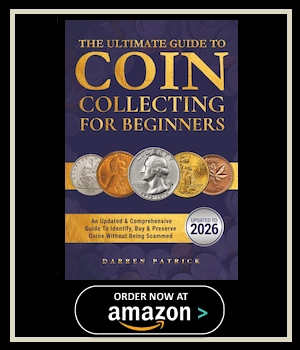
This guide is meticulously crafted with high-quality images to empower you with the knowledge and tools you need to become a savvy collector.
From best-selling coin author Sam Sommer, MBA, this hands-on guide shows exactly how to uncover valuable error coins, rare dates, and silver in everyday change
Advertising Disclosure: This page contains affiliate links. As an eBay Partner Network affiliate, FindRareCoins.com earns from qualifying purchases. As an Amazon Associate, we earn from qualifying purchases. We may also earn commissions from other dealers linked on this site, at no extra cost to you. Full disclosure Coin Roll Hunting Guide How to Find Silver,…
Advertising Disclosure: This page contains affiliate links. As an eBay Partner Network affiliate, FindRareCoins.com earns from qualifying purchases. As an Amazon Associate, we earn from qualifying purchases. We may also earn commissions from other dealers linked on this site, at no extra cost to you. Full disclosure FindRareCoins.com Tools & Price Guides — Everything a…
Advertising Disclosure: This page contains affiliate links. As an eBay Partner Network affiliate, FindRareCoins.com earns from qualifying purchases. As an Amazon Associate, we earn from qualifying purchases. We may also earn commissions from other dealers linked on this site, at no extra cost to you. Full disclosure Junk Silver Coins Value…
Advertising Disclosure: This page contains affiliate links. As an eBay Partner Network affiliate, FindRareCoins.com earns from qualifying purchases. As an Amazon Associate, we earn from qualifying purchases. We may also earn commissions from other dealers linked on this site, at no extra cost to you. Full disclosure Counterfeit Coin Detection Guide Authentication Tests & Red…
Advertising Disclosure: This page contains affiliate links. As an eBay Partner Network affiliate, FindRareCoins.com earns from qualifying purchases. As an Amazon Associate, we earn from qualifying purchases. We may also earn commissions from other dealers linked on this site, at no extra cost to you. Full disclosure Gold Coin Premium Calculator Enter the current gold…
Advertising Disclosure: This page contains affiliate links. As an eBay Partner Network affiliate, FindRareCoins.com earns from qualifying purchases. As an Amazon Associate, we earn from qualifying purchases. We may also earn commissions from other dealers linked on this site, at no extra cost to you. Full disclosure How to Verify a PCGS Coin — Cert…
We use cookies for the purposes of statistical analysis, improving the friendliness and usability of our website, tailoring content to your interests and engaging with social media. By visiting and using our website, you consent to our use of cookies as described in our cookie policy.
This website uses cookies to improve your experience while you navigate through the website. Out of these cookies, the cookies that are categorized as necessary are stored on your browser as they are essential for the working of basic functionalities of the website. We also use third-party cookies that help us analyze and understand how you use this website. These cookies will be stored in your browser only with your consent. You also have the option to opt-out of these cookies. But opting out of some of these cookies may have an effect on your browsing experience.
Necessary cookies are absolutely essential for the website to function properly. This category only includes cookies that ensures basic functionalities and security features of the website. These cookies do not store any personal information.
Any cookies that may not be particularly necessary for the website to function and is used specifically to collect user personal data via analytics, ads, other embedded contents are termed as non-necessary cookies. It is mandatory to procure user consent prior to running these cookies on your website.
 Find These Coins on eBay
Money Back Guarantee
Find These Coins on eBay
Money Back Guarantee

 '
'